

Key Takeaways
A no-start condition is easier to diagnose when you first describe exactly what the engine is doing. Work from simple electrical checks toward fuel, ignition, and electronic systems, and stop before repeated attempts create more damage.
- Separate a no-crank fault from a crank-but-no-start fault.
- Test the battery, connections, and charging system before replacing parts.
- Treat starter, fuel, ignition, sensor, and immobilizer symptoms differently.
- Use safe home checks, but leave module programming and complex wiring to a specialist.
- Tow the vehicle when repeated starting attempts could worsen the problem.
Identify the type of starting problem
The first useful diagnosis is not a component name; it is a symptom description. Listen to what happens when you turn the key or press the start button, and watch the dashboard at the same time. These observations make Mercedes starting problems solutions more practical because they narrow the number of systems that need testing.
When the engine does not crank at all
If the engine stays completely still, the likely fault is somewhere in the battery, starter, wiring, ignition switch, or vehicle authorization system. Dim lights and silence suggest low voltage or a poor connection, while a single click can point toward the starter solenoid or insufficient current. Before trying again, make sure the transmission is in Park or Neutral and that the brake or clutch pedal is fully depressed.
When the engine cranks but will not start
A steady cranking sound means the starter is turning the engine, so the investigation moves toward fuel, spark, timing, and sensor signals. Check whether the fuel level is genuine rather than relying only on a possibly inaccurate gauge. A scan for stored codes, followed by fuel-pressure and ignition tests, is more useful than replacing several parts based on sound alone.
When the engine starts and then stalls
Starting briefly and dying often means the engine initially receives enough fuel or authorization, but a continuing signal or supply is missing. Possible areas include fuel pressure, a crankshaft or camshaft sensor, an intake problem, or an immobilizer event. Note whether the stall happens immediately, after a few seconds, or only when accessories are switched on; the timing provides valuable diagnostic context.
How warning lights and dashboard messages narrow the cause
Dashboard messages can distinguish low system voltage from a key-recognition or steering-lock concern, but they should be treated as clues rather than final diagnoses. Record the exact wording and any warning lamps before switching the vehicle off. A message that disappears after a weak-battery event may still leave fault codes that need to be checked.
Check the battery and electrical system
Electrical testing is the sensible starting point because modern starting systems depend on stable voltage. A battery can illuminate the dashboard and still lack the current needed to crank the engine. Check the battery and its connections before moving into more expensive mechanical diagnosis.
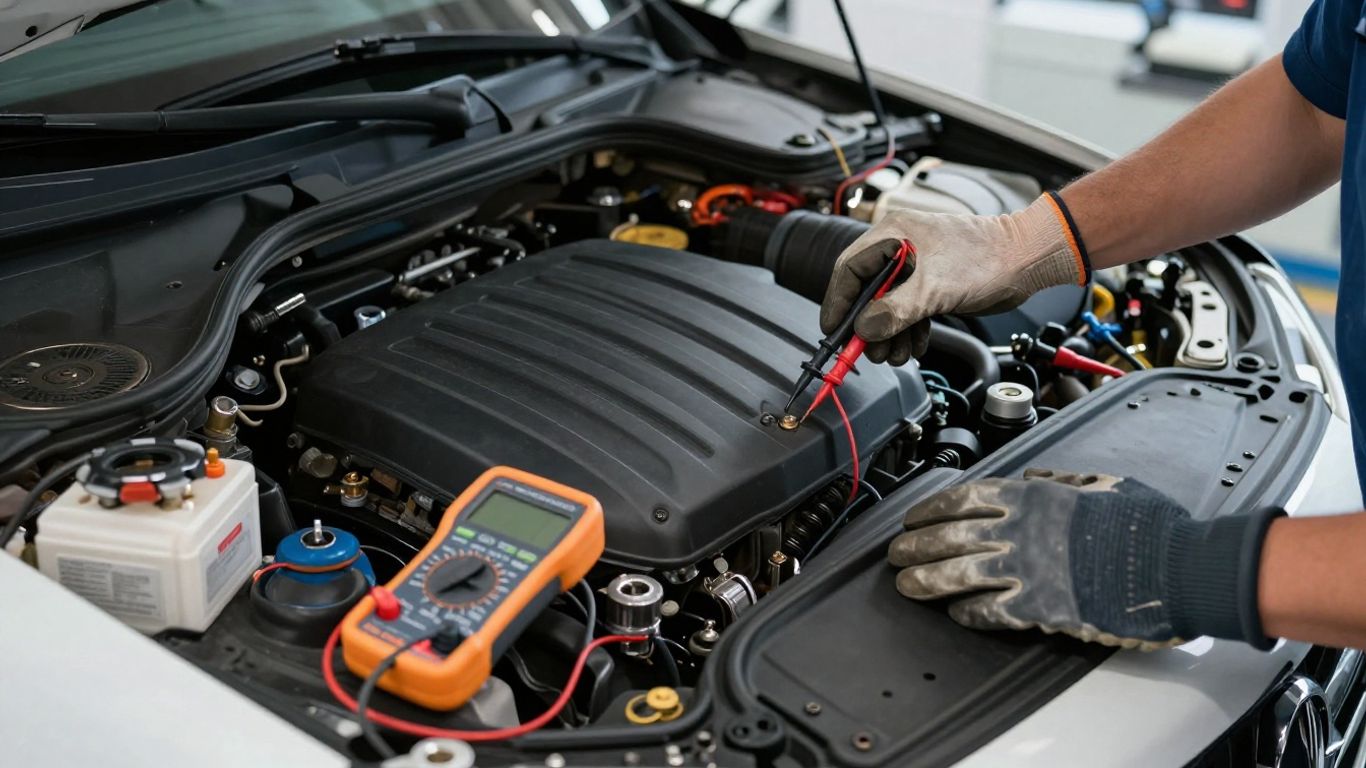
Testing battery voltage and cold-cranking performance
Measure voltage with the vehicle switched off, then observe it while the starter operates. Resting voltage alone does not prove that the battery can deliver sufficient cold-cranking current, so a proper load or conductance test is preferable. Slow cranking, flickering displays, or rapid clicking are strong reasons to test the battery rather than assume the starter has failed.
Inspecting battery terminals, grounds, and power cables
Loose or corroded terminals can restrict current just as effectively as a weak battery. Inspect the positive connection, the negative terminal, engine-to-body ground straps, and the main cables for looseness, heat damage, or corrosion. Clean and tighten only connections that are safe to access, and never bridge terminals with a tool.
Recognizing alternator-related starting problems
An alternator problem may appear first as a starting fault because the battery was not properly recharged during earlier driving. Clues include a charging warning, repeated battery discharge, dimming lights, or a vehicle that starts after charging but fails again later. Test charging output and belt condition after the engine is running; replacing the battery alone will not solve an underlying charging fault.
Understanding how cold weather affects battery performance
Low temperatures reduce the battery’s available starting power while making the engine harder to turn. A battery that works acceptably in mild weather may crank slowly on a freezing morning, especially if it is older or partly discharged. Park in a sheltered place when possible, reduce unnecessary electrical loads, and have a weak battery tested before winter rather than waiting for a no-start event.
Diagnose the starter and ignition circuit
When battery condition is satisfactory, follow the path from the start command to the starter motor. The circuit includes fuses, relays, wiring, switches, authorization signals, and the motor itself. A careful sequence prevents a loud click or a silent key turn from being mistaken for a complete diagnosis.
Signs of a failing starter motor or solenoid
A single heavy click with no crank can indicate a solenoid or motor problem, although low voltage and poor cables can create the same symptom. Repeated rapid clicks more often suggest inadequate voltage reaching the starter. Intermittent operation, grinding, or a starter that works only after several attempts should be recorded and professionally tested rather than dismissed as random.
Checking fuses, relays, and starter wiring
Use the vehicle’s wiring information to identify the relevant fuse and relay instead of changing parts at random. Look for blown fuses, overheated terminals, damaged insulation, and signs of water intrusion. Voltage should be checked at the appropriate points while the start command is active, because a visual inspection cannot reveal every high-resistance connection.
How the ignition switch affects engine cranking
A worn ignition switch may fail to send the start request even when the key turns normally and the dashboard appears active. Push-button systems have their own control logic, but the same principle applies: the command must reach the starting circuit and be accepted by the vehicle’s modules. Intermittent behavior, accessories that cut out, or a start position that feels inconsistent warrants circuit testing.
When a jump-start helps—and when it can cause further issues
A jump-start can help confirm that low battery charge is involved, provided the cables, polarity, and procedure are correct. It will not repair a failed starter, damaged cable, immobilizer fault, or fuel problem. Use the vehicle handbook’s instructions, avoid repeated attempts, and stop if cables become hot, sparks appear unexpectedly, or the battery is swollen or leaking.
Investigate fuel and ignition problems
If the engine cranks at normal speed, the next question is whether it receives the essentials for combustion: correctly metered fuel, a usable spark, and accurate timing information. These checks require more care than listening for a click. Fuel vapors and ignition voltage are hazardous, so work in a ventilated area and avoid improvised tests.
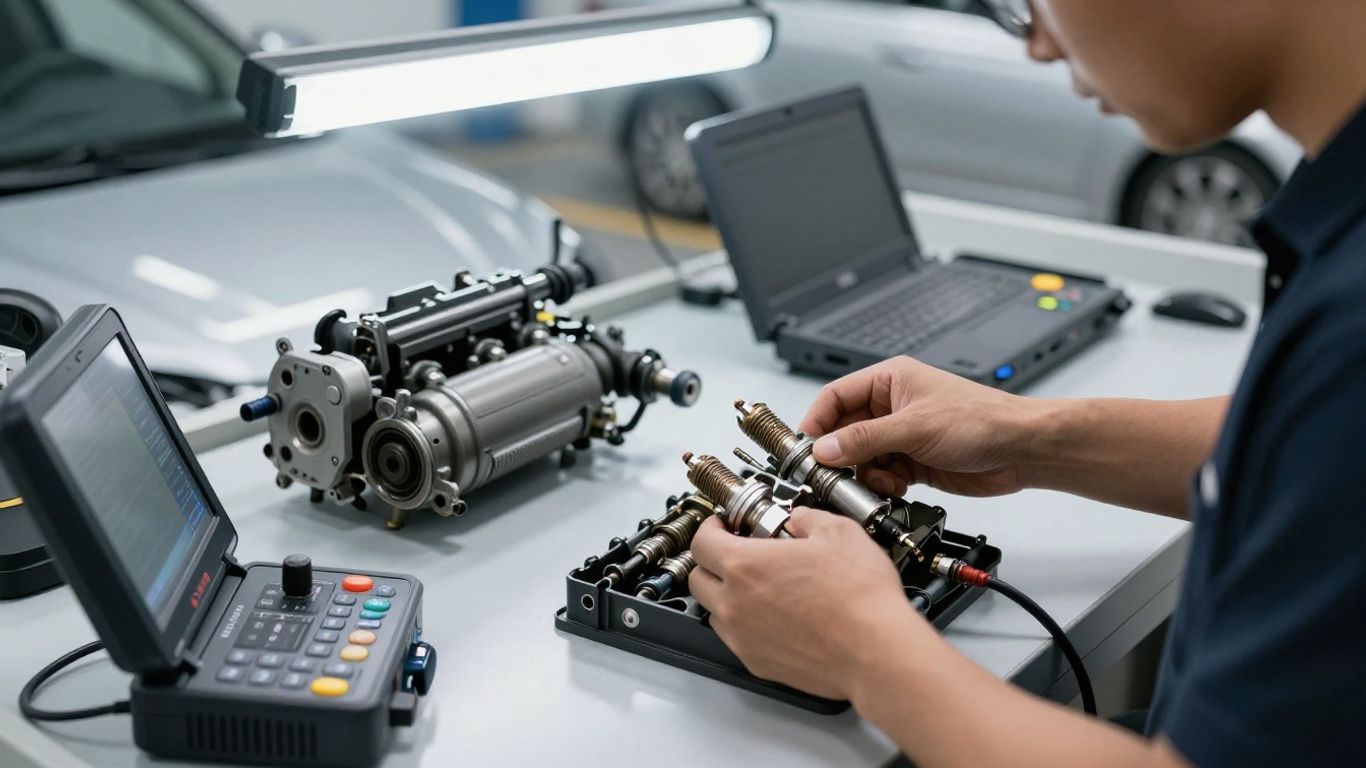
Checking fuel pressure, the pump, and the fuel filter
Listen for the pump’s brief priming sound when the ignition is switched on, but remember that sound does not prove adequate pressure. A pressure gauge and the vehicle’s specified test procedure can distinguish a weak pump, restricted filter, wiring issue, or fuel-pressure control fault. Confirm the fuel level and inspect for leaks before opening any fuel connection.
Testing spark plugs, ignition coils, and engine timing
A crank-but-no-start condition can result from absent spark, weak spark, or spark delivered at the wrong time. Testing should follow the correct engine procedure, since modern ignition systems can produce dangerous voltage and some components can be damaged by unsuitable methods. Worn plugs, failed coils, and timing faults may produce similar symptoms, so scan data and measured tests matter.
How a faulty crankshaft or camshaft sensor prevents starting
The engine computer needs position information to coordinate fuel injection and ignition. If a crankshaft or camshaft sensor signal is missing or implausible, the engine may crank without starting, start intermittently, or stall unexpectedly. A stored code can help, but checking live data and wiring is wise because a damaged connector or harness can imitate a failed sensor.
The effect of low-quality or contaminated fuel
Contaminated fuel, water in the tank, or a fueling error can cause difficult starting and rough running. Symptoms may begin soon after refueling and can include misfiring, stalling, or a complete refusal to start. Do not keep cranking in the hope that contaminated fuel will clear; preserve the receipt if possible and have the fuel sampled or removed safely.
Resolve key, immobilizer, and electronic faults
Electronic authorization faults can look deceptively similar to a dead battery or failed starter. A key may turn, the dashboard may wake up, and yet the vehicle may withhold the start command. Do not bypass security systems with improvised wiring; identify whether the issue affects one key, both keys, or the vehicle itself.
Replacing or testing a weak Mercedes key fob battery
A weak key-fob battery can reduce communication range or prevent reliable recognition, depending on the vehicle and key design. Replace it with the correct battery type and follow the owner’s instructions so the casing, contacts, and key electronics are not damaged. If a spare key works normally, the original fob becomes a stronger suspect, though the vehicle should still be checked if the symptom persists.
Understanding immobilizer and electronic steering lock issues
An immobilizer may prevent starting when authorization is incomplete, while an electronic steering lock problem can prevent the vehicle from completing its start sequence. Warning messages, an unusual steering-lock sound, or a key that cannot be turned provide useful clues. These systems are integrated with vehicle modules, so repeated cycling of the ignition rarely fixes a genuine fault.
What to do when the key is not recognized
Keep the key away from other wireless devices and try the spare if one is available. Check the fob battery, ensure the vehicle battery is healthy, and follow the emergency key-recognition procedure in the owner’s manual. If neither key works, record the messages and arrange diagnosis instead of purchasing multiple replacement fobs without confirming the cause.
When diagnostic software and module scans are necessary
A module scan becomes valuable when the symptom involves authorization, steering lock, communication, or a warning that returns after the battery is charged. The scan should be paired with a battery-voltage check and a review of relevant live data, not treated as a list of parts to replace. Some repairs also require security access, coding, or programming that should be performed by a qualified technician.
Choose the right Mercedes starting problem solution
The right repair depends on the confirmed fault, not simply on the most common cause. Begin with observations and safe measurements, then escalate when the system becomes difficult to access or the consequences of a mistake increase. A useful starting-problem checklist can help organize symptoms before the vehicle reaches a workshop.
Safe checks to perform at home
Home checks should be limited to observations and low-risk inspections. Write down the sequence of events, dashboard messages, weather, recent refueling, and whether the engine cranks. You can also check battery connections, try a spare key, verify the fuel level, and inspect accessible fuses if the handbook identifies them.
A short record usually gives a technician more value than a long series of guesses. These four details are especially helpful:
- Whether the engine cranks, clicks, or stays silent.
- Whether the lights become dim during an attempt.
- Whether the problem changes with a spare key or jump-start.
- Whether the fault began after refueling, rain, or battery discharge.
After those checks, stop if there is fuel odor, smoke, heat, fluid leakage, or a damaged cable. General vehicle troubleshooting advice also stresses distinguishing a weak battery from a starter or fuel fault before choosing a repair; see this Mercedes starting guide for another symptom-based reference.
Repairs that require specialized Mercedes tools
Starter removal, fuel-pressure testing, electrical back-probing, module scans, and key or immobilizer work can require model-specific information and equipment. A professional should also handle high-voltage ignition testing, fuel-system opening, and any procedure involving coding or security access. Choosing a repair provider calls for the same care as choosing qualified contractors: check credentials, insurance, written scope, and clear communication rather than relying on a vague estimate.
When towing is safer than repeated starting attempts
Tow the vehicle when the battery or cables become hot, the starter grinds, fuel is leaking, smoke appears, or the engine is cranking unusually fast. Towing is also sensible when a key, immobilizer, or steering-lock message remains active, because repeated attempts will not restore authorization. If the car starts only intermittently, avoid switching it off in an unsafe location and arrange transport or professional assistance.
A starting issue explanation may help you compare symptoms while waiting, but it should not replace inspection of the actual vehicle. The safest decision is the one that prevents a small electrical fault from becoming a damaged starter, discharged battery, or unsafe roadside repair.
How to prevent recurring starting problems through maintenance
Keep the battery tested at sensible service intervals, especially before cold weather, and address charging warnings promptly. Maintain clean, tight terminals, use the correct fuel, replace service items according to the vehicle schedule, and investigate intermittent starting before it becomes a total failure. For broader research habits, even a competitive intelligence report illustrates the value of gathering evidence before acting; with a vehicle, that evidence is test data, fault history, and service records.
Conclusion
A careful diagnosis begins with the starting symptom and proceeds through voltage, connections, starter control, fuel, ignition, sensors, and authorization systems. Safe checks can narrow the cause, but specialist testing is the better route when electronic security, fuel pressure, or complex wiring is involved.
Frequently Asked Questions
Why does a car click but not start?
A click can come from a weak battery, poor cable connection, starter solenoid, or failing starter motor. Test battery voltage under load and inspect the main connections before replacing the starter.
Can a weak battery cause warning messages?
Yes. Low voltage can create several temporary warnings or communication faults. Charge and test the battery, then rescan the vehicle if messages remain or return.
What does it mean when the engine cranks but will not fire?
The starter is turning the engine, but fuel, spark, timing, or engine-position information may be missing. Fuel-pressure testing, ignition checks, and diagnostic data can separate those possibilities.
Is it safe to keep trying to start the vehicle?
Only briefly and when there are no signs of leakage, smoke, overheating, grinding, or damaged wiring. Repeated attempts can discharge the battery, overheat the starter, or worsen an existing fault.
Can contaminated fuel prevent starting?
Yes. Water, incorrect fuel, or other contamination can cause misfiring, stalling, and no-start symptoms. Stop cranking and have the fuel system checked safely.
When should a vehicle be towed?
Tow it when there is a safety risk, a persistent immobilizer or steering-lock message, severe grinding, fuel leakage, smoke, or no reliable way to test the fault at the roadside.
Does replacing the key-fob battery always fix key recognition?
No. A new fob battery may help when the original is weak, but the vehicle battery, key electronics, receiver, or authorization modules may also be involved. A spare key and a proper scan can clarify the cause.