

Key Takeaways
A vibrating steering wheel is a symptom, not a diagnosis. The speed, driving condition, and location of the vibration usually provide the first useful clues.
- Highway-speed shaking often points to wheel or tire imbalance.
- Vibration during braking can indicate rotor, caliper, or front-end trouble.
- A bent wheel, damaged tire, or loose steering part should be inspected promptly.
- Diagnosis should begin with simple checks and progress to professional testing.
- A Mercedes steering wheel vibration fix should address the underlying cause, not just the sensation.
What steering wheel vibration tells you
The timing and feel of the vibration can narrow the search considerably. A shake that appears only at one speed suggests a different problem from a tremor that follows brake application or acceleration. Note what the car is doing when the symptom begins, and whether the vibration is getting worse.
Vibration at low speeds versus highway speeds
Low-speed vibration is often easier to feel through the tire and suspension as the wheel turns slowly. It may follow a tire with a bulge, a wheel with significant damage, or a component that is no longer rotating evenly. Highway-speed vibration more commonly becomes obvious when a small imbalance or runout is amplified by wheel speed, although a careful inspection is still needed before drawing a conclusion.
Shaking during braking or acceleration
If the steering wheel shudders mainly when the brake pedal is applied, the braking system deserves close attention. Uneven rotor surfaces, a sticking caliper, or looseness in the front suspension can transfer movement into the steering. A vibration under acceleration may instead involve a tire, wheel, driveline, or mount, so the exact conditions matter.
Steering wheel movement versus whole-car vibration
Movement concentrated in the steering wheel generally points toward the front wheels, steering linkage, or front suspension. A vibration felt through the seat or floor may originate farther back or involve the whole vehicle. These sensations can overlap, but describing where the vibration is strongest helps a technician avoid replacing unrelated parts.
Warning signs that make driving unsafe
Stop treating the issue as a comfort annoyance if the car pulls sharply, the steering feels loose, a tire has a bulge, or a wheel is visibly cracked. Grinding, clunking, burning smells, and a rapidly worsening shake also call for immediate attention. If control feels uncertain, reduce speed safely and arrange an inspection rather than testing the vehicle at higher speeds.
Common causes of Mercedes steering wheel vibration
The most common causes are mechanical and relatively familiar: tires, wheels, alignment, suspension, steering, and brakes. A pothole or curb impact can create more than one fault at once, which is why balancing a wheel may not resolve the problem completely. The right Mercedes repair starts with the symptom pattern and a physical inspection.
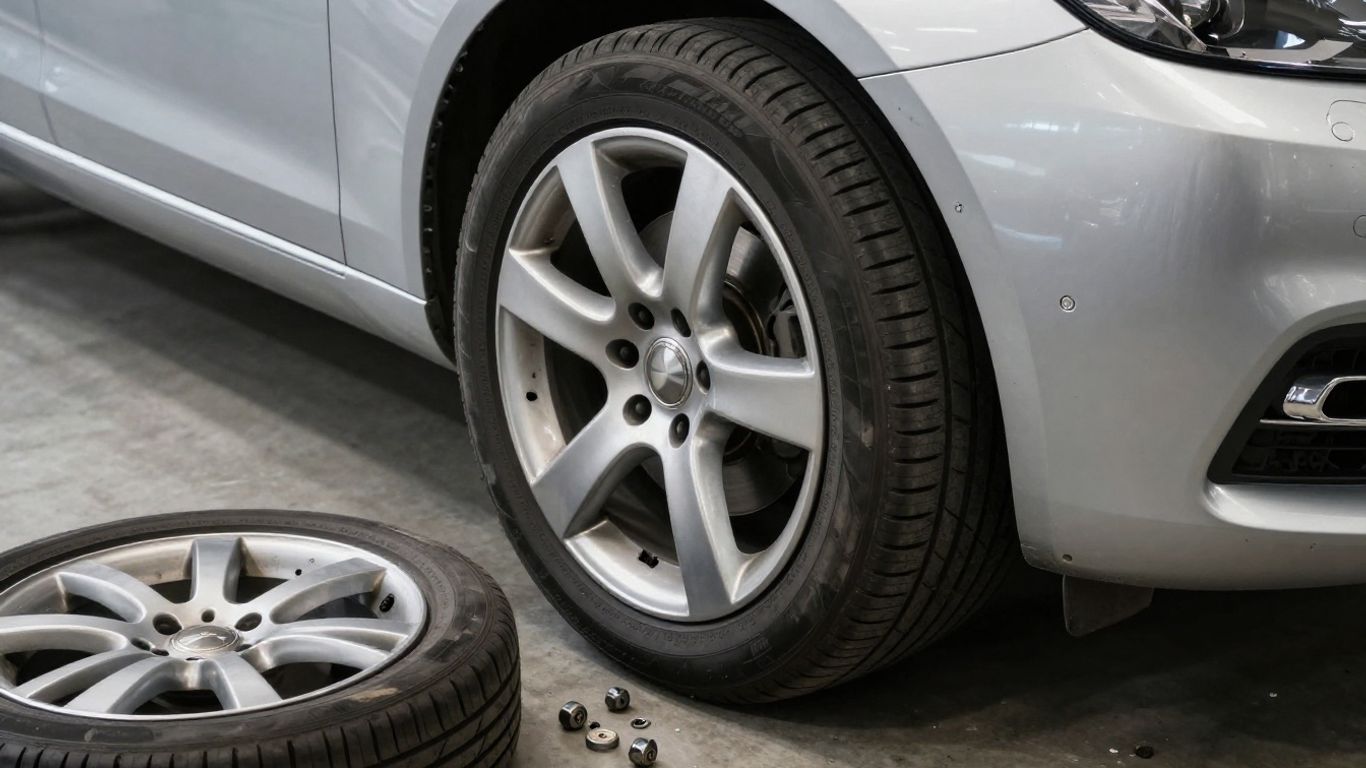
Unbalanced or damaged wheels and tires
A missing wheel weight, uneven tire wear, internal tire damage, or a bent rim can disturb the rotation of a wheel. The result may be a rhythmic shake that becomes stronger at a particular road speed. Check for bulges, cuts, separated tread, and unusual wear, but remember that internal damage is not always visible from the outside.
Wheel alignment and suspension problems
Incorrect toe, camber, or other alignment angles can make the car wander and wear a tire unevenly. Worn shocks, bushings, or control-arm parts may allow the wheel to move when it should remain controlled. Alignment should normally be checked after damaged or loose parts are repaired; adjusting angles cannot compensate for a component that is failing.
Worn steering and front-end components
Tie rods, ball joints, and control-arm connections influence how accurately the front wheels follow the steering wheel. Excess play can produce vibration, wandering, or a vague center position, especially over uneven pavement. Because these parts affect directional control, a technician should inspect them before the vehicle is driven aggressively or at high speed.
Brake rotor and caliper issues
Brake vibration is often most noticeable through the steering wheel during moderate or heavy deceleration. Rotor thickness variation, uneven friction deposits, or a caliper that does not release properly can make the shaking return every time the brakes heat up. The condition of the pads, rotor, caliper, and related hardware should be assessed together rather than replacing one part by guesswork.
How to diagnose the vibration accurately
Diagnosis works best as a progression from simple observations to measurements. Record the speed range, road surface, brake use, and whether the vibration appears while turning or accelerating. The symptom pattern matters because it prevents a routine wheel balance from masking a deeper steering or suspension fault.
Check tire pressure, tread, and visible damage
Begin with cold tire pressures and compare them with the vehicle’s recommended values rather than the maximum printed on the sidewall. Look across the tread for scalloping, cupping, bald patches, or a separated section, then inspect the sidewalls for bulges and cuts. A short, gentle drive can reveal whether the vibration changes with speed, but do not continue if the tire appears unsafe.
Inspect wheels for bends, cracks, and missing weights
Look at the inner and outer rim edges, particularly after a pothole strike. Missing balance weights may be obvious, while a bent inner barrel can be difficult to see with the wheel installed. A shop can measure radial and lateral runout and balance the assembly on appropriate equipment, providing more useful information than visual inspection alone.
Test for wheel bearing and suspension play
With the vehicle safely supported, a technician can check for looseness at the wheel bearing, tie rods, ball joints, and control arms. Bearing noise may change with steering load, while suspension play can be revealed through controlled movement and inspection of bushings. These tests should be performed with proper lifting equipment and should not be improvised beneath an unsupported vehicle.
Identify when professional diagnostic equipment is needed
Professional testing becomes especially valuable when the vibration persists after balancing, appears only under braking, or follows a recent impact. A shop may need a road test, wheel-force balancing, alignment measurements, brake inspection, and runout measurements. The following sequence keeps the investigation focused rather than replacing parts at random:
- Confirm tire pressures and document the symptom.
- Inspect tires, wheels, brakes, and visible suspension parts.
- Balance the wheels and measure wheel or rotor runout when indicated.
- Check alignment and test steering, bearing, and suspension play.
That order is not a substitute for a technician’s judgment, but it helps separate simple rotating-mass problems from faults that affect control. For another general overview of causes, see this steering vibration guide, and compare its basic inspection logic with the symptoms observed on your vehicle.
Mercedes steering wheel vibration fixes
The repair should match the failed part and the conditions that caused it. A balance correction is appropriate for an imbalance, but it will not repair a cracked wheel, damaged tire, loose ball joint, or sticking caliper. After the repair, the vehicle should be road-tested under the conditions that originally produced the vibration.
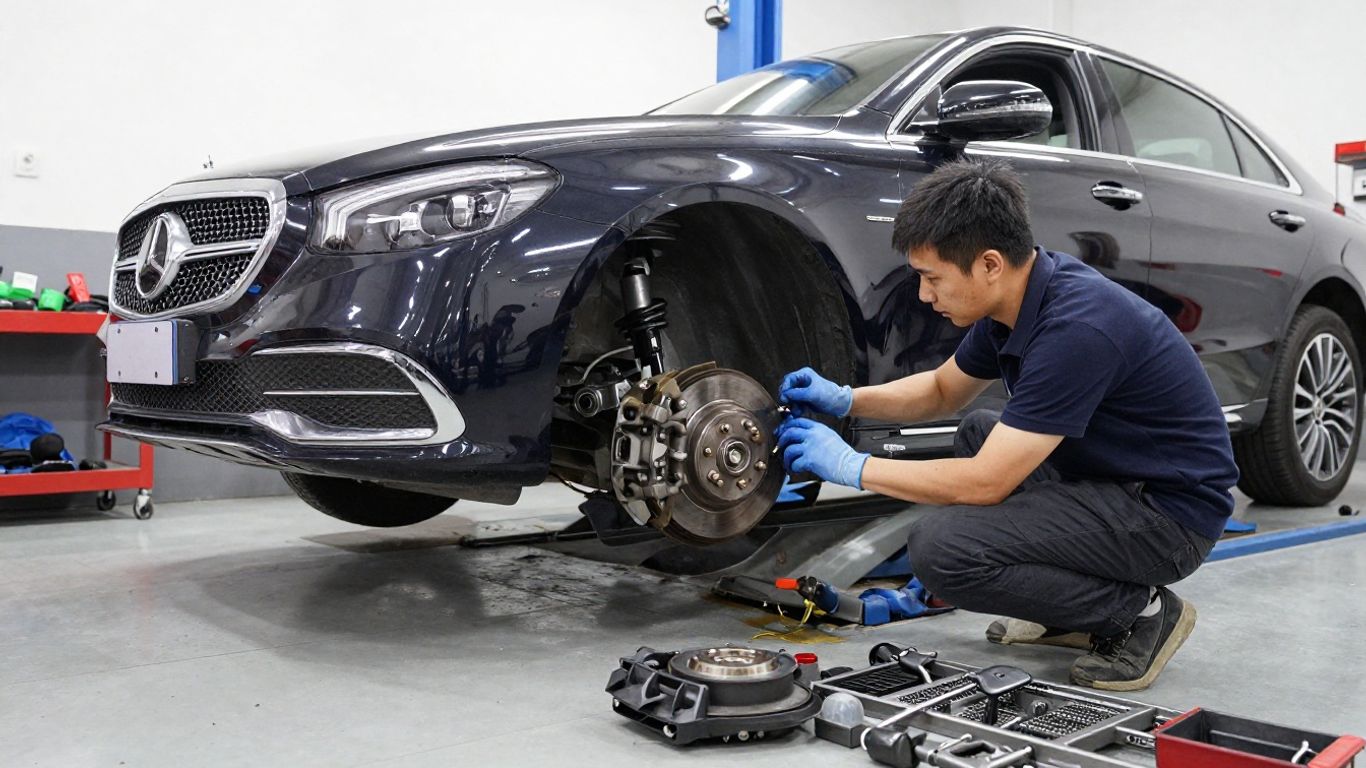
Balance or replace the affected tires
A wheel-and-tire assembly that is simply out of balance may be corrected with a proper balance and replacement weights. If the tire has structural damage, severe uneven wear, or a bulge, replacement is the safer path. The wheel should also be checked before mounting a new tire, since a bent rim can damage the replacement or recreate the same symptom.
Repair alignment and suspension issues
An alignment adjustment can restore the specified wheel angles when the hardware is sound. If a pothole has bent a component or a bushing has deteriorated, that part must be repaired first. Once the underlying issue is corrected, an alignment and tire-wear check can help prevent the vibration from returning.
Replace worn tie rods, ball joints, or control arms
Loose steering and front-end components should be replaced with parts suitable for the vehicle and installed correctly. Fasteners may require specific procedures, and some repairs need a follow-up alignment. Do not accept a steering-wheel shake as normal simply because the vehicle remains driveable; looseness can worsen and change how the car responds in an emergency.
Service warped rotors and sticking brake calipers
A brake inspection should establish whether the rotor, pads, caliper, slides, or hub face is responsible. Replacing rotors without correcting a sticking caliper or contaminated mounting surface can lead to repeat vibration. After service, bedding and break-in should follow the repairer’s instructions, with attention to any continuing pull, smell, or pedal pulsation.
Model-specific and maintenance considerations
The same symptom can have different practical causes depending on wheel size, tire construction, suspension design, and vehicle use. A heavy SUV, a low-profile performance model, and a compact sedan may respond differently to the same road impact. Use the vehicle’s records and the exact tire and wheel specification when discussing the problem with a repair shop.
Differences between Mercedes sedans, SUVs, and performance models
Vehicle weight and suspension calibration affect how clearly a vibration is transmitted to the driver. Larger wheels and firmer performance setups can make small bends or tire irregularities easier to notice, while a heavier vehicle may place greater loads on suspension components. These are diagnostic considerations, not reasons to dismiss a new vibration as characteristic behavior.
How run-flat tires and low-profile wheels affect vibration
Run-flat and low-profile tires generally have stiffer sidewalls, so impacts can be felt more sharply through the cabin and steering wheel. They may also make wheel damage or uneven wear more apparent after a pothole strike. Tire pressure, load rating, size, and fitment should match the vehicle’s requirements; substituting an incorrect specification can create handling and ride problems.
When Mercedes electronic systems may be involved
Electronic warnings can accompany a vibration when a wheel-speed or stability-control system detects an abnormal condition, but a warning light does not identify the mechanical cause by itself. Read the stored fault information and inspect the related wheel, tire, and sensor wiring rather than clearing the warning and continuing to drive. Electronic diagnosis is most useful when combined with a physical inspection.
Using the vehicle’s service history to narrow the cause
Recent tire replacement, wheel repair, brake work, alignment, or suspension service can provide a valuable starting point. Note whether the vibration began immediately afterward or only after a later road impact. A complete history also helps separate recurring wear from a new fault and can keep the inspection from repeating work that was already performed.
For broader maintenance planning, readers may also review technical SEO services, currency risk planning, or sleep and stress guidance as unrelated general resources; none of those topics diagnoses a vehicle vibration. Homeowners comparing unrelated project budgets can find loft conversion costs, while businesses seeking market research may review a competitive intelligence report. These links are separate from the mechanical guidance above.
Repair costs, safety, and prevention
Costs vary with the vehicle, wheel size, parts selected, local labor rates, and whether several faults developed together. A sound estimate should identify the failed component and explain why the proposed repair addresses the vibration. Ask whether balancing, alignment, runout measurement, or a post-repair road test is included.
Typical costs for balancing, alignment, and component replacement
Balancing is usually among the least expensive services, while tires, wheels, brake assemblies, and steering components can raise the bill substantially. A single damaged tire is a different repair from four unevenly worn tires or a bent wheel paired with alignment damage. Before approving work, request an itemized estimate and ask which measurements support each recommendation.
A simple cost framework can help make an estimate easier to understand:
| Repair area | What the service usually addresses | Why the cost varies |
|---|---|---|
| Wheel balance | Uneven rotating weight | Wheel size, tire condition, and repeated adjustments |
| Alignment | Incorrect wheel angles | Vehicle setup, damaged hardware, and required adjustments |
| Tire or wheel replacement | Structural or impact damage | Tire specification, wheel material, and fitment |
| Brake repair | Rotor, pad, or caliper faults | Parts condition, labor access, and related hardware |
The table is only a planning aid, not a price quote. If the vibration remains after the least expensive repair, return for measurements rather than authorizing another unrelated replacement.
When a temporary adjustment is not a reliable fix
Adding a balance weight, reducing speed, or changing tire pressure may alter the symptom without correcting the fault. Those steps are not reliable fixes for a tire bulge, cracked wheel, loose steering joint, or brake component that is binding. A temporary change should be treated as diagnostic information, not permission to postpone inspection indefinitely.
How to prevent recurring steering wheel vibration
Regular checks are most useful after pothole impacts, seasonal tire changes, or brake and suspension work. Keep pressures consistent, rotate tires when appropriate for the tire and vehicle setup, and investigate uneven tread wear early. Use the correct wheel hardware and have replacement tires fitted and balanced by a shop familiar with the vehicle’s specifications.
When to stop driving and arrange a tow
Arrange a tow if the steering becomes loose, the vehicle pulls hard, a tire is damaged, a wheel is cracked, or the vibration is severe and worsening. Stop driving as well if there is smoke, a burning odor, grinding, or a brake that appears to drag. A short trip to a repair shop is not worth risking loss of control or additional damage.
For a second general discussion of this symptom, this shaking steering wheel article covers tires, alignment, brakes, and suspension as possible areas to inspect. Use such background reading to prepare questions, then rely on direct measurements and a qualified inspection for the actual repair decision.
Conclusion
A Mercedes steering wheel vibration fix begins with careful observation and ends with a repair that addresses the actual source, whether that is a tire, wheel, brake, alignment setting, or worn front-end component. Prompt inspection is the safest way to turn an unsettling symptom into a specific, manageable repair.
Frequently Asked Questions
Is steering wheel vibration always caused by tire imbalance?
No. Tire imbalance is common, but damaged wheels, uneven tire wear, brake problems, alignment faults, wheel bearings, and worn suspension or steering parts can produce similar symptoms.
Why does the steering wheel shake only at highway speeds?
Higher wheel speed can amplify a small imbalance, wheel runout, or tire problem. The exact speed range is useful diagnostic information, but it does not identify the cause by itself.
Why does my steering wheel vibrate when I brake?
Brake-related vibration can involve rotor thickness variation, uneven deposits, a sticking caliper, or looseness in the front suspension. A complete brake and front-end inspection is preferable to replacing rotors by assumption.
Can a wheel alignment stop the vibration?
Alignment can correct incorrect wheel angles and may help when uneven tire wear is involved. It will not repair a bent wheel, damaged tire, or loose suspension component, so those faults must be checked first.
How long can I drive with a vibrating steering wheel?
There is no safe universal time limit. A mild symptom still deserves prompt inspection, while a worsening shake, loose steering, damaged tire, grinding, pulling, or burning smell means you should stop driving and arrange a tow.
Can low tire pressure cause steering wheel vibration?
Incorrect pressure can affect handling and contribute to uneven wear, but it is not the only possible cause. Check pressures when the tires are cold and inspect the tires and wheels for damage.
What information should I give the repair shop?
Describe the speed at which the vibration begins, whether it occurs during braking or acceleration, where it is felt, and whether it followed a pothole, tire change, or repair. Mention warning lights, noises, pulling, and any recent service as well.