
Key Takeaways
Starting a project to improve your vehicle requires balancing reliability with raw power. This guide covers essential modifications for enthusiast drivers.
- Define clear objectives before purchasing hardware.
- Prioritize cooling to maintain consistent power.
- Balance aggressive performance with daily comfort.
- Choose materials that match your specific endurance needs.
- Always account for maintenance intervals after tuning.
Understanding the foundation of Mercedes performance
Every build begins with understanding the inherent limits and potential of your specific model. Before turning a single wrench, consider how each modification impacts the overall balance of the vehicle. Modifying a luxury car requires a delicate touch to avoid compromising the quality that makes the driving experience so rewarding in the first place.
Defining your performance goals
Setting clear targets helps in selecting the right components for your vehicle. Whether you want a more responsive throttle or increased peak output, establishing your priorities early reduces unnecessary spending on redundant parts. Many owners find that a focused Mercedes performance parts upgrade strategy yields better results than simply buying the most expensive items on the market.
Impact of factory warranty on upgrades
Modifying the engine management or powertrain often changes the terms under which a manufacturer covers repairs. It is common for owners to wait until the primary coverage expires to avoid disputes, though some opt for minor aesthetic or suspension changes that remain within standard parameters. Evaluating the financial risk associated with loss of coverage is a necessary step for any responsible enthusiast.
Daily driver versus track-ready modifications
Building a car for the street and the circuit requires two different philosophies. A machine prepared for a daily commute needs to handle potholes and maintain cabin noise levels, while a track-purposed sedan demands firm damping and high-temperature brake endurance. Use the following guide to compare the focus of each approach.
| Feature | Daily Driver | Track Ready |
|---|---|---|
| Suspension Stiffness | Compromised Comfort | Maximum Traction |
| Cooling Capacity | Stock Efficiency | Heavy-Duty Upgrades |
| Exhaust Noise | Resonant Damping | Free-Flowing Straight |
Selecting the right path ensures the car continues to serve your specific lifestyle needs without turning simple errands into a chore.
Engine software and ECU tuning
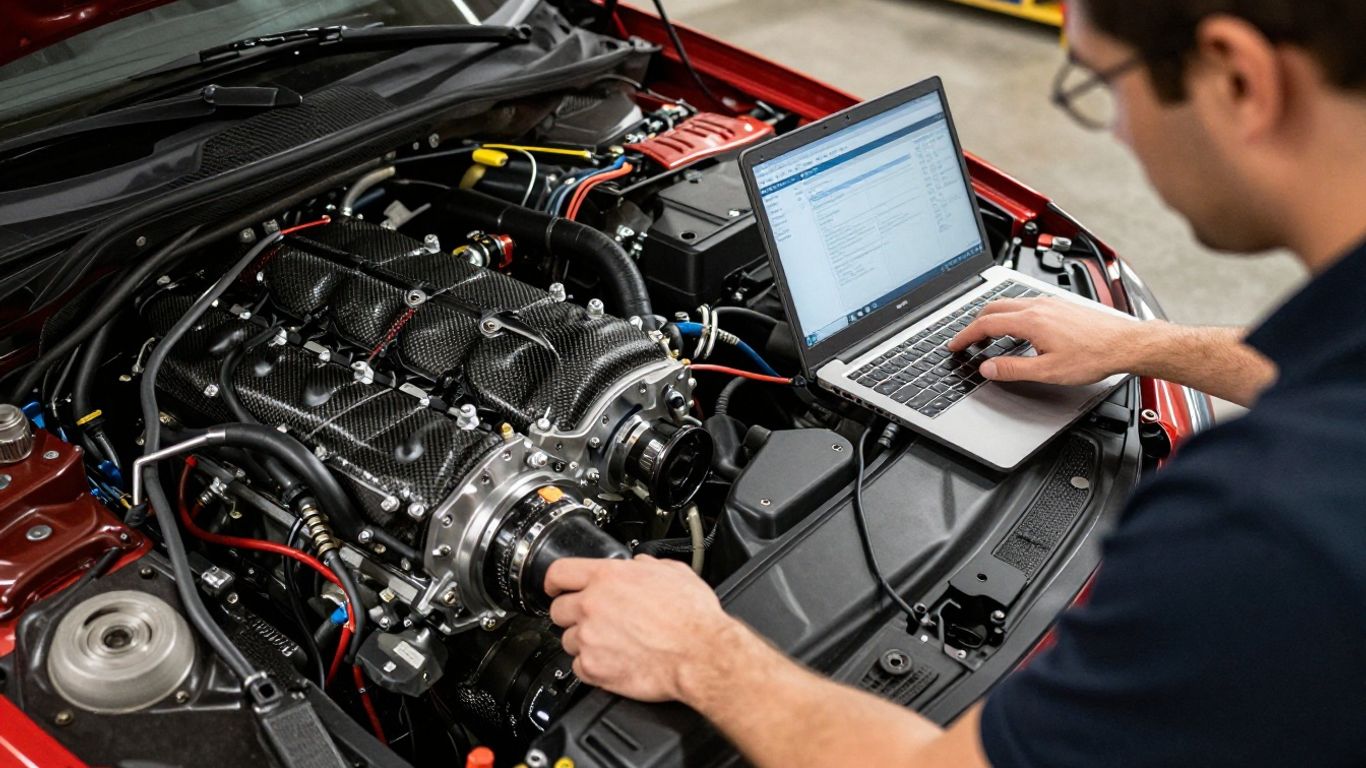
Optimizing the engine management system is often the fastest way to extract hidden power from a modern engine. By refining how much fuel and air enter the combustion chamber, you can achieve noticeable gains in both horsepower and torque. This process is complex, requiring a deep understanding of the stock firmware to ensure the engine remains durable under increased load.
Benefits of remapped ignition timing
Adjusting the spark timing allows your engine to take full advantage of higher octane fuel densities. When the timing is tuned precisely, you achieve smoother power delivery and significantly faster acceleration out of corners. If you are looking for premium performance parts to support these gains, consider how airflow must also be calibrated to match the new timing logic.
Managing boost pressure on turbocharged models
Maximizing the potential of forced induction requires careful control of how much air is being compressed. Increasing boost levels is an engineering challenge that necessitates a robust fuel delivery system to match. Products from Weistec Engineering can help safely manipulate these parameters if your goal involves hitting higher performance targets reliably.
Risks associated with unauthorized firmware changes
Improperly applied software carries the risk of causing catastrophic engine damage, particularly if safety thresholds are bypassed. Flashing hardware without consulting experienced professionals often results in engine codes or long-term component wear that negates any momentary power gains. Always prioritize safe, proven paths when modifying the brain of your car.
Exhaust system enhancements
Exhaust upgrades are essential for improving the acoustic character and volumetric efficiency of a high-performance engine. By reducing restrictive bends and optimizing flow, you help the engine breathe as intended. This process is not just about volume, but about clarity of note and weight reduction.
Differences between cat-back and turbo-back systems
Cat-back systems focus on the rear section of the exhaust, preserving the factory emissions equipment while enhancing the pitch. Turbo-back systems, however, replace the critical downpipes immediately after the turbochargers to unlock substantial power. Installing a system from UroTuning can provide that signature growl by utilizing larger diameter tubing and optimized muffler designs.
Balancing noise regulations with performance gains
Striking a balance between a deep, aggressive roar and local noise compliance is a challenge for many owners. High-performance mufflers allow for deep tones at idle while keeping highway cruising noise within a manageable range. Focus on chambered designs if you want to perform on the track without drawing unnecessary attention during routine city driving.
Material selection: Stainless steel versus titanium
Choosing the right exhaust material involves weighing thermal properties against structural mass. Stainless steel is renowned for its excellent corrosion resistance and affordability in daily use. Titanium, favored for competitive vehicles, significantly reduces unsprung weight to improve chassis behavior even if it comes at a higher cost.
Forced induction and cooling upgrades
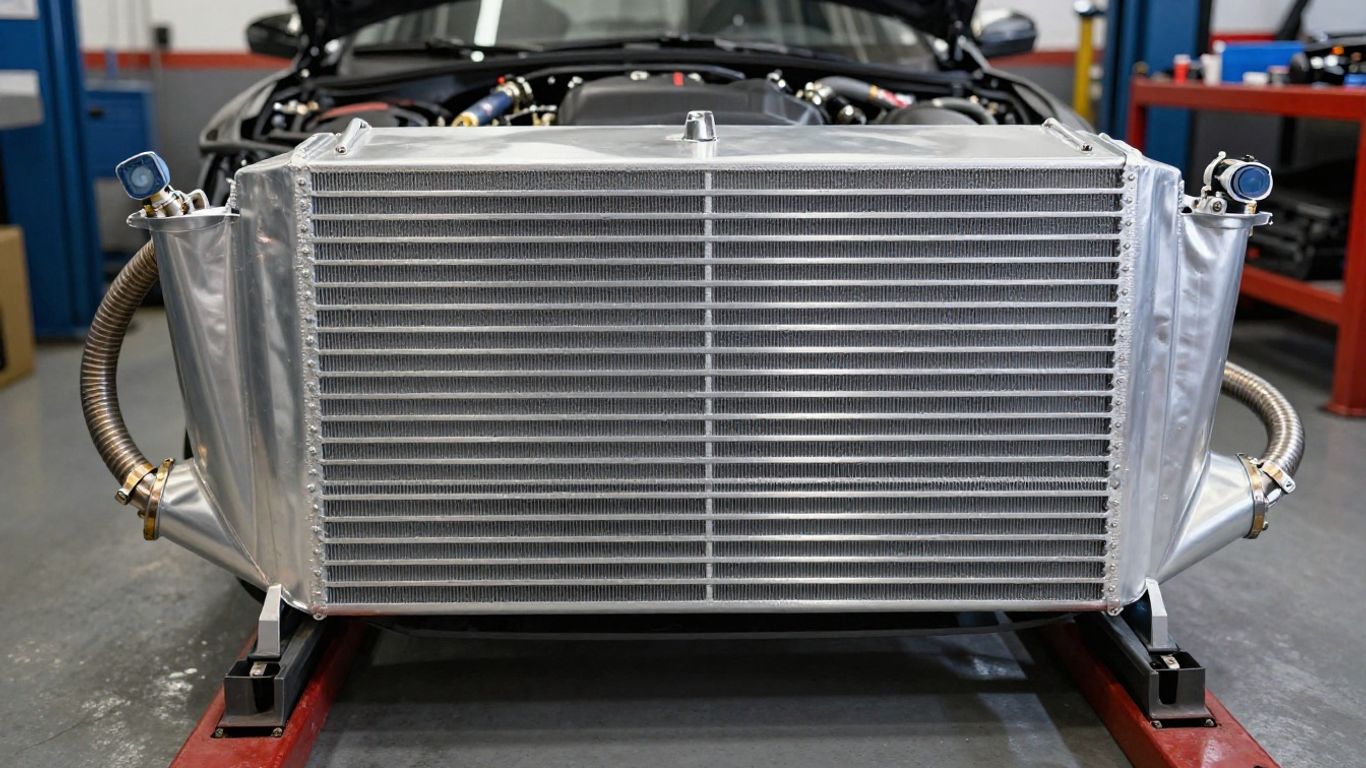
Keeping intake air temperatures low is critical for maintaining consistency during spirited driving sessions. As engines are pushed harder, heat soak can quickly degrade power output unless your cooling systems are specifically upgraded. Investing in high-capacity radiators or heat exchangers is a smart way to ensure your engine performs the same on the last lap as it does on the first.
Upgrading intercoolers for consistent power output
Larger core designs provide better surface area for heat exchange, which prevents the timing retards that typically occur during extended heat exposure. This modification ensures that your turbochargers are always receiving cool, dense air. Maintaining lower temperatures helps protect internal components and sustains peak torque across a broader RPM band.
High-flow filtration systems and cold air intakes
Replacing stock intake housing with high-flow filters improves the suction capacity of the engine. A successful air intake migration usually involves the following components to ensure longevity:
- Multi-layer synthetic filter media for better trapping efficiency.
- Carbon fiber piping to reduce heat soak from the engine block.
- Silicone couplers that resist thermal expansion under high pressure.
- Sealed air boxes to prevent ingestion of hot engine bay air.
These additions are essential for stabilizing the air mass delivery throughout the intake tract.
Assessing the need for larger turbochargers
Moving to larger turbine housings is a serious undertaking that changes the entire power delivery curve of your vehicle. While this creates massive top-end potential, it often requires extensive supporting hardware to prevent turbo lag and engine stress. Evaluate your driving style to see if the current forced induction setup is already at its limit before upgrading.
Suspension and chassis reinforcements
Transforming the way a car feels in a transition requires firming up the supporting structure. Suspension upgrades do more than just lower the profile, as they change the geometry that dictates how your tires contact the road. Proper alignment combined with stiffened bushings helps eliminate the vagueness often found in stock street setups.
Handling benefits of performance springs and coilovers
Adjustable coilover systems allow you to fine-tune your ride height and damping rates for any environment. By controlling how the chassis leans through curves, you gain the confidence to carry more speed into apexes. This setup is perfect for drivers who want to bridge the gap between street comfort and surgical precision.
Reducing chassis flex with strut tower braces
Strut braces unify the two front shock towers, reducing the amount of movement allowed in the front end during heavy cornering. This simple reinforcement leads to a more predictable steering feel and helps the suspension operate as a single, coordinated system. The overall improvement in feedback becomes apparent as soon as you maneuver through a technical set of turns.
Selecting the right compound for track usage
Your choice of tire is the only point of connection between your performance build and the tarmac. For track usage, selecting a compound that reaches operating temperature quickly is vital for grip. Always pair high-grip tires with suspension settings that prevent uneven wear, ensuring the car remains balanced as you push the limits of performance.
Braking system and wheel upgrades
Improving your ability to stop is just as important as being able to accelerate rapidly. High-speed driving causes significant thermal strain on your braking components, often leading to fade if the system is not managed. Prioritizing upgraded pads and fluid formulations will significantly enhance your confidence deep into braking zones.
Improving pedal feel with braided steel lines
Replacing standard rubber lines with braided stainless steel prevents the hoses from bulging under extreme pressure. This simple, affordable upgrade provides a much firmer pedal that communicates braking force directly to the calipers. A solid pedal feel is the hallmark of a confident driver who understands the nuance of trail braking.
High-performance cooling ducts for heavy braking zones
Directing ambient air to your rotors is the most efficient way to combat heat-induced fade. By installing custom cooling ducts, you ensure that even under continuous heavy braking, the discs remain within their optimal temperature range. This reduces the risk of warping while drastically extending the operational lifespan of your performance pads.
Selecting lightweight alloys to decrease unsprung weight
Lighter wheels reduce the rotational inertia of the car, allowing the suspension to react faster to surface irregularities. This change makes the steering feel noticeably sharper and improves the overall efficiency of your acceleration and braking cycles. Choosing high-strength alloys ensures you do not compromise durability for these gains.
Conclusion
Building a performance vehicle is a journey of refinement that requires patience and a deep appreciation for automotive engineering. By carefully selecting each upgrade and ensuring your hardware is installed by professionals, you can transform your vehicle into a machine that reflects your own driving ambitions. Always remember that the best build is one that remains balanced, reliable, and fundamentally fun to operate on every road you choose to explore.
Frequently Asked Questions
How can I make my engine more responsive without risking reliability?
Prioritizing intake efficiency and refined ECU calibration offers the most balance by increasing throttle response while maintaining standard safety thresholds.
What is the primary advantage of upgrading to a cat-back exhaust system?
This upgrade centers on improving the exhaust note and reducing weight without the complexity and cost of modifying sensitive emissions equipment.
Do lightweight wheels actually improve performance during daily driving?
Yes, reducing unsprung mass allows the suspension to track the road more accurately, leading to a smoother, more composed feel regardless of the speed.
When is the right time to consider a complete turbocharger replacement?
Upgrade to larger forced induction only when your existing system can no longer meet your output goals after being properly tuned and cooled.
Why is suspension reinforcement considered essential for track performance?
Reinforcing areas like the strut towers reduces chassis flex, which keeps your suspension geometry consistent during high-speed cornering and braking.
Can I mix and match performance parts from different manufacturers?
It is possible, but always verify that components are designed to work together to avoid software conflicts or mechanical incompatibility when tuning.
How often should I perform maintenance compared to a stock vehicle?
Modified engines typically require more frequent oil changes and spark plug inspections to account for the increased stress placed on the internal components.