

Key Takeaways
An illuminated ABS warning should be diagnosed before it is reset. The light may point to a sensor, wiring, voltage, fluid, or control-module problem, and a reset alone cannot repair any of them.
- Check braking feel, brake fluid, tires, and visible leaks before driving farther.
- Treat ABS, BAS, ESP, and traction-control warnings as related safety signals.
- Read ABS-specific fault codes instead of relying only on a basic engine-code scan.
- Repair the underlying fault before erasing stored codes.
- Arrange professional diagnosis or a tow when braking performance is abnormal.
What the Mercedes ABS light means
The ABS light indicates that the anti-lock braking system has detected a fault or has been temporarily disabled. Conventional braking may still work, but the car may not provide anti-lock intervention during a hard stop. A Mercedes ABS light reset is therefore the final step in a repair process, not the first response to an illuminated dashboard.
How the ABS warning system works
The anti-lock system monitors wheel movement and brake-system operation while the vehicle is in motion. If its control unit sees data that does not make sense, it stores a fault and switches on a warning light. Depending on the fault, related stability or traction functions may also be limited, even though the brake pedal still feels normal.
The warning light can sometimes disappear after a temporary electrical disturbance, but that does not prove the system is healthy. A stored code and a careful inspection provide much more useful information than the light alone.
ABS, BAS, ESP, and traction control light differences
These warnings refer to different functions, although they can share sensors, wiring, and control logic. ABS helps prevent wheel lock under braking; BAS relates to brake assist; ESP concerns electronic stability control; and traction control helps manage wheel spin. The exact symbols and wording vary by model year and instrument cluster.
When several lights appear together, avoid assuming that each one needs a separate repair. A single wheel-speed signal or voltage problem can affect multiple systems. This warning-light guide offers another general overview of common causes and safety considerations.
Why the light may appear with other dashboard warnings
A weak battery, charging fault, steering-angle calibration issue, or failed wheel-speed signal can make several modules report trouble at once. The vehicle may also illuminate a general brake warning if fluid is low or another braking fault is present. Reading the actual module codes is the only dependable way to separate a shared cause from several unrelated faults.
A warning that appears immediately after battery work deserves particular attention to voltage and calibration. Do not erase every code before recording when the warnings appeared and what work preceded them.
When driving is unsafe
Driving may be unsafe if the brake pedal is soft, the vehicle pulls while stopping, the red brake warning remains on, or fluid is visibly leaking. The same is true when the car makes unusual hydraulic noises or requires much more distance to stop. In those situations, a reset attempt should wait until the braking system has been assessed.
If the pedal is firm and braking remains predictable, a short, cautious trip for diagnosis may be possible, but the disabled safety functions still matter. Keep speeds low, increase following distance, and avoid treating a dark warning light after a reset as proof of a successful repair.
Safety checks before attempting a reset
Before connecting a scan tool, establish that the basic brakes are operating normally. Electronic diagnosis cannot make a leaking hydraulic system or severely worn brake hardware safe. These checks take only a few minutes and can change the right decision from driving to arranging a tow.
Testing the brake pedal and stopping performance
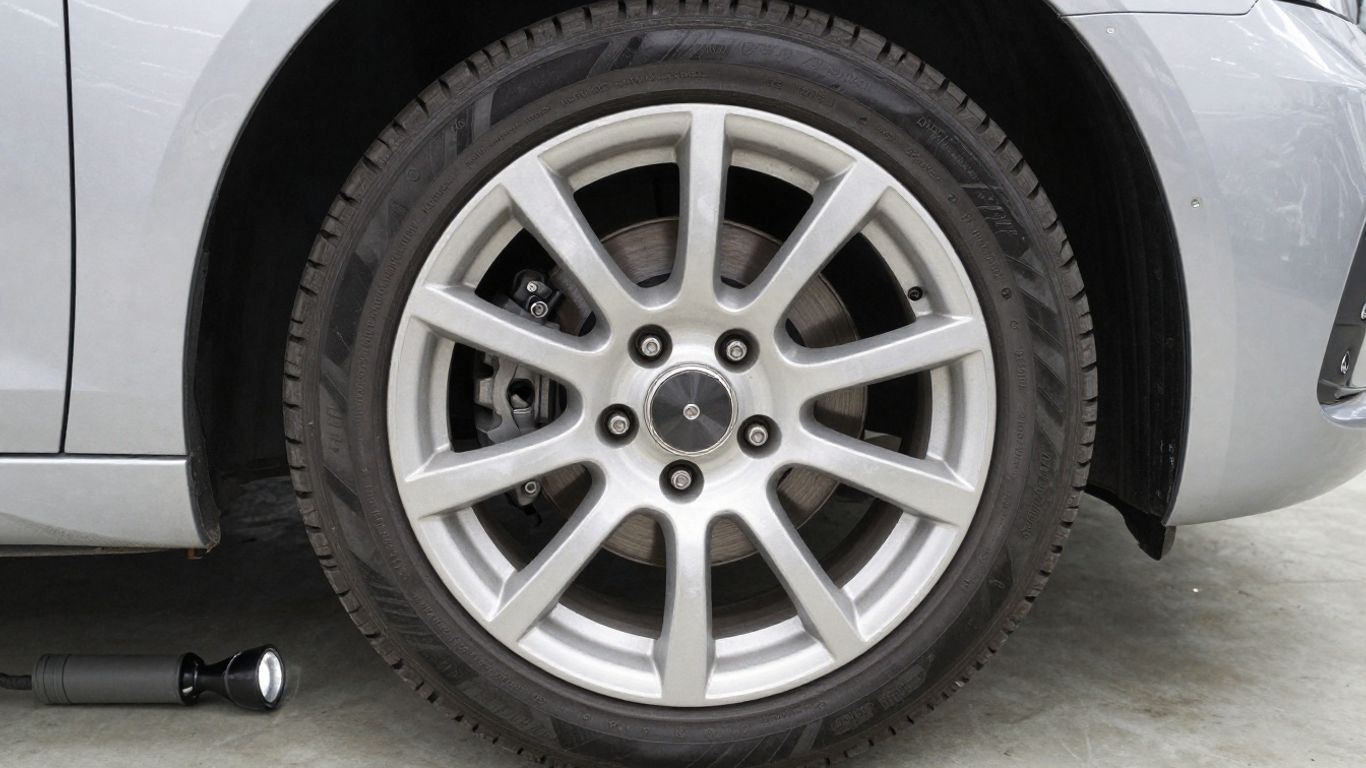
With the vehicle stationary, press the brake pedal firmly and pay attention to its travel and resistance. A pedal that sinks, feels spongy, or becomes lower with continued pressure needs prompt inspection. During a very slow test in a safe area, note pulling, grinding, vibration, or an unusually long stopping distance.
Do not repeatedly test emergency braking on a public road. The purpose is to identify an obvious change from normal operation, not to reproduce the ABS event that triggered the warning.
Checking brake fluid and visible leaks
Park on level ground and check the reservoir against its marked range, using the vehicle manual for the correct procedure and fluid specification. A low level may result from pad wear, a leak, or recent service, so simply adding fluid may hide the real issue. Look around the master cylinder, calipers, flexible hoses, and beneath the vehicle for wetness.
The brake-fluid level and the ABS warning should be considered together with the red brake warning, if present. This ABS causes checklist can help organize the common possibilities, but it does not replace a physical inspection.
Inspecting tires, wheels, and brake components
Compare tire sizes and pressures, and look for a damaged sidewall, uneven wear, or a wheel that has recently been removed. Inspect accessible sensor cables for obvious rubbing or breaks, without pulling on connectors. Also check for loose wheel hardware, damaged reluctor or tone-ring areas, and debris near the wheel hub.
These observations are clues rather than a complete diagnosis. A sensor can fail internally while appearing clean, and a wiring break may occur inside insulation that looks intact.
Knowing when to stop driving and arrange a tow
A tow is the sensible choice when braking performance is abnormal, fluid is escaping, a wheel is damaged, or multiple warnings are accompanied by unusual vehicle behavior. It is also appropriate when the driver cannot safely reach a repair facility without heavy traffic, hills, or poor weather. Safety takes priority over clearing a dashboard symbol.
If the car is otherwise braking normally, drive only as far as necessary for diagnosis and avoid hard stops. Do not use a battery disconnection as a substitute for confirming that the system works.
Common causes of an ABS warning on a Mercedes
The ABS warning is a symptom, not a parts diagnosis. Several faults can produce the same light, and model year, wheel design, weather exposure, and recent repairs all affect the likely cause. A sensible inspection starts with accessible items and then moves toward module-level testing.
Failed or dirty wheel speed sensors
Wheel-speed sensors sit close to road dirt, moisture, and impacts, making them common sources of ABS faults. Contamination, corrosion, internal failure, or an incorrect air gap can make the signal drop out or become implausible. A sensor code identifies the circuit or wheel area to investigate, but it does not always prove the sensor itself is defective.
The connector and hub should be checked before ordering a replacement. Live data can reveal whether one wheel reports a speed that differs from the others, especially during a slow, straight drive.
Damaged sensor wiring and tone rings
A sensor may be healthy while its cable is broken, chafed, stretched, or corroded at a connector. The tone ring or magnetic encoder that the sensor reads can also be cracked, damaged, rusted, or obstructed. Movement at the suspension can make a wiring fault intermittent, which explains why a warning sometimes disappears and returns later.
Road salt and repeated wheel or brake work can accelerate connector and cable problems. Inspect the routing from the hub toward the body, looking for contact with rotating or moving parts.
Low battery voltage and charging-system problems
ABS and stability modules are sensitive to supply voltage during starting and operation. A weak battery, loose terminal, poor ground, or alternator problem can create communication or plausibility codes that look like a deeper electronic failure. Test the battery and charging system rather than assuming the warning began with a wheel sensor.
Record the voltage condition when the fault occurred if the scan tool provides that information. A problem that appears after a difficult start or battery replacement deserves a closer look at power and ground connections.
Faulty ABS module, hydraulic unit, or steering-angle sensor
Less common but more expensive possibilities include an internal control-module fault, a hydraulic-unit problem, or a steering-angle sensor that needs calibration or replacement. These faults should be supported by appropriate codes and tests before parts are installed. An ABS light by itself is not enough evidence to condemn the module.
The order of diagnosis matters because replacing a module will not correct a damaged sensor wire or low system voltage. If the fault points to steering angle, confirm alignment and calibration requirements for the specific vehicle.
How to diagnose the ABS fault correctly
Good diagnosis preserves information before anything is cleared. Write down the warning lights, recent repairs, battery symptoms, driving conditions, and whether the problem is constant or intermittent. Then use a scan tool that can communicate with the braking and stability modules, not just the engine computer.
Reading Mercedes-specific ABS fault codes
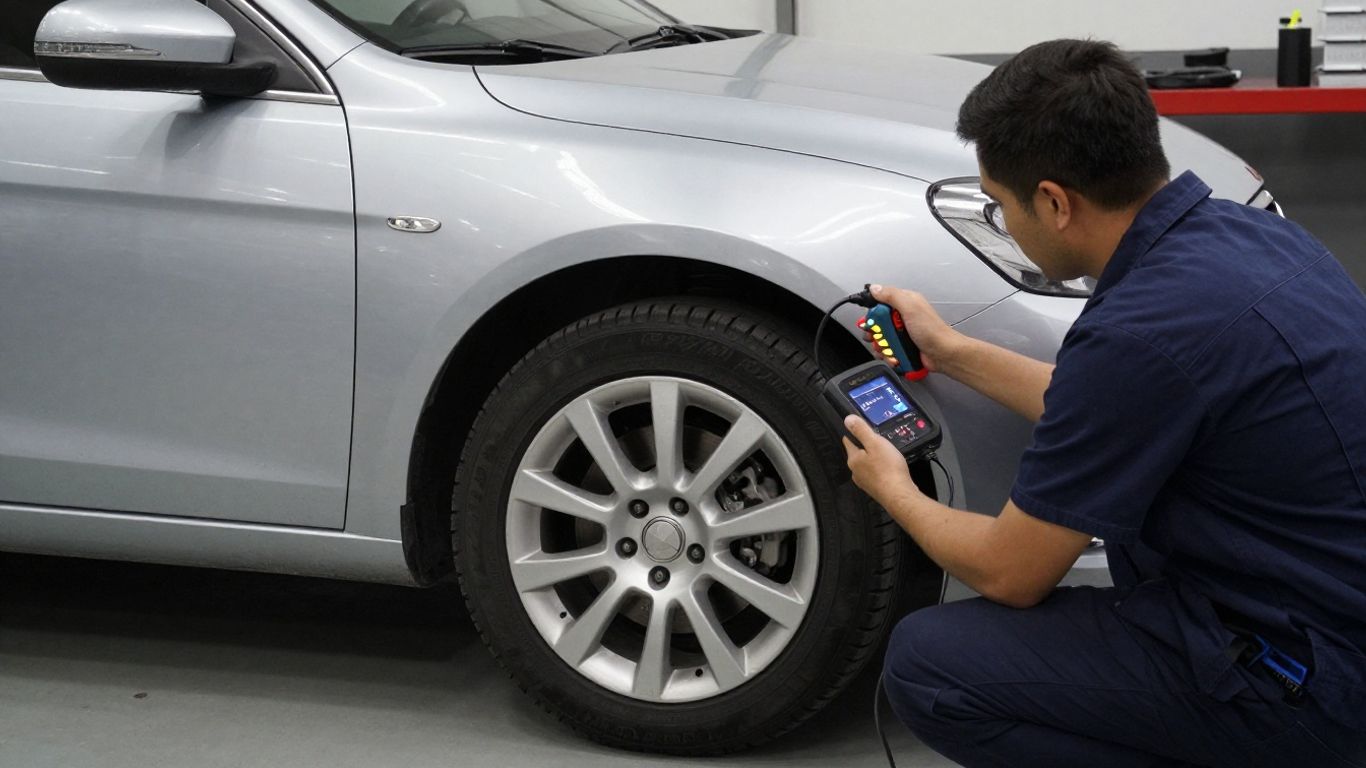
Connect to the vehicle and read the ABS, ESP, or related braking-control module. Note current, stored, and pending faults, along with freeze-frame or event details when available. Code wording can direct attention to a wheel, circuit, voltage condition, communication line, or calibration issue, but testing is still needed.
Do not treat a generic description from a phone app as the complete repair instruction. The diagnostic reset steps explain why reading the fault before attempting to turn off the warning is a useful first move.
Choosing between an OBD-II scanner and a Mercedes-capable scan tool
A basic OBD-II reader is primarily designed for engine and emissions-related information. It may not access the ABS or stability module at all. A Mercedes-capable tool that supports the vehicle’s braking modules is more suitable when the goal is to read, interpret, and clear an ABS fault.
Tool menus vary, so follow the device instructions and select the vehicle accurately. If the scanner cannot identify the ABS module, that limitation is more useful to recognize than to work around with repeated battery resets.
Checking live wheel-speed data
Live data allows the technician to compare wheel-speed readings while turning the wheels or driving slowly in a controlled area. One wheel that drops to zero, jumps erratically, or differs from the others can narrow the search. The result should be compared with a physical check of the sensor, encoder, wiring, and connector.
A scan screen is not a substitute for safe test conditions. Secure the vehicle properly when checking stationary wheel movement, and use a qualified assistant or professional service for road testing.
Clearing codes only after recording the diagnostic information
Save or write down every relevant code before erasing anything. Once codes are cleared, the diagnostic trail may be lost until the fault happens again, making an intermittent problem harder to find. Record the fault first is a simple rule that prevents unnecessary guesswork.
After repairs, clear the codes and check whether they return during the prescribed self-test. If the light comes back immediately, the fault is probably still active or the repair has not addressed the actual cause.
How to perform a Mercedes ABS light reset
A reset should follow diagnosis and repair. The exact menu names vary by vehicle generation and scan tool, but the overall sequence is consistent: correct the fault, communicate with the control module, erase the stored code, and verify the result. If the system will not clear a current code, do not force the process.
Fixing the underlying problem first
Replace or repair the confirmed failed component, correct wiring, restore proper voltage, or complete a required calibration. Inspect your work and make sure connectors are fully seated and routed away from heat and moving parts. A light that disappears after a temporary reset can return as soon as the module repeats its checks.
The ABS reset procedure also reinforces the central point: diagnosis comes before clearing. A reset is useful only after the condition that set the warning has been addressed.
Connecting the scan tool to the diagnostic port
Switch off unnecessary electrical loads, locate the diagnostic port, and connect a compatible scan tool securely. Turn the ignition to the position required by the tool, without starting the engine unless the instructions specifically call for it. Identify the vehicle and allow the tool to complete its module scan.
If communication fails, check the tool connection, battery condition, fuses, and ignition position. Repeatedly cycling power will not solve a communication problem caused by a failed module or electrical supply.
Selecting the ABS, ESP, or braking control module
Choose the module that stores the ABS-related fault rather than entering only the engine-control menu. Depending on the vehicle, it may be labeled ABS, ESP, SBC, or another braking-control designation. Read the module information and confirm that the codes you recorded are visible before selecting an erase function.
Some vehicles require a separate steering-angle or stability-control calibration after repairs. Follow the scan tool’s prompts and vehicle-specific service instructions instead of guessing from a similar model.
Erasing stored fault codes and cycling the ignition
Use the tool’s clear or erase command only after the repair information has been saved. Wait for confirmation, switch the ignition off for the interval requested by the tool, and then turn it back on. The warning may remain until the module completes its checks, so do not judge the result while the process is still running.
If an active code refuses to clear, stop and return to diagnosis. Clearing a code repeatedly can remove useful context without changing the fault.
Confirming the warning light stays off during a road test
Start the vehicle and confirm that the expected warning lamps perform their normal self-check. Then make a cautious road test in a safe area, observing braking, steering, and the dashboard. Scan again afterward if the light returns, because a stored or current code can identify a fault that only appears when the wheels turn.
Do not deliberately trigger a hard ABS stop simply to test the repair. Normal driving data and a post-test scan are safer ways to confirm that the warning remains absent.
What to do if the ABS light comes back
A returning warning means the system has detected a condition again, whether immediately or after several miles. Treat that timing as diagnostic evidence. Note the road surface, vehicle speed, weather, steering position, and other warnings when the light appears.
Interpreting active and intermittent fault codes
An active code is present when the module is checked; an intermittent or stored code may describe a condition that is not happening at that moment. Intermittent faults often involve wiring, connectors, wheel movement, moisture, or voltage changes. The code history and the circumstances of recurrence should guide the next inspection.
A code that returns immediately after clearing generally deserves a different approach from one that appears only over bumps or during wet weather. Both still require verification before parts are replaced.
Rechecking sensors, connectors, and wiring
Return to the wheel or circuit named by the code and inspect it carefully. Check connector locking, corrosion, cable strain, insulation damage, sensor mounting, and the tone-ring or encoder surface. If appropriate, gently move the harness while monitoring the circuit, but avoid creating a new fault or damaging the connector.
A visual check should be paired with resistance, continuity, signal, or live-data testing as appropriate for the component. The traction-control warning guide discusses how related warnings can point back to a shared speed-sensor or cable issue.
Testing battery voltage and alternator output
Measure battery voltage with the vehicle at rest and observe charging voltage with the engine running, using the manufacturer’s testing procedure where available. Inspect terminals and grounds for looseness or corrosion. Voltage that falls sharply during starting or varies abnormally while running can produce misleading module faults.
Do not rely on the dashboard battery symbol alone. A charging system can be weak before that warning appears, and a recent battery replacement does not rule out a poor connection or alternator problem.
Deciding when professional Mercedes service is necessary
Professional service is appropriate when the fault involves the hydraulic unit, control module, network communication, steering-angle calibration, or a warning that returns after competent checks. It is also the safer choice when special bleeding, programming, or model-specific test procedures are required. Braking electronics are not a good place to guess.
Bring the recorded codes and a description of what has already been tested. That information can shorten diagnosis and reduce the chance of repeating work that did not address the cause.
Inspection, repair costs, and prevention
Costs and inspection rules vary by location, vehicle generation, and the confirmed failure. A warning light that is off today may still matter if a monitor has not completed or a fault remains stored. Think of inspection preparation as verification of a working system, not a contest to make the dashboard look clear.
Whether resetting the ABS light will pass an inspection
Erasing the warning does not guarantee a pass. An inspection may check whether the lamp illuminates during the self-test, whether it remains on, whether diagnostic readiness or fault information is present, and whether the braking system meets local requirements. Rules differ, so confirm the requirements with the relevant inspection authority or facility.
A reset immediately before inspection can leave monitors incomplete or allow the light to return during testing. Repair first, then drive the vehicle through the required checks and verify the result.
Typical costs for sensors, wiring, and ABS module repairs
There is no single reliable price for an ABS repair. A sensor or connector is usually a smaller job than harness repair, hydraulic-unit work, or control-module replacement, but labor access and programming can change the total substantially. Ask for a diagnosis, parts estimate, labor estimate, and any calibration or bleeding charges separately.
| Repair area | What changes the cost | Why diagnosis matters |
|---|---|---|
| Wheel-speed sensor | Access, corrosion, and hub design | A wiring fault can mimic sensor failure |
| Wiring or connector | Location, harness damage, and testing time | The visible sensor may still be good |
| Tone ring or encoder | Hub construction and replacement parts | The signal source must be inspected |
| ABS module or hydraulic unit | Programming, bleeding, and specialist labor | A code alone does not prove module failure |
This breakdown helps compare estimates without assuming that the most expensive component is responsible. A written fault description is often more valuable than a low quote for a part that has not been tested.
Why disconnecting the battery is not a complete reset
Disconnecting the battery may remove temporary power from some systems, but it does not repair a failed sensor, damaged wire, low-fluid condition, or defective module. It can also erase useful diagnostic information and create additional calibration or window settings issues. If the warning returns, the original problem remains unresolved.
Use a compatible scan tool and proper testing when a reset is needed. Battery isolation is an electrical procedure, not proof that the ABS system has passed its checks.
Preventing future ABS warning-light problems
Routine maintenance cannot prevent every electronic failure, but it can reduce avoidable trouble. Keep tires matched and correctly inflated, protect sensor wiring during wheel service, and address battery or charging symptoms early. After brake or suspension work, confirm that cables and connectors are secured exactly as they were intended.
A few habits are particularly useful when working around the wheels:
- Avoid pulling or twisting wheel-speed sensor cables during service.
- Clean and secure connectors before moisture or road salt causes corrosion.
- Check battery terminals and charging performance when electrical symptoms appear.
- Scan returning warnings before replacing parts.
These steps do not replace diagnosis, but they make recurring faults easier to spot and less likely to be caused by routine service damage.
The video can supplement the written sequence, but always follow the vehicle-specific service instructions and stop if the braking system behaves abnormally.
Conclusion
A Mercedes ABS light reset is best understood as the last part of a diagnosis, not a shortcut around one. Check the brakes and fluid, read the correct module, repair the confirmed fault, clear the stored information, and verify the system on a cautious road test. When braking performance or electronic diagnosis is uncertain, professional help is the safer path.
Frequently Asked Questions
Can I drive with the ABS light on?
You may still have conventional braking, but anti-lock and related stability functions may be unavailable. Drive only when braking feels normal and the route is safe; otherwise arrange a tow.
Will the ABS light turn off by itself?
It may go out if a temporary condition no longer appears, but a stored or recurring fault can remain. A scan and inspection are needed to determine whether the system is actually fixed.
Does low brake fluid cause an ABS warning?
Low fluid can contribute to braking warnings, especially when another brake warning is illuminated. Check the level and look for leaks rather than simply topping it up without finding the cause.
Can a basic OBD-II reader reset ABS codes?
Many basic readers access engine and emissions information only. ABS diagnosis generally requires a tool that can communicate with the vehicle’s braking or stability-control module.
Is a wheel-speed sensor the only common cause?
No. Wiring, tone rings or encoders, low voltage, connectors, control modules, and steering-angle components can also set the warning.
Should I disconnect the battery to clear the light?
Battery disconnection is not a complete repair or reset. It can erase useful information while leaving the original fault in place, and the warning may return.
What should I do if the light returns after clearing it?
Record when it returns, rescan the relevant module, and recheck the named circuit, connectors, wiring, and system voltage. Seek professional diagnosis if the fault is active, complex, or related to hydraulic or calibration work.