

Key Takeaways
Power steering loss can come from a hydraulic leak, a failing pump, or an electrical fault, so the correct repair depends on identifying the system first.
- Heavy steering should be treated as a safety issue, especially during low-speed manoeuvres.
- Hydraulic systems need fluid, belt, hose, and pump checks; electric systems need voltage and fault-code checks.
- Driving with low fluid can damage the pump and steering components.
- Battery and charging faults can interrupt electric steering assistance.
- A proper repair includes clearing the cause, testing the system, and confirming normal steering operation.
What power steering loss means in a Mercedes
Power steering assistance reduces the effort needed to turn the front wheels, particularly while parking or moving slowly. When that assistance disappears, the vehicle may remain steerable, but the wheel can feel unexpectedly heavy. The right Mercedes power steering loss repair starts by identifying whether the vehicle uses hydraulic, electro-hydraulic, or fully electric assistance.
Hydraulic versus electric power steering systems
A hydraulic system uses a pump, fluid, hoses, and a steering rack to create assistance. The pump may be driven by the engine belt, so a slipping belt or low fluid level can affect steering effort. Electric power steering uses a motor, sensors, wiring, and control electronics instead, and it does not depend on a hydraulic fluid reservoir.
Electro-hydraulic systems combine an electric motor with hydraulic pressure. That arrangement can still suffer from fluid leaks while also being sensitive to battery voltage and electrical connections. Checking the system type before ordering parts prevents a hydraulic pump from being confused with an electric steering unit.
Warning signs that indicate a steering-assist failure
The clearest symptom is a sudden increase in steering effort. Other clues may include a steering-wheel warning lamp, a dashboard message, whining during turns, fluid beneath the vehicle, or assistance that cuts in and out. A warning that appears alongside other electrical messages deserves particular attention because a charging fault may be affecting several systems at once.
The phrase power steering warning signs often covers several different faults rather than one failed component. Note when the symptom occurs, whether the engine is running, and whether turning left or right changes the noise or effort. Those observations help separate a hydraulic restriction from an intermittent electrical fault.
Why steering can become heavy without being completely disabled
Manual steering remains possible in many failures because the mechanical connection between the steering wheel and the road wheels is still present. The assistance motor or hydraulic pressure is what has stopped working, not necessarily the steering linkage itself. Even so, the extra effort can be substantial when the vehicle is stationary or travelling slowly.
Some systems reduce assistance gradually, while others shut it off after detecting overheating, low voltage, or a control fault. A temporary return to normal steering does not prove the problem has gone away. Intermittent assistance should be investigated before the vehicle is used normally.
When the vehicle should not be driven
Do not continue driving if the steering is suddenly very heavy, the wheel does not return normally, the vehicle pulls sharply, or a fluid leak is large and active. A damaged belt, loose steering component, or failing rack can create risks beyond simple loss of assistance. Stop safely, switch on the hazard lights, and arrange recovery when control feels uncertain.
If steering remains manageable and the warning is intermittent, a short journey to a repair facility may sometimes be possible, but only after checking the owner information and local safety conditions. Avoid motorways, heavy traffic, and tight parking manoeuvres. The safest choice is recovery when the cause is unknown.
Common causes of Mercedes power steering failure
The same dashboard warning can arise from very different problems. Hydraulic faults usually leave physical evidence such as wet hoses, a low reservoir, or pump noise, while electric faults may leave little visible evidence at all. Careful inspection matters because replacing the most obvious part can miss the original cause.
Low fluid levels and hydraulic leaks
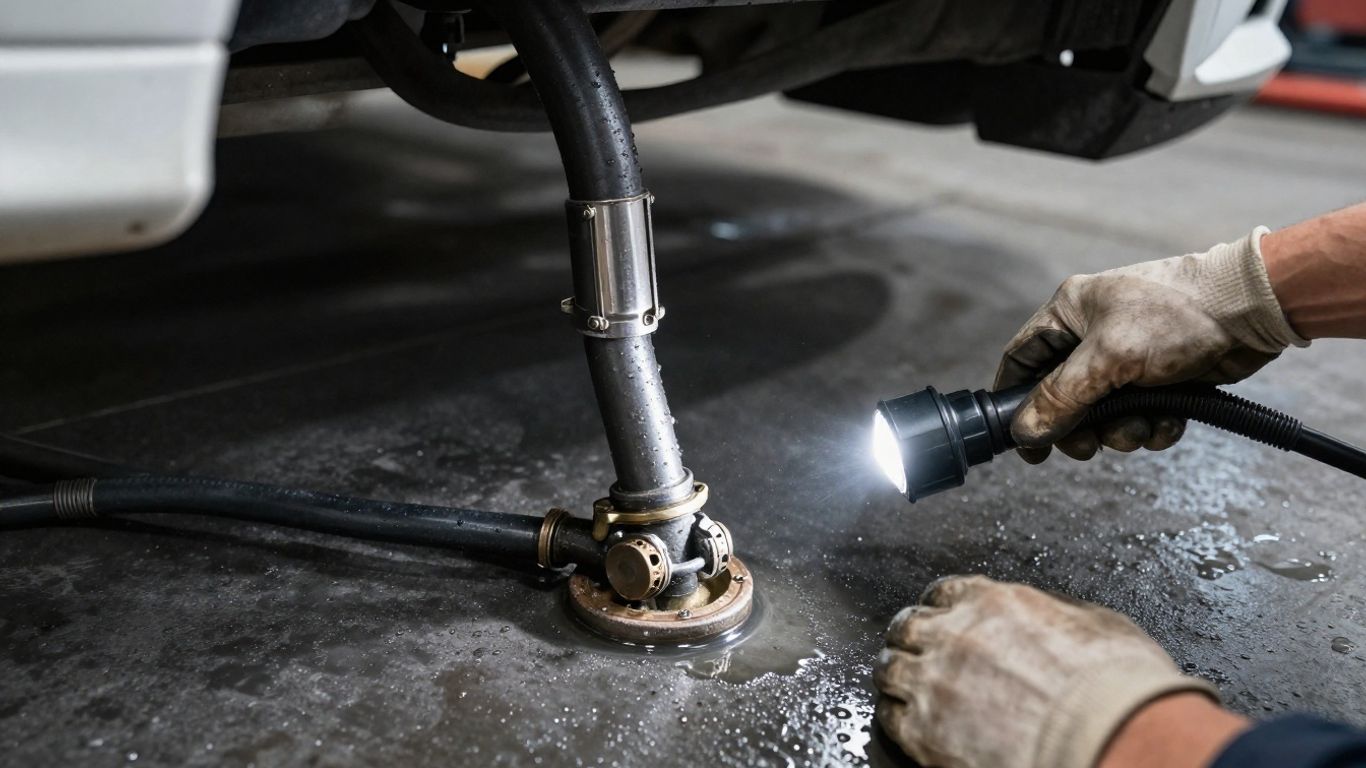
Low fluid is one of the first checks on a hydraulic or electro-hydraulic vehicle. Fluid may escape from a hose connection, pump seal, steering rack, reservoir, or cooler line. Air drawn into the system can make the steering feel uneven and may produce a whining or groaning sound when the wheel is turned.
Do not simply top up an empty reservoir and treat the repair as complete. The leak must be located, and the correct fluid specification must be used. A leak that reaches a belt, electrical connector, or other component can create additional damage.
Failed power steering pumps
A hydraulic pump can wear internally, lose pressure, or become noisy as its bearings and seals deteriorate. A belt-driven pump may also stop working if the belt is loose, damaged, or contaminated. If the reservoir is low, operating the pump for an extended period can accelerate wear.
Pump diagnosis should include fluid condition, belt condition, pressure testing where appropriate, and inspection for restrictions. A replacement pump will not solve a blocked line or a rack that is binding. The cause of the failure should be established before installation.
Damaged hoses, lines, and steering components
Hoses can crack with age, while metal lines may corrode or suffer impact damage. Connections can seep slowly before producing a noticeable puddle. Wear in the steering rack, tie rods, ball joints, or column can also create stiffness or looseness that feels similar to an assistance problem.
A line replacement requires clean mating surfaces and the correct seals. The practical power steering line replacement guide is useful background for understanding why hose routing, sealing washers, and bleeding matter, although lifting and repair work should be left to someone with the right equipment when safety is uncertain.
Electrical, battery, and charging-system problems
Electric steering assistance needs stable power. A weak battery, poor ground, corroded connector, blown fuse, damaged wiring, or alternator problem can cause the system to reduce or shut off assistance. Voltage may look acceptable at rest yet fall too far during starting or while steering loads increase.
An electrical fault can also be secondary to another problem, such as water entering a connector or a damaged harness near the steering rack. The battery and charging system should therefore be tested before an expensive steering unit is condemned. A simple supply fault may be repairable without replacing the main assembly.
Faulty sensors, modules, or electric steering motors
Electric steering relies on sensor signals and control electronics to determine how much assistance to provide. A failed position sensor, overheated motor, communication fault, or internal module problem can trigger a steering warning. These faults often require scan data and circuit testing rather than a visual inspection alone.
A stored code identifies the area of concern, not always the failed part. Confirm power, ground, communication, and connector condition before ordering a motor or rack. That distinction is central to avoiding unnecessary parts and repeat repairs.
How to diagnose the problem safely
Diagnosis should begin with safety and basic observations, then move toward measurements and system-specific testing. Avoid holding the steering wheel against full lock while investigating a hydraulic noise, since that can increase system pressure. Record warning messages and symptoms before disconnecting the battery, because clearing them may remove useful clues.
Checking the dashboard warnings and stored fault codes
Read the exact dashboard message and note any red steering symbol, battery warning, or temperature warning. A scan tool can reveal whether the fault is in the steering module, an engine control system, or a network shared by several modules. The P063500 diagnostic guide gives useful context for interpreting this electric steering code pattern without treating the code alone as a complete diagnosis.
Fault history is often valuable even when the warning has disappeared. Freeze-frame information, supply voltage, and communication faults can show whether the event occurred during starting, turning, or high electrical demand. Save the results before clearing codes.
Inspecting fluid level, condition, and visible leaks
With the vehicle parked safely and the system cool where applicable, check the reservoir level against its markings. Look for foam, a burnt smell, dark contamination, or fluid around the pump, hoses, rack, and line connections. Use a clean light and inspect beneath the vehicle rather than relying only on the reservoir.
A low level confirms fluid loss but does not identify its source. Do not use an unidentified fluid as a substitute, and never crawl beneath a vehicle supported only by a jack. If the leak is active, recovery is safer than repeated topping up.
Testing the battery and alternator voltage
A battery test should assess more than open-circuit voltage. Starting voltage drop, charging voltage, ground integrity, and performance under electrical load can expose a fault that a quick visual check misses. Connections should be clean and tight, with no signs of heat damage or corrosion.
Record the measurements with the engine off and running, following the vehicle’s service information for the correct test conditions. Unstable charging voltage can create several unrelated-looking warnings, so it should be corrected before deeper electric steering diagnosis.
Listening for pump noise and identifying steering symptoms
On a hydraulic system, a whine that rises with engine speed may point toward low fluid, air, a restriction, or pump wear. Compare the noise with the steering centred and during a gentle turn, without holding the wheel at full lock. Note whether assistance changes with engine speed or disappears only after the vehicle warms up.
On an electric system, the absence of pump noise does not rule out a steering problem. Pay attention to when the warning appears, whether assistance returns after restarting, and whether steering effort changes with battery load. A written symptom timeline can save diagnostic time.
Determining whether professional diagnostic equipment is needed
Professional testing is appropriate when the warning is active, steering assistance is absent, or a fault code points to a module, motor, or communication circuit. Some systems require manufacturer-level access, steering-angle calibration, or guided tests after a component is installed. Guessing at a replacement part can be more expensive than paying for a focused diagnosis.
If the vehicle has been in a collision, has damaged wiring, or shows more than one network fault, arrange a specialist inspection. Mechanical checks and electronic checks often need to be performed together. The goal is a verified cause, not merely a code that has been erased.
| Observation | Possible direction | Useful next check |
|---|---|---|
| Low reservoir or wet line | Hydraulic leak | Trace the highest wet point and inspect seals |
| Whine that follows engine speed | Pump, air, or restriction | Check fluid, belt, and hydraulic pressure |
| Steering warning with low voltage | Battery or charging fault | Test starting and charging performance |
| Heavy steering with no fluid system | Electric assist fault | Scan module and test power, ground, and communication |
| Fault returns after clearing | Unresolved underlying problem | Use live data and guided circuit tests |
This comparison narrows the investigation without replacing vehicle-specific service information. A symptom can fit more than one row, which is why measurements and a complete inspection remain necessary.
Mercedes power steering loss repair options
The repair should match the failed part and the type of steering system. A leaking line may be a relatively contained job, while an electric rack or steering motor can involve calibration and programming. Before work begins, confirm the part number, system type, fluid requirement, and any post-repair setup procedure.
Replacing a leaking hose or power steering line
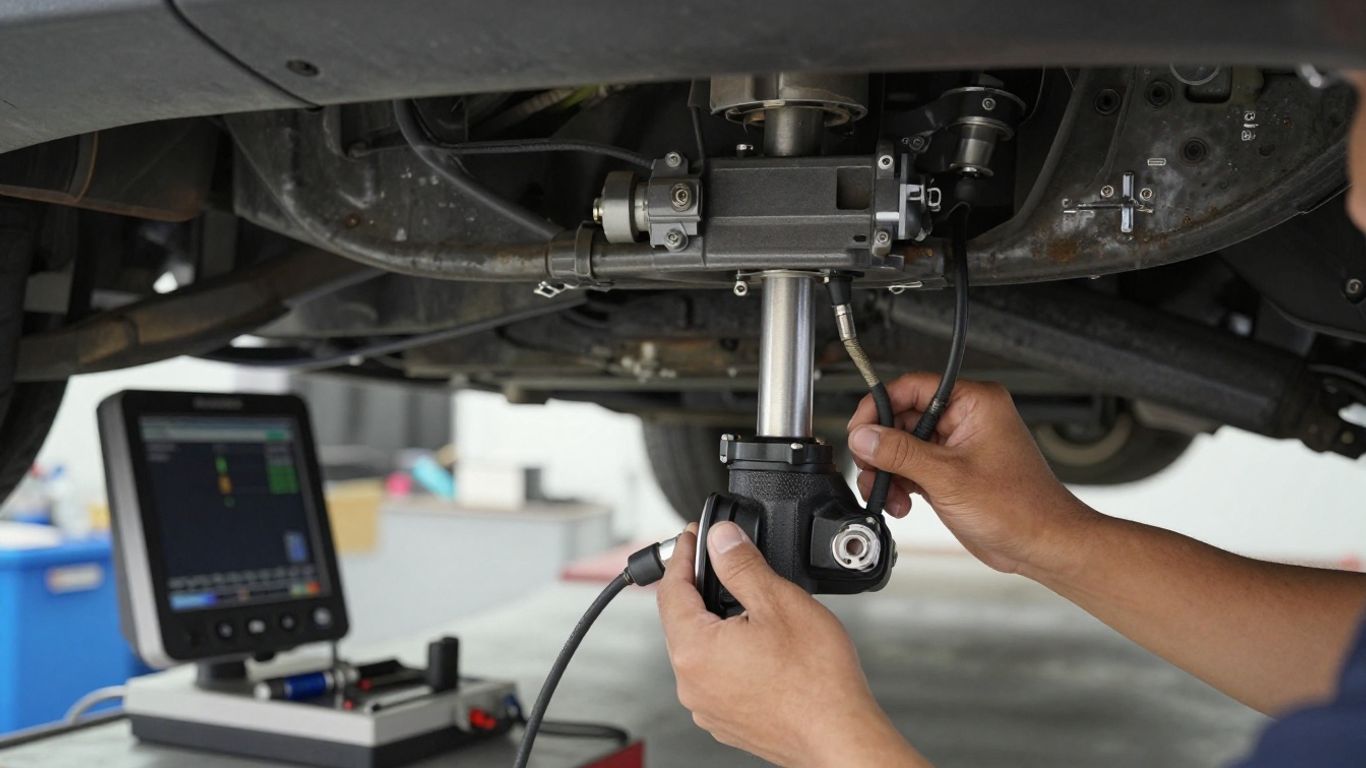
A leaking hose or line should be replaced with the correct routing and fittings, not simply tightened until the leak appears to stop. New seals or washers may be required, and the line must be kept clear of belts, exhaust heat, and moving suspension parts. After installation, the system should be filled and checked for leaks under operating conditions.
Cleanliness matters because dirt introduced into a hydraulic circuit can damage the pump or rack. The old fluid should be handled according to local disposal rules. A short road test followed by another inspection helps catch a slow seep.
Repairing or replacing the power steering pump
A pump repair may involve a seal or pulley issue, but internal wear often makes replacement more practical. The surrounding belt, reservoir screen, hoses, and fluid should be checked at the same time. Installing a new pump while leaving contaminated fluid or a restricted line in place can shorten its life.
After replacement, the hydraulic circuit needs correct filling and bleeding. Steering should be tested gradually, with attention to noise, fluid level, and assistance at low speed. Any remaining whine or foaming indicates that the system needs further attention.
Servicing the steering rack or electric steering unit
A worn hydraulic rack may leak or bind, while an electric steering unit may have a motor, sensor, module, or internal mechanical fault. Rack replacement can require wheel alignment, steering-angle calibration, and module setup. Electric units may also need programming or a guided initialization procedure.
Do not assume a complete rack is necessary until power, ground, communication, and mechanical movement have been tested. The correct repair may be a connector, sensor, or separate control component. Once installed, the unit must be checked for smooth assistance across the full steering range.
Resolving wiring, fuse, sensor, or control-module faults
Electrical repairs should begin with circuit diagrams and confirmed measurements. Check fuse supply, grounds, connector pin fit, corrosion, continuity under movement, and network communication. A new module will not cure a damaged ground or a wire that opens when the steering assembly moves.
Sensors may require calibration after replacement, and some control modules may need coding to the vehicle. The final test should confirm that the warning stays off and that steering effort is consistent. Keep the diagnostic report with the repair record.
Flushing contaminated fluid and bleeding the system
Fluid flushing is appropriate when the fluid is contaminated, aerated, or mixed with an incorrect specification, provided the system itself is sound. The old fluid should be removed using a method suitable for the vehicle, then replaced with the specified fluid. Bleeding removes trapped air and helps restore consistent assistance.
A sensible repair sequence is compact but deliberate:
- Identify the steering system and confirm the failed circuit or component.
- Repair the leak or electrical cause before refilling or recalibrating.
- Use the specified fluid, seals, and replacement parts.
- Bleed or initialize the system according to service instructions.
- Recheck warnings, steering effort, fluid level, and leaks after testing.
This sequence prevents a clean fluid flush or code reset from being mistaken for a complete repair. It also gives the technician clear checkpoints if the original symptom returns.
Repair costs and replacement decisions
The price of Mercedes power steering loss repair depends less on the warning message than on the failed system and access to the part. A hose, fuse, or ground repair may be straightforward, while a rack, pump, or electric steering assembly can require extensive labour and setup. A written estimate should separate diagnosis, parts, labour, fluid, alignment, programming, and any core charge.
Typical parts and labor cost factors
Parts pricing varies with model, production year, steering design, and whether the component is available separately. Labour rises when the rack is difficult to access, the system needs bleeding, or calibration follows the mechanical repair. Diagnostic time is a legitimate part of the job when intermittent electrical faults are involved.
Ask whether the estimate includes a post-repair scan and road test. Also clarify whether an alignment is required after steering or suspension work. These details prevent a low initial quote from becoming an unexpected final bill.
Comparing repair, remanufactured, and new components
A repairable original component may be preferable when the fault is limited to a seal, connector, or serviceable electrical part. A remanufactured assembly can cost less than a new one, but its warranty, testing process, and supplied accessories should be clear. A new component is often the most predictable option, though not always the most economical for an older vehicle.
Compare like with like: warranty length, calibration requirements, included seals, return conditions, and labour if the part fails. The cheapest component is not necessarily the lowest-cost repair if it creates a second installation.
How the Mercedes model and steering system affect pricing
Older hydraulic vehicles may need a pump, belt, hose, or rack, while newer electric systems can involve a motor, control module, or complete steering assembly. Electro-hydraulic designs combine some of those concerns. The exact chassis and build specification should be confirmed by the vehicle identification number before parts are sourced.
This is also where a quality parts network can help locate a suitable used, genuine, or aftermarket component across Melbourne, Sydney, Brisbane, and elsewhere in Australia. Fitment must still be verified carefully. A visually similar steering part may have different connectors, software, or mounting points.
Additional damage caused by driving with low fluid
Low fluid allows air into a hydraulic circuit and reduces lubrication for the pump. Continued driving can turn a hose leak into pump damage, spread contaminated fluid through the rack, or leave the vehicle without assistance at an inconvenient moment. A belt exposed to fluid may also deteriorate.
The repair estimate should therefore include an inspection for secondary damage. Replacing only the visible leaking hose may be enough, but that conclusion should follow testing rather than assumption. Early attention generally preserves more repair choices.
When a dealership or specialist is worth the extra cost
A specialist is valuable when the vehicle has electric steering, multiple communication faults, collision history, or a warning that returns after basic repairs. Dealer-level software may be needed for coding, guided diagnostics, or calibration. An independent workshop with the right equipment can also be suitable if it can document the required tests.
Choose based on capability rather than appearance. Ask what system will be scanned, whether the technician can perform steering calibration, and how the repair will be verified. A clear diagnostic process is often worth more than a quick parts swap.
Model-specific issues to check
Mercedes steering systems changed across model generations, and the same dashboard wording does not guarantee the same hardware. Verify the build year, chassis, engine, and steering arrangement before comparing symptoms or ordering components. Service information should take priority over general online advice.
Mercedes models with hydraulic power steering
Many earlier and certain model-specific applications use a conventional hydraulic arrangement with a belt-driven pump, reservoir, lines, and rack. Their likely inspection points include fluid level, pump noise, belt condition, hose leaks, and rack seals. A low reservoir is evidence of a problem, not a normal maintenance state.
The exact fluid and bleeding method can vary. Confirm both against the vehicle’s documentation rather than relying on fluid colour or a generic substitute. Mechanical steering wear should be checked at the same time if the wheel feels loose or binds.
Mercedes models with electro-hydraulic systems
An electro-hydraulic system uses an electric motor to create hydraulic pressure, so it can be affected by both fluid faults and electrical supply faults. A low battery or poor connection may stop the pump even when the hydraulic circuit looks dry. Conversely, a leak can overwork the motor and cause an electrical failure later.
Diagnosis should measure supply voltage while the pump operates and inspect the fluid circuit for restrictions. Replacing the pump without fixing a leak or voltage problem risks another failure. Confirm the system type by vehicle identification before testing.
Mercedes models with fully electric steering assist
Fully electric assistance uses a motor, sensors, control electronics, and mechanical steering components rather than a hydraulic reservoir. There may be no fluid level to check, so diagnosis shifts toward battery condition, grounds, connectors, communication, live data, and calibration. Heavy steering can still leave the mechanical linkage functional.
An electric steering unit may shut down as a protective response to overheating, abnormal current, or a detected sensor problem. A restart can temporarily restore assistance without resolving the cause. Treat that temporary improvement as a diagnostic clue, not a repair.
Common diagnostic code patterns, including P063500
P063500 is associated with the steering control circuit and should be interpreted alongside other stored codes and measured conditions. Low supply voltage, wiring faults, communication problems, overheating, and an internal steering-unit fault can produce overlapping symptoms. The code does not by itself prove that the complete steering assembly must be replaced.
Check when the code was recorded and whether battery or network faults were present at the same time. Clear codes only after saving the original report, then confirm whether the fault returns during a controlled test. Model-specific diagnostic software may provide more useful data than a basic code reader.
Checking technical service information and recalls
Technical service information can reveal known inspection procedures, revised parts, connector repairs, or calibration requirements for a particular build. Recall status should be checked through the appropriate official channel using the vehicle identification number. A recall or service campaign may change the recommended repair path.
Do not assume that a similar online case applies to every vehicle with the same warning. Production changes can affect connectors, software, and steering hardware. The vehicle’s records and service information should guide the final decision.
How to prevent another steering-assist failure
Prevention begins with using the correct service information and responding to small symptoms before they become a loss of assistance. Hydraulic and electric systems need different maintenance, but both depend on clean connections and reliable supporting components. Keep invoices and diagnostic reports so future faults can be compared with earlier repairs.
Following the correct Mercedes fluid specification
Hydraulic and electro-hydraulic systems must receive the specified fluid, not a generic product chosen by appearance. Mixing fluids can affect seals, lubrication, and pump operation. Check the reservoir, cap, workshop documentation, or vehicle-specific service information before topping up.
If the level falls again, find the leak instead of repeatedly adding fluid. A stable level is a useful maintenance indicator. Fully electric systems should not be given fluid simply because a steering warning is present.
Inspecting hoses, belts, and connections during service
Routine inspections can catch damp fittings, cracked hoses, belt wear, loose grounds, and corrosion before assistance is lost. Pay attention to areas exposed to heat, road debris, and movement. A small seep around a connection deserves attention even if the steering still feels normal.
After any repair near the steering rack, confirm that wiring and hoses are secured away from moving parts. Check that connectors lock properly and that protective covers are fitted. Small installation errors can create intermittent faults later.
Maintaining the battery and charging system
A healthy battery and alternator provide the stable voltage that electric steering systems require. Replace a weak battery with the correct specification and keep terminals clean and tight. Charging-system checks are especially worthwhile before winter, after repeated short trips, or when other electrical warnings appear.
Do not dismiss slow starting as unrelated to steering. Voltage instability can be the first visible sign of a wider electrical problem. Testing early may prevent an unnecessary steering-unit replacement.
Responding promptly to steering warnings
A steering warning should be investigated while the symptom is still clear. Record the message, note the driving conditions, and avoid repeatedly restarting the vehicle to make the warning disappear. If steering effort is high or unpredictable, stop driving and arrange recovery.
Prompt action can limit secondary damage and preserve fault history. It also gives a technician a better chance of finding an intermittent supply, temperature, or communication issue. Waiting until assistance fails completely usually reduces convenient repair options.
Confirming proper operation after the repair
A completed repair should include a visual inspection, fluid or electrical checks as applicable, fault-code review, and a controlled road test. Confirm that steering effort is even, the wheel returns normally, and no warning reappears. Hydraulic systems should be checked again for leaks after the test.
Where required, complete alignment, steering-angle calibration, or module initialization. The repair is not finished merely because the dashboard light has gone out. A final documented check protects both the driver and the next technician.
Conclusion
Mercedes power steering loss repair is safest when the system is identified first and the diagnosis follows the evidence. Check fluid and mechanical components on hydraulic systems, test voltage and communication on electric systems, and avoid driving when steering effort or control is uncertain. A careful repair, followed by calibration or bleeding where required and a proper road test, is the best way to restore dependable assistance.
Frequently Asked Questions
Can I drive a Mercedes with no power steering assistance?
The vehicle may remain mechanically steerable, but the added effort can make low-speed turns and emergency manoeuvres unsafe. Stop if steering is unpredictable, a leak is active, or a warning is accompanied by other serious symptoms.
Does a power steering warning always mean the pump has failed?
No. The cause may be low fluid, a hose leak, a belt problem, low battery voltage, wiring, a sensor, a control module, or an electric steering motor. Testing is needed before choosing a replacement part.
What does heavy steering usually indicate?
It usually indicates that hydraulic pressure or electric assistance has been reduced or lost. Mechanical binding, worn steering components, and certain electrical faults can feel similar, so the complete system should be inspected.
Can a weak battery cause steering assistance to stop?
Yes, electric steering systems may reduce or disable assistance when supply voltage is too low or unstable. The battery, alternator, grounds, and related wiring should be tested before condemning the steering unit.
Is it safe to top up power steering fluid and keep driving?
Topping up may temporarily restore the level, but it does not repair the leak. If fluid is escaping, continued driving can damage the pump or leave the system without assistance, so the source should be found promptly.
Why does the steering warning disappear after restarting?
A restart may clear a temporary voltage, temperature, or communication condition, but it does not prove the underlying fault is fixed. Stored codes and operating data should be checked while the issue is recent.
What should be checked after a steering repair?
The technician should verify leaks or electrical connections, clear and rescan fault codes, complete required calibration or initialization, and road-test the vehicle. Steering effort and warning status should remain normal afterward.