

Key Takeaways
Brake pad wear develops gradually, but warning sounds, dashboard alerts, and changes in pedal feel should be taken seriously.
- Brake pad life depends on traffic, driving style, vehicle weight, and brake-system condition.
- A realistic estimate should separate pad cost, labor, inspection time, and any rotor or hardware work.
- The correct pads must match the vehicle’s model, trim, axle, brake package, and wear-sensor setup.
- Professional service is the safer choice when access, electronic systems, or seized components complicate the repair.
- Gentle braking, regular inspections, and correct bedding can help new pads last longer.
When your Mercedes needs brake pad replacement
A Mercedes brake pad replacement is usually prompted by wear rather than a fixed calendar date. Some drivers notice a sound first, while others see a warning on the instrument panel or feel a change through the pedal. Because front and rear brakes can wear at different rates, a visual inspection remains more useful than relying on mileage alone. The safest approach is to investigate early, before worn friction material affects the rotor.
Common signs of worn brake pads
Thin friction material, squealing, scraping, vibration, or a car that takes longer to stop can all justify an inspection. A light squeal may come from ordinary pad movement or surface contamination, but a persistent metallic sound is more concerning. Pulling to one side, an uneven pedal, or heat and odor from one wheel can also point to a broader brake problem rather than simple pad wear.
A technician should compare pad thickness on both sides of the axle and look for uneven wear. Inner and outer pads do not always wear at the same speed, particularly when a caliper or slider is not moving freely. If braking feels different from usual, avoid treating the symptom as a minor maintenance issue.
Dashboard warnings and brake wear sensors
Many vehicles use a wear sensor that triggers a dashboard message when the pad reaches a service threshold. The warning does not necessarily mean the pad is completely gone; it means there may be limited remaining material and the system should be checked soon. The sensor itself can also need replacement if it has made contact with the rotor.
A warning should be considered alongside the physical inspection. If the light remains after new pads are installed, the sensor circuit, connector, or service-reset procedure may need attention. Do not assume that clearing the message alone repairs the underlying wear.
How driving habits affect pad life
Repeated hard stops, steep descents, heavy traffic, and carrying extra weight all increase the heat and friction placed on the pads. Urban driving often creates more brake applications than steady highway travel, while towing or frequent mountain driving can shorten service intervals. The same vehicle can therefore produce very different pad life from one driver to another.
Smooth anticipation helps. Leaving a little more following distance, easing off the accelerator early, and avoiding unnecessary last-second braking reduces repeated heat cycles. That does not mean coasting in an unsafe way; it means planning stops while keeping full control of the vehicle.
Why brake noise should not be ignored
Noise has several possible causes, including worn friction material, glazing, dust, loose hardware, corrosion, or a rotor surface that is no longer even. A high-pitched squeal is not always an emergency, but grinding deserves prompt attention because the backing plate may be contacting the rotor. Clunks or clicks can also indicate movement in the pad hardware.
A short inspection can distinguish a harmless temporary noise from damage that will become more expensive. General cost context is available in this brake pad cost guide, but a published range cannot replace an estimate based on the specific car and its condition.
How much Mercedes brake pad replacement costs
The price of Mercedes brake pad replacement varies with the model, axle, brake package, parts selected, and condition of the surrounding hardware. A small sedan with straightforward access may cost less than a heavier SUV or performance-oriented model. Labor rates also differ by location and workshop, so online averages are best used as a starting point rather than a promise. Ask for a written estimate that identifies what is included.
Typical parts and labor price ranges
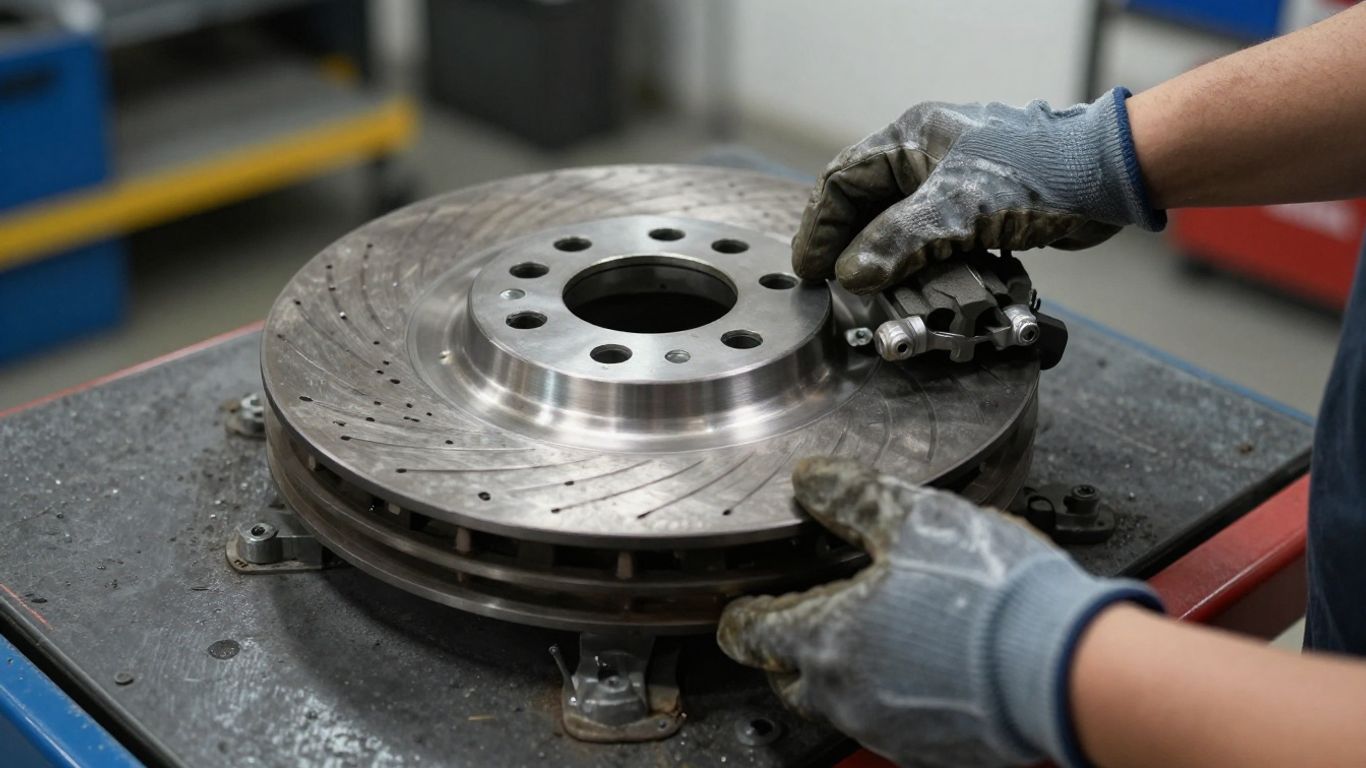
A broad starting range for pad replacement is often about $100 to $300 per axle, with many routine jobs near the middle of that span. That figure can move quickly when the vehicle uses larger brakes, special pad compounds, electronic wear sensors, or additional hardware. It may also exclude inspection, tax, disposal charges, or rotor replacement.
The phrase “per axle” matters. Replacing the front pads is one job, and replacing the rear pads is another; they are not automatically replaced together. A shop should state whether the estimate covers one axle or both, and whether labor includes the sensor and bedding procedure.
Factors that change the total estimate
The clearest estimates explain the reason behind each variable rather than offering one unexplained number. Model year and trim affect parts selection, while caliper design can change labor time. Vehicle condition matters too: corroded fasteners, seized sliders, and damaged hardware may add work once the wheel is removed.
Before approving service, ask these practical questions:
- Is the quoted price for the front axle, rear axle, or both?
- Are the pads OEM, genuine, or aftermarket, and what warranty applies?
- Does the estimate include wear sensors and fitting hardware?
- Were the rotors measured, or is their condition only assumed?
Those answers make it easier to compare estimates on an equal basis. A lower initial quote is not necessarily cheaper if it leaves out parts that the inspection later shows are needed.
OEM, aftermarket, and ceramic pad options
OEM or genuine pads are designed for the vehicle’s original brake specification, while aftermarket pads can offer several formulations and price points. Ceramic pads are often chosen for their low-dust characteristics and quiet operation, but the best option depends on the vehicle, climate, use, and manufacturer specification. No pad material is automatically ideal for every driver.
When ordering parts, a supplier that connects customers with used, genuine, and aftermarket options can help broaden the search, but the part still needs to be verified against the exact application. A reputable seller should provide clear fitment information rather than asking the buyer to rely on appearance alone.
When rotors and additional parts increase the cost
Pads work against the rotor, so replacing pads without checking the rotor can leave a worn or damaged braking surface in place. Rotors may need replacement if they are below minimum thickness, deeply scored, cracked, excessively corroded, or uneven enough to cause vibration. The caliper, sliders, clips, shims, and wear sensor should also be inspected.
That does not mean every pad job requires new rotors. The decision should be based on measurement and condition, not on a blanket upsell. A useful estimate lists the recommended work separately from optional or future work so the driver can understand the immediate safety need.
How to choose the right brake pads for your Mercedes
Choosing brake pads is a fitment decision first and a shopping decision second. The correct part must match the vehicle’s model, year, trim, axle, and brake package, and it must suit how the car is driven. Two vehicles that look similar can use different pad shapes, sensors, or friction specifications. Good records and the vehicle identification number can prevent an expensive mismatch.
Matching pads to the model and trim
Start with the VIN or the exact registration and build details, then confirm the front or rear axle. Performance packages, larger wheel options, and changes between model years can alter the brake system. If a previous owner changed calipers or rotors, the original catalog information may not tell the whole story.
A physical comparison can help, but it should support—not replace—catalog verification. Check pad dimensions, backing-plate shape, sensor location, and hardware style before ordering. When in doubt, ask a parts professional to confirm the application in writing.
Comparing Mercedes-Benz OEM and aftermarket parts
OEM or genuine parts can be a straightforward choice when maintaining the original specification is the priority. Aftermarket parts may provide more choice in dust levels, noise characteristics, heat tolerance, or price, but quality varies between manufacturers. The package should identify the application and relevant certifications clearly.
A reasonable comparison looks at the complete kit, not only the friction material. Hardware, sensor compatibility, warranty, and return policy can matter just as much as the advertised pad price. For drivers sourcing parts across Australia, a nationwide network can make availability easier, but fitment remains the key check.
Understanding brake dust, noise, and stopping performance
Low dust, quiet operation, and strong initial bite can involve trade-offs. A very aggressive pad may tolerate heat well but create more dust or noise in everyday traffic, while a comfort-focused pad may feel different under repeated heavy braking. The right choice should reflect normal use rather than a single appealing feature.
Stopping performance also depends on tires, rotors, calipers, fluid, and the driver’s technique. A new pad cannot correct a sticking caliper or a contaminated rotor. If the vehicle is used for frequent high-load or downhill driving, mention that before the parts are selected.
Checking compatibility with electronic wear sensors
Some brake systems use a sensor that must match the pad and connect correctly to the vehicle’s warning circuit. A pad can be physically the right shape and still be unsuitable if the sensor provision differs. Inspect the existing connector and compare it with the replacement part before installation.
If a sensor has already been worn through, replacing only the pad may leave the warning active. The repair estimate should state whether a new sensor is included and whether the warning system will be checked after the work.
What happens during a Mercedes brake pad replacement
A proper Mercedes brake pad replacement is more than removing an old pad and sliding in a new one. The vehicle is inspected, supported securely, and checked for related wear before the new parts are fitted. The exact steps vary by model and brake design, but the goal is consistent contact, safe movement, and a warning system that works as intended. A careful process also creates a useful record of the brake system’s condition.
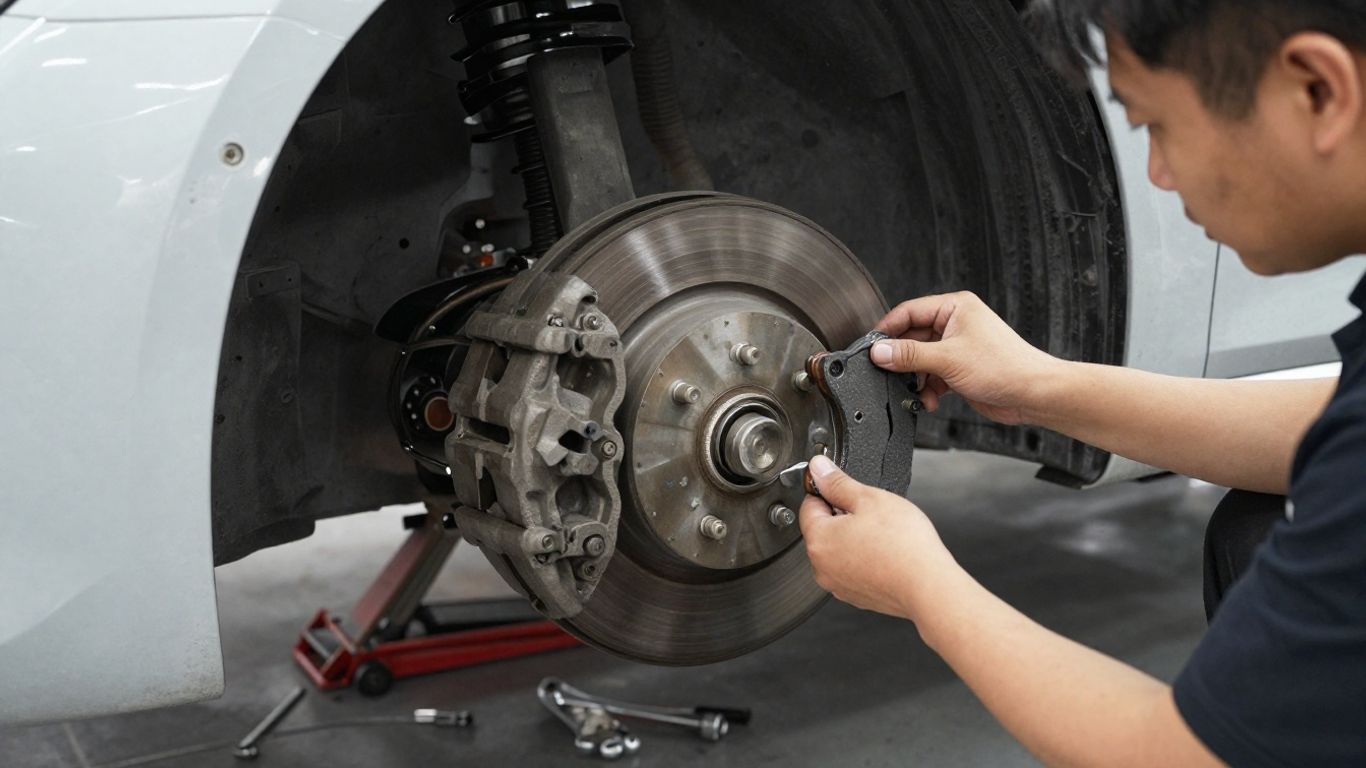
Inspecting the pads, rotors, calipers, and brake hardware
The technician compares pad thickness, checks rotor condition and measurements, and examines the caliper, pins, boots, clips, shims, and hoses. They should look for uneven wear, fluid leaks, corrosion, or signs that one pad has been dragging. This inspection determines whether pads alone are appropriate.
The findings should be explained before extra work is approved. Photos, measurements, or a clear description of the defect make the recommendation easier to understand and help separate necessary repairs from preventative suggestions.
Safely lifting the vehicle and removing the wheel
The car must be parked securely, lifted at the correct points, and supported with equipment rated for its weight. Once the wheel is removed, the technician can access the caliper and brake assembly without placing unnecessary strain on hoses or wiring. Wheel removal is routine for a professional, but it is not a step to rush when working at home.
The old parts are removed with care, particularly where corrosion has affected fasteners or clips. If a caliper is moved aside, it should be supported rather than left hanging from the brake hose.
Installing and securing the new pads
The contact surfaces are cleaned as appropriate, the piston is retracted using the correct method, and new pads and hardware are installed in their intended positions. Any wear sensor must be routed and connected without rubbing against the wheel or rotor. Fasteners are tightened to the vehicle’s specified torque.
After assembly, the wheel is refitted and the brake pedal is pressed until it feels firm. This restores piston contact before the vehicle moves. The technician should also check for leaks, unusual resistance, and correct wheel installation.
Resetting the brake wear warning system
If the vehicle uses an electronic wear warning, the sensor circuit and dashboard message should be checked after installation. Some systems reset automatically when the sensor circuit is restored, while others may require a vehicle-specific service procedure. The correct method depends on the model and equipment.
A reset should never be used to hide an unresolved warning. If the message returns, the connector, sensor, wiring, or remaining brake-system fault needs diagnosis rather than repeated clearing.
Bedding in the new brake pads
New pads usually need a controlled bedding period so their friction surfaces mate with the rotors. Follow the pad maker’s instructions and avoid repeated emergency stops unless safety requires one. During the first drives, allow extra space and pay attention to pedal feel, noise, and whether the vehicle stops evenly.
The process is about gradual, consistent use, not aggressive testing. A short video can be useful for visual context, but it should not replace the vehicle-specific instructions supplied with the parts or service.
Mercedes brake pad replacement: DIY or professional service
Replacing pads can look straightforward when viewed as a list of parts, but braking work carries little room for error. The decision depends on experience, tools, safe working space, and the vehicle’s electronic and mechanical condition. A confident home mechanic may handle a familiar setup, while another driver may save time and risk by using a qualified workshop. Either way, the completed job should be checked before normal driving.
Tools and mechanical skills required
A DIY job generally calls for a suitable jack and stands, wheel-removal equipment, torque tools, brake-cleaning supplies, piston-retraction equipment, and a way to manage the wear sensor. Some models require additional procedures or scan equipment. Knowing how to identify a damaged rotor or seized caliper is as important as operating the tools.
If a person lacks a torque wrench, stable supports, or experience with hydraulic brake components, the project is not a good first repair. The cost of professional labor is modest compared with the consequences of an incorrectly secured wheel or brake part.
Safety precautions for working on the braking system
Work on level ground, secure the vehicle, and never rely on a jack alone. Avoid breathing brake dust, keep fluid and grease away from friction surfaces, and do not press the pedal with the caliper removed unless the procedure specifically requires it. Protect the brake hose and support removed components properly.
The vehicle should be tested at low speed in a safe area after assembly. If the pedal remains soft, the car pulls, a warning appears, or a wheel becomes unusually hot, stop driving and arrange an inspection.
Situations that require a qualified technician
Professional help is the sensible option when the rotor is damaged, a caliper is seized, fasteners are corroded, the warning system will not reset, or the pedal does not feel right. It is also wise when the vehicle has an unfamiliar electronic parking brake or a modified brake package. These situations can turn a simple pad change into a diagnosis and repair job.
A technician can also identify problems outside the pad itself, including hydraulic leaks, uneven caliper action, and suspension issues that affect braking stability. That broader check is valuable when symptoms have been present for some time.
How to evaluate a repair shop’s estimate
Look for an itemized estimate showing parts, labor, axle location, taxes or fees, and any recommended additional work. Ask whether the shop will measure the rotors, replace the wear sensor if required, and explain the warranty. A clear estimate is easier to trust than a single package price with no detail.
You can compare regional guidance with this Mercedes brake service pricing overview, while remembering that an estimate for another vehicle or location is not a guaranteed price for yours. The strongest shop conversations are specific: they identify the symptom, the measured condition, and the repair proposed.
How to extend the life of new Mercedes brake pads
New pads last longest when the whole brake system is healthy and the vehicle is driven with some foresight. Maintenance cannot prevent normal friction wear, but it can catch uneven contact, rotor problems, or fluid issues before they shorten pad life. Keep the invoice and part details so future inspections can compare wear over time. Small observations between services are useful.
Using proper braking techniques
Look farther ahead in traffic and begin slowing smoothly rather than waiting for a sudden stop. Maintain a safe following distance, use appropriate lower gearing on long descents when suitable, and avoid resting your foot on the pedal. These habits reduce unnecessary heat without compromising control.
Do not coast in neutral or use any technique that reduces the driver’s ability to respond. The aim is predictable braking, not minimal brake use at any cost. Heavy loads and hills still require active braking when needed.
Keeping up with brake inspections
Have the brakes inspected when the wheels are serviced, during scheduled maintenance, or whenever a noise or pedal change appears. An inspection can reveal uneven pad wear before the friction material reaches the backing plate. It also gives the technician a chance to check hardware and caliper movement.
Keep notes about the date, mileage, axle serviced, pad brand or specification, and rotor condition. Those details make the next assessment more accurate and can reveal a pattern of unusually rapid wear.
Monitoring rotor condition and brake fluid
Rotors should remain within their service limits and have a reasonably even surface. Fluid should be checked for leaks, contamination, and the correct service interval rather than judged by color alone. A low fluid level may indicate a leak or significant pad wear, so topping it up without finding the cause is not a complete repair.
Pay attention to vibration through the steering wheel or pedal, especially during moderate braking. That symptom can have more than one cause, and a proper inspection should consider rotors, wheel fitment, suspension, and caliper action.
Recognizing problems after installation
The pedal should become firm after the pads are installed and the system is prepared correctly. Mild bedding-related smell or a change in initial bite can occur, but grinding, severe pulling, persistent warning messages, or a burning wheel should be treated as a problem. Stop and seek advice rather than attempting to drive through it.
A quick follow-up check after the first few drives can catch loose hardware, sensor issues, or uneven contact early. Safe braking is the priority; extending pad life is secondary to correcting anything that feels abnormal.
Conclusion
Mercedes brake pad replacement is easiest to manage when warning signs, fitment, pricing, and inspection are considered together. Get a vehicle-specific estimate, verify the parts and sensors, and use a qualified technician whenever the repair exceeds your tools or experience. With sensible driving and regular checks, the new brake system can remain quiet, predictable, and ready for the road.
Frequently Asked Questions
How often do brake pads need to be replaced?
There is no universal interval. Pad life depends on traffic, driving style, vehicle weight, terrain, pad material, and the condition of the caliper and rotor. Inspect them when servicing the vehicle and respond to warning signs promptly.
Should front and rear brake pads be replaced together?
Not necessarily. Front and rear pads often wear at different rates, so each axle should be inspected and priced separately. Replace both sides of the same axle together so braking remains balanced.
Can I replace brake pads without replacing the rotors?
Often, yes, if the rotors are above their minimum thickness and have no serious scoring, cracking, corrosion, or unevenness. The rotors should be measured and inspected rather than automatically reused or replaced.
Why do new brake pads make noise?
Noise can result from bedding, dust, hardware movement, pad material, rotor condition, or incorrect installation. A brief change in sound may settle, but grinding, severe squealing, or vibration should be inspected.
What does a brake wear warning mean?
It usually indicates that the pad or its sensor has reached a service threshold. The warning should prompt an inspection of the pads, sensor, wiring, and related brake components rather than simply being cleared.
Is ceramic brake material always better?
No. Ceramic pads may suit drivers who prioritize low dust and quiet operation, but suitability depends on the vehicle’s specification and use. Heat demands, climate, rotor condition, and manufacturer guidance should all be considered.
What should I do if the pedal feels soft after replacement?
Do not continue normal driving. A soft pedal can indicate air, a hydraulic issue, incorrect assembly, or another fault. Have the vehicle inspected immediately and confirm that the system was prepared and tested correctly.