

Key Takeaways
Mercedes brake problems solved starts with noticing changes early and treating warning lights, unusual pedal feel, and grinding as safety concerns rather than annoyances.
- Listen for new noises and watch for changes in pedal feel.
- Check fluid, pads, rotors, calipers, and warning messages together.
- Use a compatible scan tool when ABS or electronic systems are involved.
- Get a professional assessment when braking is weak, uneven, or unpredictable.
- Maintain fluid and friction components before small faults become expensive repairs.
Recognize the most common Mercedes brake problem symptoms
Braking symptoms rarely arrive with a neat diagnosis attached. A sound may come from friction material, a rotor, or a caliper, while a warning light may point to an electrical or hydraulic fault. The safest approach is to record what happens, when it happens, and whether stopping performance has changed.
Squealing, grinding, and scraping noises
A brief squeal can result from pad vibration, surface rust, or debris, especially after the car has been parked. Persistent squealing deserves an inspection, while grinding usually means friction material may be severely worn and the rotor could be damaged. Do not keep driving simply because the car still stops; a common brake symptoms guide can help you organize observations before booking an inspection.
Brake pedal vibration or pulsation
Pulsation through the pedal or steering wheel often becomes more noticeable during firm braking. Uneven rotor surfaces, excessive heat, or variation in the friction surface can contribute, but the entire wheel-end assembly should be checked before replacing parts. A vibration that worsens quickly is a reason to reduce driving and arrange a proper examination.
Soft, spongy, or sinking pedal
A soft pedal can indicate air in the hydraulic circuit, low fluid, a leak, or another pressure problem. A pedal that gradually sinks while steady pressure is applied should not be treated as normal wear. Since braking performance can deteriorate without much warning, park the vehicle if the pedal approaches the floor or stopping distances increase.
Pulling to one side while braking
Pulling may occur when one caliper is sticking, one brake is applying differently, or a hose is restricting fluid flow. Uneven pad wear, a hot wheel, or a burning smell can provide additional clues, though tire and suspension conditions can also affect direction. Avoid hard driving until the cause is identified, particularly if the pull is strong or sudden.
Brake, ABS, and warning lights
A brake warning light may relate to fluid level, pad wear, or a control-system fault, while an ABS light means the anti-lock function may not be available. Read the dashboard message and note whether several lights appeared together. Warning lights deserve context: switching the engine off and on may clear a message temporarily without fixing the underlying problem.
Understand what causes Mercedes brake problems
The braking system combines friction parts, hydraulic pressure, sensors, wiring, and electronic controllers. A fault in one area can create symptoms elsewhere, which is why replacing the most obvious part does not always solve the complaint. Mercedes brake problems solved properly require the cause to be separated from the symptom.
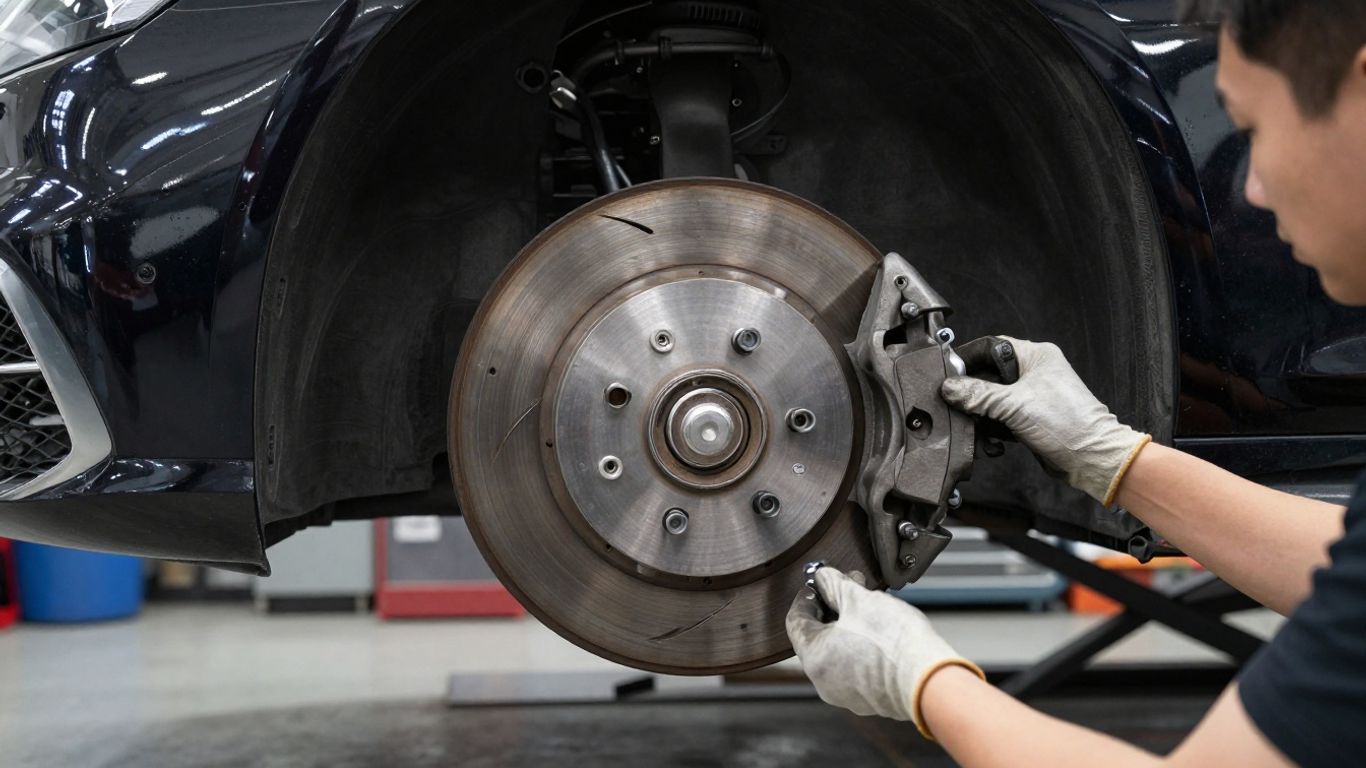
Worn brake pads and damaged rotors
Pads become thinner with use, and rotors can develop grooves, scoring, heat spots, or uneven thickness. Driving style, traffic, hills, vehicle load, and caliper condition all influence wear. Replacing pads alone may be inappropriate when the rotor is below specification or its surface cannot provide consistent contact.
Brake fluid leaks and moisture contamination
Fluid can escape from a caliper, hose, line, master-cylinder area, or connection. Even without a visible puddle, fluid absorbs moisture over time, lowering its resistance to heat and potentially changing pedal feel. A low reservoir should prompt a search for the reason, not simply a top-up and return to the road.
Air in the hydraulic brake system
Air compresses more readily than brake fluid, so it can make the pedal feel soft and reduce confidence under repeated braking. Air may enter after a component is opened, during poorly performed service, or because a leak has allowed the reservoir to run low. Bleeding must follow the vehicle’s correct procedure and should be followed by a pressure and leak check.
Faulty brake sensors and electrical connections
Pad-wear sensors, wheel-speed sensors, connectors, and harnesses can be affected by corrosion, damage, contamination, or poor connections. A warning light does not prove that the sensor itself is defective; wiring and stored codes matter too. Diagnosis should confirm the signal at the component and at the control module.
ABS, SBC, and brake actuator failures
Some vehicles use electronically controlled braking components whose faults may affect pedal feel, warning messages, or available braking functions. SBC pump and actuator concerns are especially unsuitable for guesswork because diagnosis involves hydraulic and electronic checks. A specialist brake actuator diagnosis guide explains why professional scan-tool assessment is often necessary.
Diagnose the braking system safely
Begin with the vehicle parked on a level surface and the ignition switched off unless a test specifically requires otherwise. Never place yourself beneath a car supported only by a jack, and do not road-test a vehicle with a sinking pedal or severely reduced stopping power. A careful diagnosis is slower than guessing, but it is usually cheaper and safer.
Check the warning lights and dashboard messages
Record every warning symbol and the wording of any dashboard message before clearing anything. Note whether the lights appear at startup, during braking, or after driving through rain. This information can help distinguish a stored history from a current fault and gives a technician a more useful starting point.
Inspect pad thickness, rotors, and calipers
With the wheels safely removed, inspect the visible pad material, rotor face, caliper body, and retaining hardware. Compare inner and outer pad wear rather than checking only the easiest pad to see. Look for fluid traces, cracked boots, heavy rust, blue heat marks, and anything that suggests a caliper is not releasing.
Test brake fluid level and condition
Check the reservoir against its marked range, but interpret a low level alongside pad wear and possible leaks. Fluid that looks dark or contaminated may need replacement, yet appearance alone is not a complete chemical test. A private diagnostic testing guide is a useful reminder that test results still need careful interpretation by an appropriate professional.
Scan for ABS and brake control module codes
A generic engine-code reader may not communicate with every brake control module. Use equipment that can access the relevant system, save the codes before erasing them, and compare code data with live wheel-speed or pressure information when available. The code is a clue, not permission to replace a part automatically.
Know when professional testing is required
Professional testing is warranted when the pedal changes, warning lights remain on, or electronic braking functions are involved. It is also the sensible choice when a visual inspection does not explain uneven braking or repeated faults. For reference, an LED parking lot lighting guide illustrates a broader maintenance principle: equipment and measurements should match the system being evaluated, not merely be convenient.
Fix common Mercedes brake issues
Repairs should follow the confirmed fault, the vehicle’s specifications, and the condition of related parts. Brake work is not a good place to combine incompatible components or skip final checks. After any repair, the vehicle should be tested at low speed in a safe area before normal driving resumes.
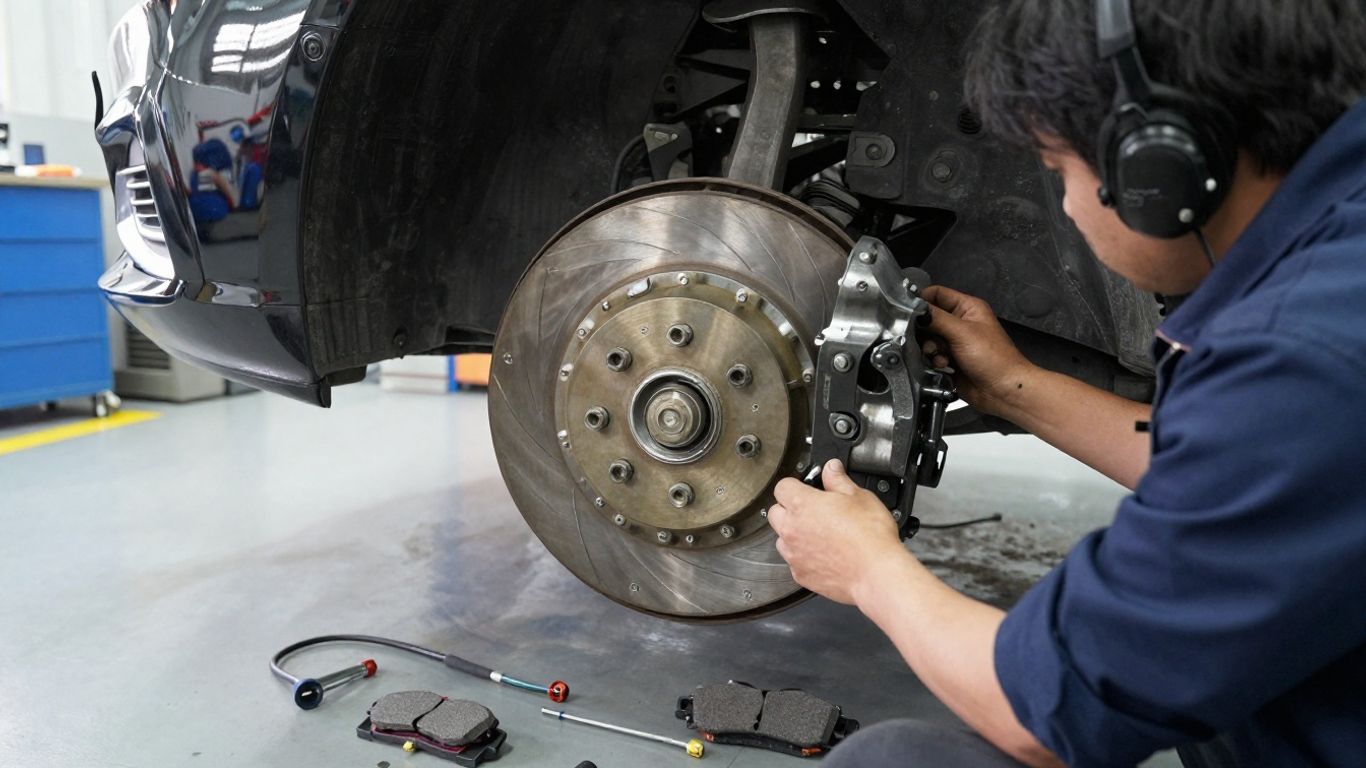
Replacing worn pads and rotors
Replace pads when they are worn, contaminated, damaged, or unevenly applied. Rotors should be measured for thickness and checked for scoring, runout, and heat damage before deciding whether resurfacing or replacement is appropriate. New friction parts also need correct bedding procedures, with gentle stops initially and no unnecessary emergency braking.
Repairing or replacing a leaking caliper
A leaking caliper can reduce hydraulic pressure and contaminate the pad, making replacement or rebuilding necessary depending on its design and condition. The hose connection, bleeder, piston seal, and surrounding components should be checked so the repair addresses the source. Afterward, the system must be bled and the wheel inspected for further leakage.
Flushing and bleeding the brake system
A flush replaces old fluid, while bleeding removes air from the hydraulic circuit; the two procedures are related but not identical. The correct fluid specification, sequence, and equipment matter, especially on systems with electronic controls. Never allow the reservoir to run dry during service, and verify a firm pedal before moving the vehicle.
Replacing damaged brake hoses and sensors
Hoses with cracks, bulges, restrictions, or damaged fittings should be replaced rather than patched. Sensor replacement should follow confirmation that the sensor is the problem and not the connector, harness, bearing, or tone ring. Once installed, confirm routing, clearance, secure clips, and the absence of warning lights.
Resetting service indicators after repairs
A service reminder should be reset only after the physical work is complete and the cause of the warning has been addressed. Resetting a reminder is not the same as clearing a diagnostic fault. Keep the invoice and record the parts replaced, measurements taken, fluid used, and any codes that remain for future reference.
Address Mercedes-specific brake system faults
Electronic brake systems can add layers of diagnosis without removing the basic need for safe hydraulic and mechanical checks. A stored code may reflect a low-voltage event, a wiring problem, or a failing module rather than a single failed component. The vehicle’s exact model, year, and equipment determine the correct test procedure.
Diagnosing SBC pump and actuator problems
SBC-related symptoms may include pump noise, warning messages, altered pedal behavior, or reduced braking assistance. Diagnosis can require checking pressure behavior, power supply, stored faults, and actuator operation with appropriate service information. Because incorrect procedures can create a dangerous condition, leave internal hydraulic or actuator work to a qualified technician.
Understanding ABS module and wheel speed sensor faults
The ABS module relies on consistent wheel-speed information to manage anti-lock and stability functions. A damaged sensor, contaminated pickup area, wiring fault, or bearing problem can imitate a module failure. Compare all wheel-speed signals and inspect the physical installation before approving an expensive control-unit replacement.
Resolving electronic parking brake issues
An electronic parking brake fault may involve the actuator, switch, wiring, battery voltage, or control logic. Do not force the mechanism or repeatedly cycle it when the vehicle reports a malfunction. Secure the vehicle safely and follow the specified release and service procedure.
Using Mercedes-compatible diagnostic equipment
Compatible equipment should communicate with the brake, ABS, and related control modules rather than only the engine computer. Ask the shop which module was scanned, what codes were found, and whether live data or guided tests were used. A printed code alone is not a diagnosis.
When software updates or coding are necessary
Some replacement modules, sensors, or actuators may require initialization, coding, or a software procedure specified for that vehicle. Those steps should be performed only when the repair information calls for them. Software work cannot compensate for a mechanical leak, worn pad, damaged rotor, or poor electrical connection.
Estimate repair costs and choose the right service
A reliable estimate connects each charge to a confirmed condition. Brake prices vary with model, axle, parts quality, labor time, corrosion, electronic-system involvement, and whether additional hydraulic work is needed. When comparing a shop, focus on the quality of the diagnosis and documentation, not just the first number.
Factors that affect Mercedes brake repair costs
Pad-and-rotor work is generally more predictable than an ABS module, actuator, or electronic parking-brake fault. Labor can also increase when fasteners are seized, sensors are damaged during disassembly, or a fluid flush and calibration are required. Ask whether the estimate includes inspection, parts, labor, fluid, diagnostic time, taxes, and post-repair testing.
Comparing independent shops with dealerships
Both types of facilities can be suitable when they have the right training, equipment, and willingness to explain the findings. A shop’s location or appearance does not prove diagnostic ability. For a useful comparison, review the service details in this Mercedes brake repair resource, then ask local providers whether they can access the relevant control modules.
Questions to ask before approving repairs
A short set of direct questions can prevent confusion:
- Which symptom or test result confirms the repair?
- Which parts are worn, leaking, damaged, or out of specification?
- Are the quoted parts original-equipment, equivalent, or aftermarket?
- Will the system be bled, scanned, calibrated, and road-tested afterward?
The answers should be specific enough to connect the diagnosis with the proposed work. If a shop cannot explain why a part is needed, pause before authorizing it.
Warning signs of incomplete or unnecessary work
Be cautious when a shop recommends several expensive parts without showing test results, or when a warning light is simply erased with no explanation. Other concerns include skipping a fluid check, failing to inspect the opposite side of an axle, or returning the car with an unchanged pedal complaint. Good documentation makes follow-up much easier.
Prevent future Mercedes brake problems
Prevention is mostly consistent inspection and timely service, not a special driving trick. Brake components age from heat, moisture, mileage, and environmental exposure even when the vehicle is driven gently. A written maintenance record helps reveal gradual changes that may otherwise be dismissed as normal.
Following the recommended maintenance schedule
Use the maintenance schedule for fluid service, inspections, and wear checks, while adjusting for severe traffic, towing, steep terrain, or frequent short trips. The schedule is a baseline rather than a substitute for responding to symptoms. Ask for measurements and observations at each inspection, not just a general statement that the brakes look fine.
Monitoring brake fluid and pad wear
Check the fluid level periodically and watch for changes in color, leaks, or a warning message. Pad wear should be measured rather than estimated from sound alone, since inner and outer pads can wear at different rates. The same habit applies to home maintenance: this guide to painting brick siding stresses preparation and monitoring before small defects become larger ones.
Driving habits that reduce brake wear
Anticipating traffic, leaving more following distance, and reducing speed before descents can limit repeated hard stops. Avoid resting a foot on the pedal and do not hold the vehicle on a steep incline with accelerator input. Smooth driving cannot prevent every failure, but it can reduce unnecessary heat and friction.
Inspecting brakes before long trips
Before a long journey, check pedal feel, fluid level, tire condition, visible leaks, and any new noise. Take a short local drive first and confirm that the car stops straight without vibration. Planning a trip also rewards practical preparation, much like using flexible hotel savings strategies before booking a demanding itinerary.
Deciding when immediate towing is necessary
Tow the vehicle if the pedal reaches the floor, fluid is leaking, braking power is sharply reduced, a wheel is smoking or extremely hot, or a brake warning remains accompanied by poor performance. Do not attempt to reach a shop under those conditions. The cost of a tow is small compared with the risk of losing control in traffic.
Conclusion
Mercedes brake problems solved means finding the reason behind a symptom, repairing the affected system correctly, and verifying the result before returning to everyday driving. Early inspection, compatible diagnostics, and disciplined maintenance make that process safer and more predictable.
Frequently Asked Questions
How often should brakes be inspected?
Have them checked during scheduled maintenance and whenever you notice a new noise, vibration, warning light, fluid change, or pedal problem. Driving conditions can make inspections necessary more often.
Can squealing brakes be safe to drive on?
Sometimes, but the sound may also indicate worn pads, contamination, or a caliper issue. Arrange an inspection rather than assuming the noise is harmless, especially if it persists or worsens.
What does a soft brake pedal usually mean?
It can be caused by air, low fluid, a leak, or another hydraulic fault. A soft or sinking pedal should be assessed promptly because stopping performance may deteriorate.
Why does a car pull when braking?
Uneven caliper application, restricted hose flow, different pad wear, tire problems, or suspension issues can all contribute. Diagnosis should compare both sides instead of replacing one visible part immediately.
Should brake fluid be flushed or merely topped up?
Topping up addresses level only and does not remove moisture or identify a leak. A flush may be appropriate based on condition and maintenance requirements, but the cause of low fluid must also be checked.
Can a diagnostic code identify the failed brake part?
A code narrows the investigation but does not always identify the failed part. Wiring, connectors, power supply, mechanical damage, and related sensors can produce similar codes.
When should a vehicle be towed for brake repairs?
Arrange a tow when braking is weak or unpredictable, the pedal sinks, fluid is leaking, a wheel is smoking, or a serious brake warning remains. Driving farther can turn a manageable repair into a dangerous failure.