

Key Takeaways
Overheating is a warning to slow down, stop safely, and find the cause before more heat turns a manageable repair into engine damage.
- Pull over safely when the temperature rises, steam appears, or a warning message indicates overheating.
- Never remove a hot coolant cap; pressurized coolant can cause severe burns.
- Check for coolant loss, failed thermostats, water pumps, radiator restrictions, and fan problems.
- Use pressure tests, scan data, and combustion-gas tests to separate cooling-system faults from engine damage.
- Prevent repeat problems with scheduled inspections, correct coolant, clean fins, and attention to model-specific requirements.
What to do when your Mercedes starts overheating
A temperature warning, rising gauge, steam, or a hot chemical smell should be treated as a mechanical emergency rather than a minor inconvenience. The exact cause may be simple, but continuing to drive can quickly make it expensive. These first steps apply broadly while you arrange a proper inspection. For another practical perspective on overheating warning signs, compare the visible symptoms with what you observe at the roadside.
Warning signs to take seriously
The clearest sign is a temperature gauge moving beyond its usual position or a dashboard warning that does not disappear. Steam from beneath the hood, a sweet coolant smell, poor cabin heat, and reduced engine power can also point to a cooling problem. A puddle beneath the vehicle is useful evidence, although a leak may only appear once the system is hot and pressurized.
Pay attention to when the problem occurs. Overheating in slow traffic can suggest inadequate airflow, while overheating on a highway or uphill may point toward low coolant, restricted flow, or a pump that is no longer circulating effectively. Do not dismiss an intermittent warning simply because the gauge returns to normal.
Safe steps to protect the engine
Turn off the air conditioning, switch on the heater only long enough to reach a safe stopping place, and pull over where you are away from traffic. Shut the engine off if the temperature continues to climb. Once parked, keep people away from the front of the vehicle and look for steam without reaching into the engine bay.
If there is no immediate danger, let the vehicle cool completely before checking the coolant reservoir. Do not pour cold water over a hot engine, and do not keep restarting it to see whether the warning has cleared. Protecting the engine comes first, even if that means arranging a tow rather than driving a short distance.
When to stop driving immediately
Stop as soon as it is safe if the gauge reaches the red zone, a warning message remains active, steam is heavy, or the engine begins knocking, misfiring, or losing power. A visible coolant leak is another reason not to continue. Driving with little or no coolant can damage cylinder-head components and may turn a cooling-system repair into major engine work.
If the temperature drops after a short rest, that does not prove the car is safe. A thermostat can stick intermittently, a fan can work only at certain speeds, and a small leak can become much larger under load. Have the vehicle inspected before returning to normal driving.
Why opening the coolant cap can be dangerous
The cooling system becomes pressurized as the engine heats up. Removing the cap while the coolant is hot can release boiling fluid and vapor suddenly, even if the engine has been switched off for several minutes. Burns to the hands, face, and arms are a real risk.
Wait until the engine and reservoir are fully cool, then loosen the cap slowly with a thick cloth while keeping your face away. If you are uncertain whether it is cool enough, leave it alone and call for roadside assistance. A cap is not a safe diagnostic shortcut during an overheating event.
Common coolant-related causes of overheating
Coolant carries heat away from the engine and transfers it to the radiator, where airflow can remove that heat. A problem with the fluid itself, its level, or the passages that carry it can therefore raise temperatures quickly. The Mercedes overheating guide also provides a useful general overview of low coolant, radiator, thermostat, and water-pump causes.
Low coolant levels and visible leaks
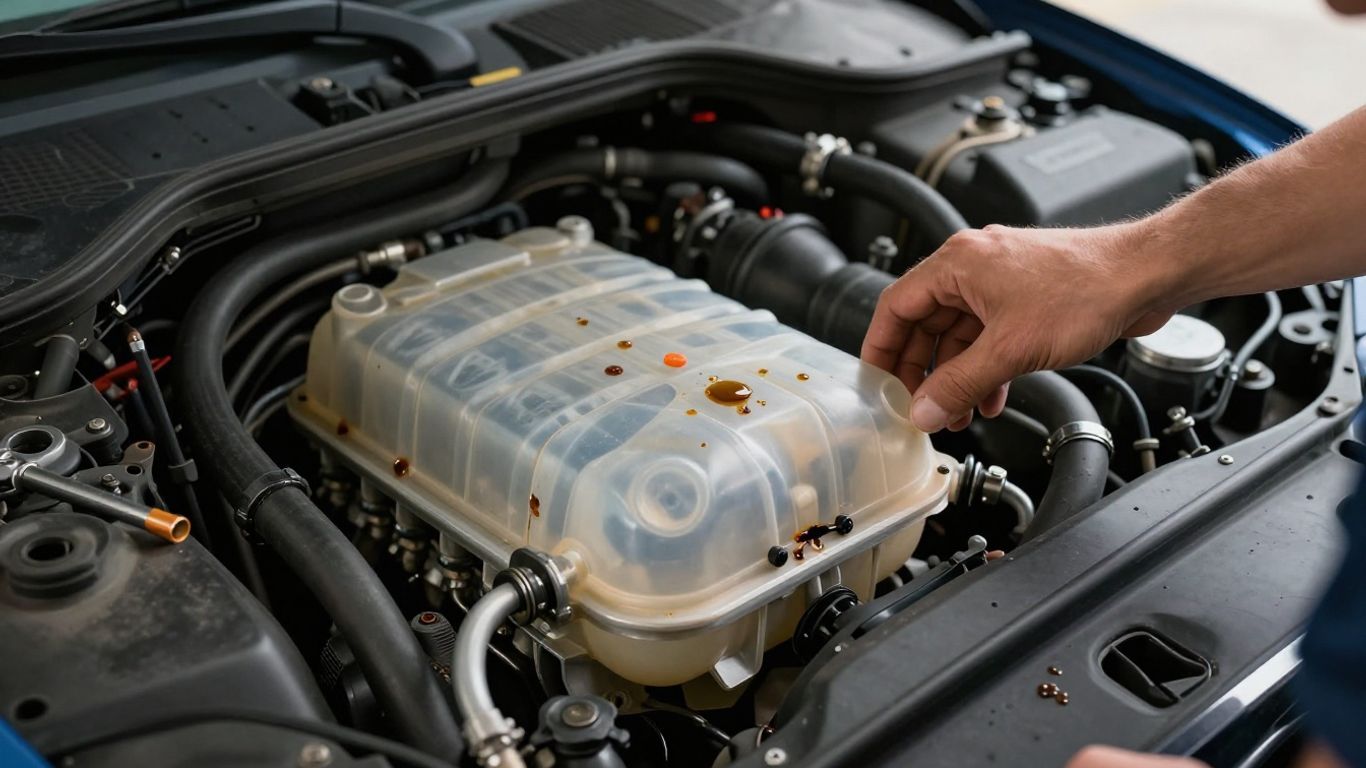
A low level means the system has lost some of its ability to absorb and transport heat. Look for wet areas around hose connections, the radiator, thermostat housing, water pump, and expansion tank, as well as dried crust or staining that may reveal an older leak. Coolant can also leak internally, so the absence of a puddle does not rule out a serious problem.
Do not simply keep topping up the reservoir without finding out where the fluid went. Repeated loss may indicate a small hose seep, a cracked tank, a damaged radiator, or a head-gasket problem. The level should be checked only with the engine cool and on reasonably level ground.
Faulty radiator hoses and expansion tanks
Hoses harden, swell, split, and weaken around clamps as they age. A hose may look fine when cold but soften, balloon, or leak once pressure and temperature rise. Expansion tanks can develop hairline cracks around their seams, cap seats, or hose outlets, making them a common source of slow coolant loss.
A technician should inspect the complete hose route rather than replacing only the visibly wet section. The cap also matters because it controls pressure; if it cannot hold the specified pressure, coolant may escape or boil at the wrong point. Replacing a damaged hose or tank is usually far less involved than repairing an engine damaged by persistent overheating.
Air trapped in the cooling system
Air pockets reduce the amount of coolant actually touching hot engine surfaces and can interrupt circulation through the heater core or cylinder head. They may enter after a leak, hose replacement, drain, or incomplete refill. Gurgling sounds, inconsistent cabin heat, or a temperature gauge that rises and falls unusually can support this suspicion.
Bleeding procedures vary by engine and cooling-system design. A shop may use the specified filling equipment or follow a model-specific procedure to remove trapped air. Guessing at the process can leave another pocket behind, so a refill should be followed by a leak check and a controlled warm-up.
The wrong coolant mixture or fluid type
Coolant needs the right fluid type and concentration for the vehicle, not just any liquid that happens to be available. An incorrect mixture can reduce freeze and boil protection, while incompatible products may contribute to deposits or corrosion. Plain water may be useful only as a temporary emergency measure, followed by correction as soon as possible.
A technician should identify what is already in the system before mixing products. If the fluid is rusty, oily, cloudy, or contaminated, topping it up may conceal a larger issue. The correct repair may involve draining, flushing, and refilling with the specified coolant and demineralized water mixture.
Cooling system parts that can fail
Even with a full reservoir, the system can overheat when coolant cannot move, heat cannot leave, or airflow is missing. Components often fail gradually, which is why a car may seem normal on one trip and run hot on the next. Diagnosis should consider the whole path from the engine to the radiator and back again.
Thermostat failure and restricted coolant flow
The thermostat controls when coolant begins circulating through the radiator. If it sticks closed, heat remains concentrated in the engine; if it sticks partly open, the engine may run too cool or take too long to reach normal operating temperature. A damaged thermostat housing or restricted passage can create similar symptoms.
Temperature behavior can provide clues, but replacing the thermostat without confirming the fault is not always efficient. Scan data, hose temperatures, and the vehicle’s service information help a technician decide whether the thermostat is opening at the correct point and whether coolant is moving as expected.
Water pump wear and circulation problems
The water pump moves coolant through the engine and radiator. Wear at the bearing or seal can cause noise and leakage, while an impeller problem can reduce circulation without producing an obvious external leak. A loose or damaged drive arrangement can also stop a mechanically driven pump from doing its job.
A pump problem may become more obvious under load, when the engine produces more heat. Inspection should include the pump area, belt or drive system, coolant flow, and any signs of bearing play. Replacing the pump alone will not solve overheating if a blocked radiator or failed fan is also present.
Radiator blockages and poor heat transfer
The radiator must move coolant through clear internal passages and release heat through clean external fins. Internal deposits can restrict flow, while bent or clogged fins reduce airflow across the core. Damage from road debris, corrosion, or a previous repair can have a similar effect.
A radiator may feel unevenly hot when sections are restricted, but surface temperature alone is not a complete test. A technician can compare temperatures across the core, inspect the fins, and assess flow. The fix may be cleaning, flushing, repair, or replacement depending on the condition and construction of the radiator.
Cooling fan, fan clutch, and fan module faults
The fan becomes especially important when the car is stationary or moving slowly, because there is little natural airflow through the radiator. A failed motor, fuse, relay, wiring connection, fan module, or temperature-control signal can leave the system unable to shed heat in traffic. Mechanical fan clutches can also slip or fail to engage properly.
A fan that spins is not necessarily a healthy fan. It may run too slowly, operate only on one speed, or fail when hot. Testing should confirm commanded operation, electrical supply, current draw, and airflow rather than relying on a quick visual check.
Engine and electrical problems behind overheating
Some overheating events begin outside the coolant circuit. Combustion pressure can enter the cooling system, sensors can send incorrect information, and electrical supply problems can stop fans or pumps from operating. Separating these possibilities prevents unnecessary parts replacement and helps establish whether the engine itself has already been affected.
Head gasket damage and combustion gases in the coolant
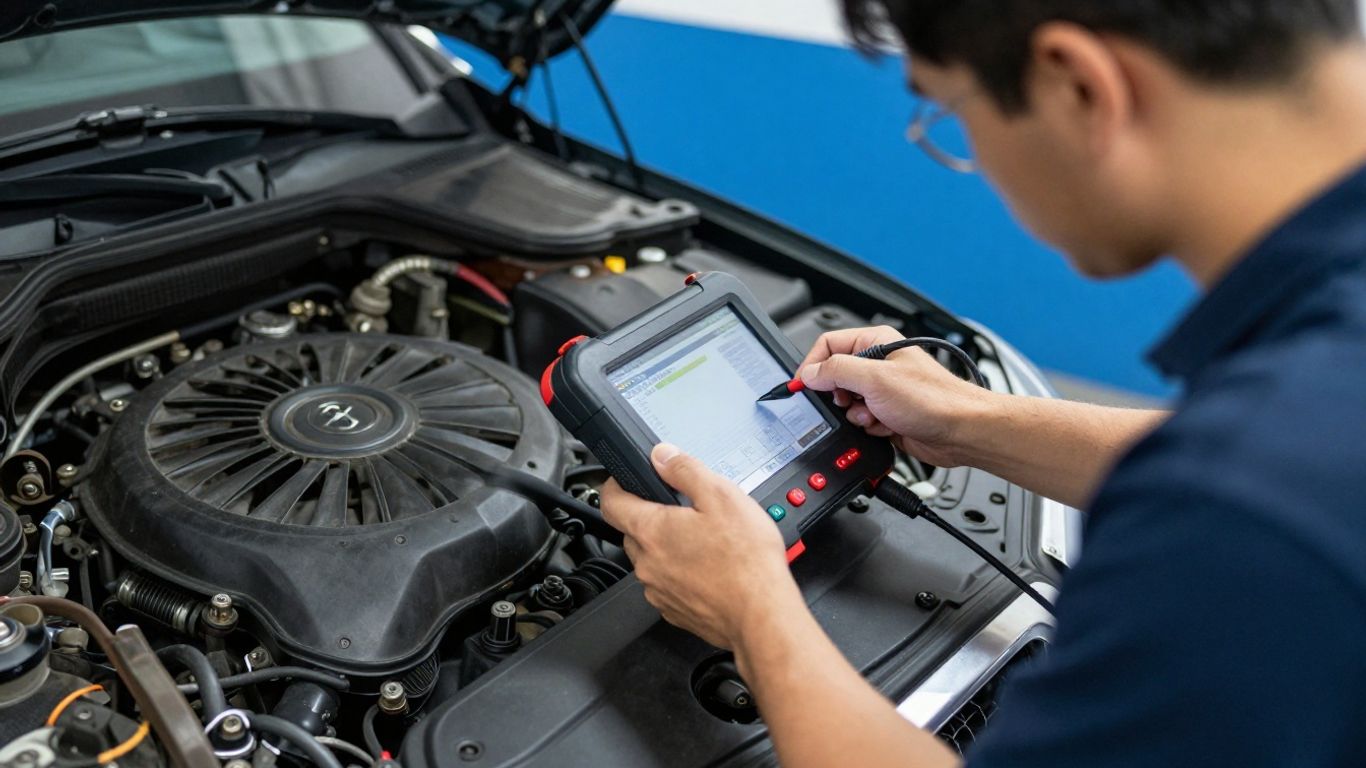
A damaged head gasket can allow combustion gases into the cooling passages or coolant into a cylinder. Persistent bubbling in the reservoir, unexplained coolant loss, white exhaust smoke, rough running, contaminated oil, or repeated pressure buildup can justify further testing. These signs are not conclusive on their own, since some can have other causes.
If overheating has been severe, the cylinder head may also be distorted or cracked. The repair decision should be based on test results and an assessment of the engine’s overall condition, not solely on the presence of one symptom. Early diagnosis can sometimes limit the extent of damage.
Radiator fan sensor and temperature sensor issues
The engine relies on temperature information to control warnings, fan operation, and other functions. A faulty sensor, damaged wiring, poor connector contact, or incorrect signal can make the system behave as though the engine is cooler or hotter than it really is. A dashboard reading should therefore be compared with scan data and physical temperature checks.
A sensor code does not automatically mean the sensor is the only failed part. The circuit, power supply, ground, and fan-control command all deserve inspection. Replacing a sensor without checking the wiring can leave the original overheating problem untouched.
Auxiliary battery and electrical supply problems
Low voltage or unstable electrical supply can affect fans, control modules, and pump operation on vehicles that use electrically controlled cooling components. An auxiliary battery fault may coexist with a cooling problem, but it should not be assumed to explain every overheating event. The actual supply and charging behavior need to be measured.
A technician can check battery condition, charging voltage, fuses, relays, grounds, and relevant connectors. Electrical diagnosis is particularly useful when the fan works intermittently or when several unrelated warning messages appear together. The remedy may be a battery, wiring, connection, or control-component repair rather than a coolant-system replacement.
Belt, pulley, and drive system failures
A worn belt, seized pulley, damaged tensioner, or failing bearing can disrupt the components driven from the engine. Depending on the design, that may reduce coolant circulation or cause the belt to come off altogether. Squealing, chirping, visible fraying, or sudden loss of related functions should be taken seriously.
Do not reach near a moving belt to investigate a noise. With the engine off, a technician can inspect alignment, tension, pulley movement, and contamination. If a drive component has failed, the surrounding parts should be checked for damage before the system is returned to service.
How to diagnose Mercedes overheating problems
Good diagnosis starts with evidence: when the temperature rose, what the dashboard showed, whether coolant was lost, and whether the problem appeared in traffic or under load. A visual check is useful, but it rarely identifies every overheating cause. For additional general reading, this engine cooling checklist covers several of the same inspection points.
Checking coolant level, color, and condition
With the engine cool, inspect the reservoir level and the fluid’s appearance. Note whether the coolant is clean and appropriately colored for the product in use, or whether it looks rusty, oily, muddy, or unusually low. Examine the cap, tank, hoses, radiator area, and ground beneath the vehicle for wetness or dried residue.
The inspection should be recorded rather than treated as a quick glance. Photos of staining and notes about when the level changes can help identify a slow leak. Never judge the coolant level while the system is hot, when expansion can make the reading misleading and opening the cap unsafe.
Reading temperature data and diagnostic trouble codes
A scan tool can show coolant-temperature readings, fan commands, sensor values, and stored or pending diagnostic trouble codes. Comparing the reported temperature with the gauge and with measured component temperatures can reveal a bad sensor or an actual heat-management problem. The pattern over time is often more useful than one isolated number.
Codes guide the investigation but do not replace it. A fan-related code may result from a motor, wiring, fuse, module, or control issue. Similarly, a temperature-sensor code should be checked against the circuit and live data before parts are ordered.
Pressure-testing the cooling system
A pressure test applies controlled pressure to a cool system so leaks can be found without waiting for normal operating temperature. It may reveal seepage at a hose, radiator, pump, housing, cap, or expansion tank. If pressure falls and no external leak appears, the technician may need to investigate an internal leak.
The test should use the correct equipment and pressure for the vehicle. Excessive pressure can create a new leak or distort the result. Once a leak is found, the system should be repaired and tested again rather than assuming the first visible fault is the only one.
Inspecting the thermostat, water pump, and radiator
These parts work together, so they should be assessed as a system. Hose-temperature differences, flow behavior, pump noise, bearing condition, radiator-core temperature, and fin condition can help identify the weak link. A thermostat replacement may be appropriate, but a restricted radiator or worn pump can produce overlapping symptoms.
The inspection should also consider the fan and drive system. Overheating is often the result of two smaller problems, such as a partially restricted radiator combined with weak airflow. Testing the complete circuit reduces the chance of an incomplete repair.
Performing combustion-gas and compression tests
A combustion-gas test checks whether exhaust gases are entering the coolant. Compression or leak-down testing can add information about cylinders, valves, and head-gasket sealing. These tests become more relevant when coolant disappears without an external leak, the system pressurizes unusually quickly, or the engine runs poorly after overheating.
No single test should be interpreted in isolation. Results must be compared with the vehicle’s symptoms and with other inspections. Confirming engine damage before disassembly makes the repair estimate more honest and helps the owner decide whether the vehicle is worth restoring.
Mercedes overheating fixes and repair decisions
The right fix depends on the confirmed cause, the extent of damage, and the condition of the rest of the vehicle. A correct repair restores both coolant control and confidence that the problem will not immediately return. The phrase Mercedes overheating causes and fixes covers a wide range of outcomes, from a failed cap to extensive engine work.
Topping up or flushing the coolant correctly
Topping up is appropriate only when the correct fluid is known and the system has no unresolved leak. The engine must be cool, the level should be brought to the specified mark, and the vehicle should be monitored afterward. A low level that returns is a symptom requiring diagnosis, not a maintenance routine.
A flush may be needed when the coolant is contaminated, the mixture is wrong, or deposits are restricting flow. The system should then be filled and bled according to the vehicle’s procedure. Mixing random coolant products can create more problems than it solves.
Replacing thermostats, hoses, and water pumps
Replacement parts should match the engine and cooling-system design. A hose job may include clamps and a careful inspection of adjacent connections, while a water-pump job may require attention to belts, tensioners, seals, and drive components. The cooling system should be pressure-tested after repairs.
It is also wise to confirm why the part failed. A pump damaged by a contaminated coolant mixture, for example, may be part of a wider maintenance issue. Correct installation and a complete refill matter as much as the part itself.
Repairing radiator and cooling fan problems
A damaged or restricted radiator may need cleaning, professional repair, or replacement. Fan repairs can involve a motor, clutch, fuse, relay, wiring, sensor, or control module. The technician should verify airflow and fan behavior at the temperatures and operating conditions where the original fault occurred.
Afterward, the vehicle needs a controlled road test and another check for leaks. A fan that runs in the workshop but fails in traffic has not been fully diagnosed. The repair should be judged by stable temperature control, not merely by the absence of a warning on the dashboard.
Deciding between a minor repair and engine work
A failed cap, hose, or sensor is a very different financial decision from a warped head or damaged short block. Compression results, combustion-gas testing, oil condition, cooling-system pressure behavior, and the vehicle’s mileage all help establish the extent of the problem. Ask for the test results and a written explanation of what the estimate includes.
Before approving major work, compare the repair with the vehicle’s overall condition and value. If overheating was brief and the engine tests well, a cooling-system repair may be enough. If it continued for a long time or caused internal damage, postponing the decision can increase the eventual cost.
Choosing genuine, OEM, or aftermarket parts
Part quality and fit matter in a pressurized, heat-cycled system. A genuine part may be selected for exact fit and specification, while a reputable aftermarket part can be suitable when its construction and application are well established. The key is matching the part to the exact engine and confirming the warranty.
Avoid choosing solely on the lowest purchase price. A poorly fitting cap, thermostat, hose, or fan component can create repeat labor and another breakdown. Ask which parts are being used, why they were selected, and whether related seals or fasteners should be replaced at the same time.
How to prevent your Mercedes from overheating again
Prevention is mostly about noticing small changes before they become a roadside failure. Coolant level, temperature behavior, leaks, airflow, and service history all provide useful clues. A simple maintenance habit is often less costly than diagnosing heat damage after the fact.
Following the recommended maintenance schedule
Use the maintenance schedule for the specific engine and model rather than relying on a generic interval. Scheduled inspections can identify aging hoses, belts, coolant condition, and drive-component wear before they interrupt a trip. Keep records of coolant replacement, thermostat work, pump replacement, and previous overheating events.
Routine service also creates a baseline. When a technician knows how the vehicle normally behaves, an unusual temperature trend or fluid loss is easier to recognize. The preventive maintenance guide makes the same broader point for equipment generally: ongoing checks are safer than waiting for a failure.
Inspecting the cooling system before long trips
Before a long drive, check the coolant level with the engine cold and look around the front of the engine bay for residue or dampness. Inspect the belt, hoses, reservoir, and radiator area, then confirm that the temperature gauge has been stable during recent drives. Pack basic roadside supplies, but do not treat them as a substitute for repair; even an emergency kit checklist cannot make an overheating vehicle safe to drive.
A pre-trip inspection is especially valuable before towing, mountain driving, or extended time in traffic. If the vehicle has recently needed coolant, schedule a pressure test before leaving. Small leaks often become obvious only after sustained heat and pressure.
Monitoring temperature warnings and coolant loss
Learn the vehicle’s normal gauge position and take note when it changes. A warning that appears only on hills, in traffic, or with the air conditioning running still deserves attention. Check the coolant level periodically, but never open the system while hot.
A useful record includes the date, mileage, fluid added, driving conditions, and any warning messages. That information can help distinguish a one-time spill from a continuing leak. It also gives a technician a clearer starting point.
Keeping radiators and condenser fins clean
Leaves, dirt, insects, and road debris can restrict airflow through the radiator and condenser. With the engine cool, inspect the front of the vehicle and remove loose debris carefully. Bent fins can be straightened by a professional, while aggressive pressure-washing can damage them or force debris deeper into the core.
Clean external surfaces help the fan and radiator do their jobs, particularly during slow driving and hot weather. If the front stack is difficult to access, have it inspected during scheduled service rather than trying to force tools into a narrow space.
Understanding model-specific maintenance needs
Cooling-system layouts, coolant specifications, fan controls, and bleeding procedures differ across engines and model years. A procedure that works on one vehicle may be unsuitable for another. Use the correct service information and identify the engine before buying fluid or parts.
This also applies to electrical diagnosis and auxiliary systems. A warning may involve more than the coolant circuit, so the technician should consider the vehicle’s full control and charging systems. Careful, model-specific work is the best way to prevent a repeat overheating event.
Conclusion
An overheating Mercedes should be handled promptly and methodically: stop safely, let the system cool, avoid opening the cap, and have the cause confirmed before driving again. Whether the fault is a leak, thermostat, pump, radiator, fan, electrical component, or engine seal, evidence-based diagnosis protects both the vehicle and the repair budget.
Frequently Asked Questions
Can I drive a Mercedes after it overheats?
It is safest not to drive until the vehicle has cooled and the cause has been checked. If the gauge reached the red zone, steam appeared, coolant was lost, or the engine ran poorly, arrange a tow rather than risking further damage.
What is the most common cause of overheating?
Low coolant from a leak, a restricted radiator, a failed thermostat, a worn water pump, and inadequate fan operation are common causes. The most likely fault depends on the symptoms and operating conditions.
How long should I wait before opening the coolant cap?
Wait until the engine and reservoir are fully cool. This may take considerably longer than a few minutes, especially after heavy load or severe overheating. If there is still steam or uncertainty, do not open it.
Why does a car overheat in traffic but not on the highway?
At low speed, the vehicle depends more heavily on its cooling fan for airflow. A failed fan, fan control, or restricted radiator can therefore cause overheating in traffic while highway airflow temporarily masks the problem.
Can low coolant cause permanent engine damage?
Yes. Low coolant reduces heat transfer and can allow temperatures to rise enough to damage gaskets, cylinder heads, bearings, or other engine components. Promptly finding and repairing the leak lowers that risk.
Is a temperature warning always caused by the thermostat?
No. A thermostat is only one possibility. Coolant leaks, water-pump problems, radiator restrictions, fan faults, sensors, electrical supply, and internal engine damage can produce similar warnings.
Should I flush the coolant after an overheating event?
Not automatically. A flush may be appropriate for contamination, the wrong mixture, or deposits, but the cause of overheating should be diagnosed first. The system should then be refilled and bled with the specified fluid and procedure.