

Key Takeaways
Jerking under acceleration is a symptom, not a diagnosis. The timing, temperature, road speed, and relationship to gear changes can narrow the search considerably.
- Note whether the symptom starts from a stop, during a shift, or at steady speed.
- Check ignition, fuel, intake, sensor, transmission, and drivetrain possibilities rather than guessing.
- Use fault codes and live data to separate an engine misfire from a driveline vibration.
- Do not ignore violent shaking, warning lights, fluid leaks, or loss of power.
- Road-test the Mercedes after each repair so the actual fix is confirmed.
What Mercedes jerking during acceleration feels like
A Mercedes that jerks while accelerating may buck, hesitate, shudder, or deliver power in uneven bursts. The sensation can come from combustion cutting in and out, a transmission engaging harshly, or a rotating driveline component vibrating under load. Before looking for a Mercedes jerking during acceleration fix, describe exactly when the symptom appears and what the vehicle is doing at that moment.
Shuddering at low speeds or from a stop
A shudder as the vehicle pulls away can feel like several small bumps through the seat or floor. It may be related to an engine that is struggling to maintain smooth combustion, but a torque converter, mount, or driveshaft can create a similar feeling. Note whether the engine speed rises smoothly and whether the vibration changes when you release the accelerator.
Hesitation under moderate or hard acceleration
Hesitation under throttle often feels like a brief pause followed by a sudden surge. Ignition faults, restricted fuel delivery, intake leaks, and sensor errors can all interrupt the engine’s response when demand increases. If the check-engine light flashes during the event, treat that as a likely active misfire rather than a harmless delay.
Jerking during gear changes
A distinct jolt that happens at the same shift point deserves a different line of inquiry from random bucking. Transmission fluid condition, shift control, adaptation values, and worn mounts may all affect how a gear engages. Record the approximate speed, selected gear, and whether the shift is more noticeable in normal, sport, or manual operation.
Differences between cold and fully warmed-up driving
A fault that is strongest during the first few minutes may involve cold-start fueling, ignition, or an air leak that changes as components warm. A shudder that appears only after the transmission reaches operating temperature points the investigation in another direction. Comparing cold and warm behavior is useful because it adds a repeatable pattern to the diagnostic record.
Check the most common engine-related causes
Engine faults are among the first possibilities to test because uneven combustion can feel exactly like a transmission problem. A misfire may be occasional, load-dependent, or limited to one cylinder, while fuel and air problems can affect several cylinders at once. Start with evidence from the scan tool and a careful visual inspection instead of replacing several parts at once.
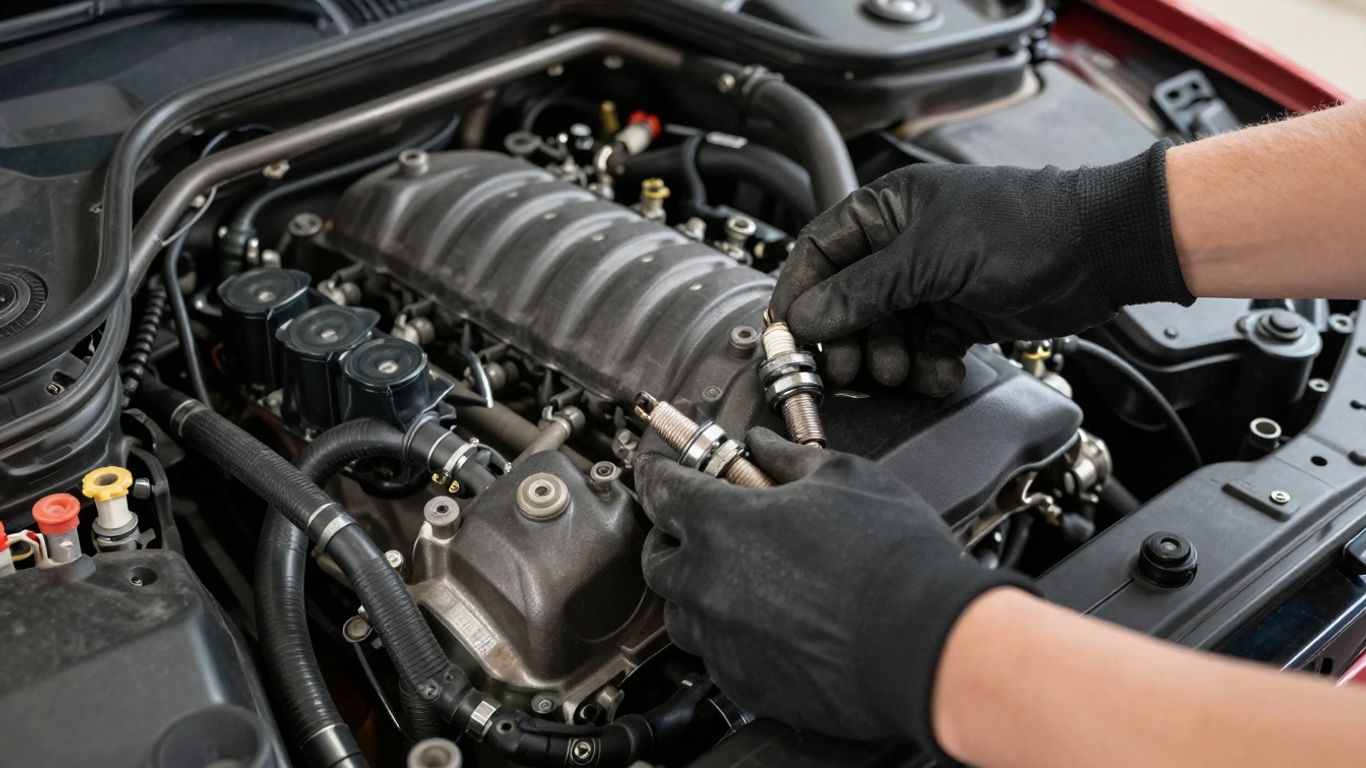
Worn spark plugs and failing ignition coils
Spark plugs with excessive wear, incorrect gaps, or deposits can struggle when cylinder pressure rises under acceleration. A weak ignition coil or damaged coil wiring can produce a similar hesitation, sometimes without an immediately obvious warning light. Misfire data, plug inspection, and a controlled component test help determine whether the fault follows a particular cylinder.
Dirty or faulty fuel injectors
An injector that is restricted, leaking, or receiving an electrical signal incorrectly can disturb the fuel mixture. The result may include rough idle, uneven acceleration, and a stumble that becomes clearer under load. Injector balance testing and electrical checks are more useful than assuming a bottle of cleaner will solve every case.
Restricted fuel delivery or low fuel pressure
A weak pump, blocked filter, restricted line, or failing pressure regulator can leave the engine short of fuel when demand rises. The vehicle may idle acceptably yet hesitate on a hill or during a firm throttle application. Measure fuel pressure under the conditions that reproduce the symptom, because a static reading alone may miss a supply problem.
Vacuum leaks and intake air problems
Unmetered air entering through a cracked hose, gasket, or intake connection can upset the intended mixture. Loose clamps and brittle hoses are simple to inspect, but some leaks require smoke testing to locate. Pay attention to hissing, unstable idle, fuel-trim changes, and evidence that the intake system has recently been disturbed.
Mass airflow and throttle position sensor faults
The engine relies on airflow and throttle-position information to decide how much fuel and ignition advance to use. A contaminated or failing sensor can create hesitation, while a damaged connector or wiring fault can make the signal intermittent. Compare the reported values with throttle movement and engine load rather than condemning a sensor solely because the car jerks.
Inspect transmission and drivetrain problems
Not every acceleration jerk starts inside the engine. A transmission may apply a clutch harshly, a torque converter may shudder during lockup, or a mount may allow the powertrain to move farther than it should. A useful drivetrain repair guide can help frame the difference between a simple shift complaint and a more serious driveline concern.
Low, old, or contaminated transmission fluid
Incorrect fluid level or degraded fluid can affect hydraulic pressure and clutch engagement. Fluid that is unusually dark, smells burned, or contains concerning debris calls for more than a routine top-up. The level must be checked using the correct procedure for the specific transmission, including any temperature and selector-position requirements.
Automatic transmission shift solenoid issues
Shift solenoids regulate hydraulic circuits that control gear changes and clutch application. An electrical fault, sticking valve, or internal contamination can cause delayed engagement, flare, or a sharp shift. Fault codes and commanded-versus-actual gear information can help distinguish control trouble from worn internal components.
Torque converter shudder
Torque converter shudder commonly feels like a rapid vibration during light or moderate acceleration, often once lockup begins. It can be confused with an ignition misfire because both may arrive under a narrow combination of speed and load. A technician can compare engine misfire data with transmission operation while reproducing the symptom.
Worn engine or transmission mounts
Mounts control powertrain movement and isolate normal vibration from the passenger compartment. When rubber separates or a hydraulic mount leaks, a normal change in torque can become a noticeable thump or lurch. Look for excessive movement during a controlled load test, while observing appropriate safety precautions.
Driveshaft, flex disc, and differential problems
A vibration or knock that rises with road speed, especially under load, may point toward the driveshaft, flex disc, differential, or another rotating component. New noises from underneath, visible damage, or violent shaking should not be treated as an ordinary tune-up issue. Continued driving can turn a localized mechanical fault into broader drivetrain damage.
Use Mercedes-specific diagnostic methods
Good diagnosis depends on capturing the fault while it is present or preserving the evidence it leaves behind. Generic code reading can be a starting point, but engine and transmission systems may store different information about the same event. The aim is to connect the driver’s description with module data, physical inspection, and a repeatable road test.
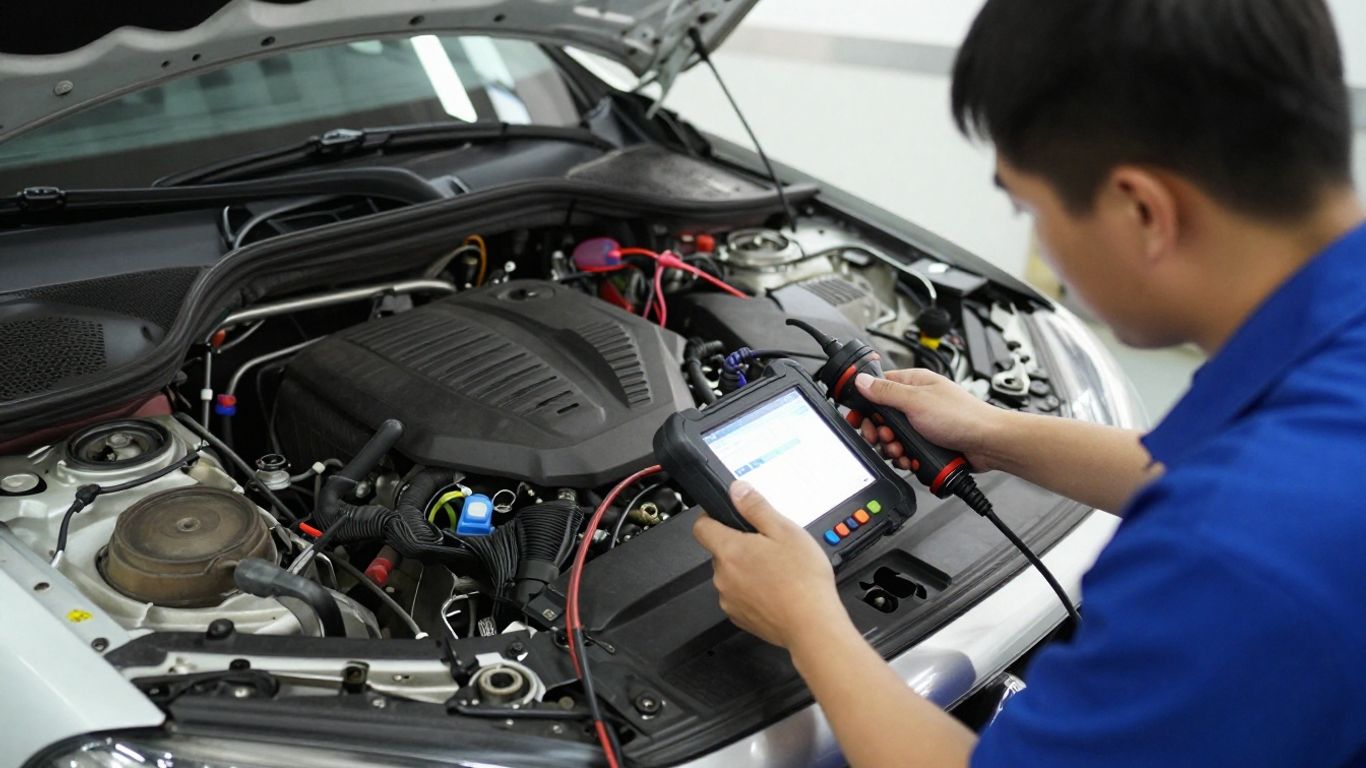
Scan for stored and pending fault codes
Read stored, pending, and manufacturer-specific codes from the relevant control modules. A code does not automatically identify the failed part; it identifies a condition or circuit that needs verification. Save the code details and freeze-frame information before clearing anything, since erasing them can remove useful clues.
Review live data from engine and transmission modules
Live data can show airflow, throttle position, fuel correction, engine speed, transmission input and output speed, and commanded gear information. Watch those values during a controlled reproduction of the jerk. Pattern matters more than one number, because a signal that drops out, lags, or disagrees with related values is often more revealing than a value that merely looks unusual.
Check misfire counters and fuel trims
Misfire counters help identify whether the engine is losing combustion on one cylinder or across a bank. Fuel trims can suggest that the control system is compensating for an air leak, fuel shortage, or inaccurate sensor input, although they do not name the root cause by themselves. Compare readings at idle and under load to avoid drawing conclusions from one operating condition.
Perform a transmission adaptation and software check
Transmission control systems may use adaptation values to adjust clutch pressure and shift timing. A qualified technician can check whether adaptations are out of range, whether relearning is appropriate, and whether applicable control software updates exist. Adaptation work should follow the correct repair and service procedure, not serve as a substitute for inspecting damaged hardware.
Compare symptoms across driving modes
Normal, sport, manual, and other available modes can change shift timing and throttle response. If the jerk changes with the selected mode, that observation may help separate a control strategy issue from a constant mechanical vibration. It is evidence to record, not proof that the mode itself caused the problem.
Follow a step-by-step troubleshooting process
A disciplined sequence prevents parts swapping and keeps the investigation economical. Begin with the driver’s account, then confirm the symptom under safe and repeatable conditions. Each test should answer a question and narrow the next step.
Confirm when the jerking occurs
Write down whether the vehicle jerks from a stop, at a particular road speed, during a gear change, on an incline, or only with heavy throttle. Also note engine temperature, fuel level, warning lights, and whether the steering wheel or floor vibrates. This short record often reveals whether the problem follows engine load, transmission operation, or vehicle speed.
Test for ignition and fuel system faults
Scan for misfires, inspect plugs and coils, and verify fuel pressure when the engine is under demand. If a test indicates one cylinder is responsible, focus there before moving to the entire fuel system. If the symptom affects multiple cylinders, consider shared power, air, fuel, or control inputs.
Inspect intake, wiring, and sensor connections
Check intake hoses, vacuum lines, electrical connectors, grounds, and harnesses for looseness, corrosion, chafing, or oil contamination. Wiggle testing and smoke testing can expose intermittent faults that a visual check misses. Do not force connectors or probe sensitive circuits without the correct method.
Check transmission fluid and mechanical condition
Verify fluid level and condition according to the transmission’s service requirements, then inspect for leaks and signs of physical damage. If the symptom tracks road speed or produces an impact from underneath, inspect mounts, flex discs, driveshaft components, and differential areas as appropriate. A fluid check cannot rule out internal wear.
Road-test the vehicle after each repair
A repair is not confirmed until the original conditions have been reproduced safely and the symptom is gone or clearly changed. Recheck fault codes and live data after the test, then verify that no new warning signs have appeared. This approach also prevents an unrelated improvement from being mistaken for a complete repair.
Match the repair to the underlying fault
The right repair follows the failed test, not the most familiar symptom. Some fixes are straightforward maintenance, while others require internal transmission or drivetrain work. Ask for the evidence supporting the recommendation and whether the repair addresses the cause or only reduces the symptom temporarily.
Replace spark plugs, coils, or damaged ignition wiring
Replace worn plugs or failed coils with the correct parts for the engine, and repair wiring or connector damage rather than masking it. If a misfire has continued for some time, inspect related components for secondary effects. Clear codes only after recording them, then confirm the repair with a load-based road test.
Clean or replace injectors and fuel system components
Injector cleaning is appropriate when testing indicates deposits that can be removed, while an electrically or mechanically failed injector generally needs replacement. A restricted filter, weak pump, or damaged pressure component requires its own repair. Recheck pressure and mixture behavior afterward so the fuel system is not judged by feel alone.
Repair air leaks and faulty engine sensors
Replace split hoses, failed seals, and damaged intake parts, then verify that fuel trims and airflow readings return to a credible range. A sensor should be replaced when testing shows an implausible or unstable signal, not simply because it is easy to access. Properly repairing the cause should improve both drivability and diagnostic readings.
Service the transmission or update its control software
A transmission service may include correcting fluid level, replacing fluid and a filter where appropriate, repairing a leak, or addressing a verified valve-body or solenoid concern. Software updates and adaptation procedures are only useful when they match the vehicle and the diagnosed condition. If clutches, bearings, or other internal parts are damaged, control changes will not restore them.
Replace worn mounts and drivetrain components
Mounts, flex discs, driveshaft parts, and differential components should be replaced when inspection confirms excessive play, separation, cracking, or other damage. Afterward, check alignment of related components and road-test under the original load conditions. For severe Mercedes-Benz drivetrain symptoms, MBI describes complete drivetrain restoration using OEM Mercedes-Benz parts and verification with Star Diagnostic System testing.
Know when professional Mercedes service is necessary
Some acceleration problems can be investigated at home, but a safe diagnosis has limits. A vehicle that is losing power, shaking violently, or leaking fluid may create a safety risk and may suffer additional damage if driven. When specialist equipment or internal inspection is needed, an accurate diagnosis is usually cheaper than several guesses.
Warning signs that make driving unsafe
Stop driving and arrange appropriate assistance if the jerking is severe, the vehicle cannot maintain power, a warning light flashes, or there is a burning smell, loud mechanical noise, fluid leak, or visible drivetrain damage. A sudden change in steering or braking behavior also changes the situation from a drivability nuisance to a safety concern. Do not repeatedly accelerate hard to reproduce a dangerous fault.
When a Mercedes-capable scan tool is required
A manufacturer-capable tool is useful when generic equipment cannot access transmission data, adaptation information, misfire details, or manufacturer-specific codes. It also helps a technician compare commanded actions with actual system responses. MBI states that its Portland specialists use Star Diagnostic System testing to verify drivetrain work, which is relevant when the symptom points beyond a basic engine service.
Why repeated fluid changes may not fix transmission damage
Fresh fluid cannot repair a worn clutch pack, damaged bearing, failing solenoid, broken mount, or compromised torque converter. Repeated servicing without confirming the source can delay the necessary repair and make the history harder to interpret. If a fluid change produces only brief improvement, return to testing rather than repeating the same treatment.
How to choose between a dealer and an independent specialist
Choose a facility that can access the needed vehicle systems, explain its diagnostic process, and inspect both engine and drivetrain causes. Ask whether the technician has experience with the relevant Mercedes-Benz transmission and whether the shop can document test results. MBI presents itself as a Portland Mercedes-Benz specialist for diagnosing and repairing critical drivetrain component failures, so its stated scope may fit a case with serious driveline symptoms.
Repair cost factors and questions to ask before approval
Cost depends on the failed component, access time, parts choice, fluid requirements, programming, and whether damage has spread to related systems. Before approving work, ask what was tested, what failed, what alternatives were ruled out, and how the repair will be verified. Also ask whether the estimate includes calibration, adaptation, a final road test, and any follow-up inspection.
Conclusion
A Mercedes that jerks during acceleration needs a pattern-based diagnosis rather than a quick parts change. Separating engine misfires from transmission, mount, and drivetrain faults makes the repair more precise, while careful testing and a final road test provide confidence that the underlying problem—not just the sensation—has been addressed.
Frequently Asked Questions
What is the most common reason a car jerks during acceleration?
Common possibilities include worn ignition parts, restricted fuel delivery, dirty injectors, intake leaks, sensor faults, transmission problems, and worn mounts. The most likely cause depends on when the symptom occurs and what diagnostic tests show.
Can bad spark plugs cause jerking under load?
Yes. Worn or incorrectly gapped spark plugs can misfire when the engine is working harder, causing hesitation or abrupt surging. Coil and wiring faults can create nearly identical symptoms.
How can I tell whether the transmission or engine is causing the jerk?
An engine problem often follows engine load and may appear with a misfire or fluctuating engine speed. A transmission or driveline problem may follow a gear change, lockup event, road speed, or movement beneath the vehicle, but testing is needed to separate them reliably.
Is it safe to keep driving a car that jerks when accelerating?
Mild, occasional hesitation should be checked promptly, while violent shaking, flashing warning lights, loss of power, burning smells, leaks, or loud noises make continued driving unsafe. Stop and arrange professional assistance when those signs appear.
Can low transmission fluid cause jerking?
Low or degraded fluid can affect hydraulic pressure and clutch engagement, producing delayed or harsh shifts. The correct level-check procedure varies, and low fluid may indicate a leak that must also be repaired.
Will a transmission fluid change always fix shuddering?
No. A fluid service may help when fluid condition or level is the cause, but it cannot repair worn internal components, a failing torque converter, damaged mounts, or drivetrain damage. Diagnosis should come before repeated service.
How long can a car be driven with an acceleration problem?
There is no dependable mileage limit because the severity and cause vary. Arrange an inspection soon, avoid heavy acceleration, and stop driving if the symptom becomes severe or is accompanied by warning lights, noises, leaks, or loss of control.