

Key Takeaways
An oil leak can be simple to repair or surprisingly labor-intensive, depending mainly on where the oil is escaping and how accessible the failed seal is.
- The visible drip is not always the true source of the leak.
- Diagnosis should come before committing to a repair price.
- Valve cover, oil pan, and drain plug leaks are often less labor-intensive than cover or rear seal repairs.
- Parts choice and shop labor rates can change the estimate substantially.
- Driving with low oil or oil reaching hot components can turn a manageable repair into engine damage.
What determines Mercedes oil leak repair cost
The Mercedes oil leak repair cost depends less on the amount of oil on the driveway than on the failed component behind it. A small seep from an accessible gasket may be handled during a short appointment, while a leak hidden behind major engine components can require many hours of labor. A proper inspection is therefore the starting point for any useful estimate.
Leak location and severity
Oil can escape from a valve cover, oil pan, filter housing, timing cover, or rear main seal. It may then run along the engine or undertray before falling to the ground, so the puddle’s position can be misleading. A slow seep may be monitored in some cases, but an active drip, falling oil level, or oil contacting the exhaust deserves prompt attention.
Mercedes model, engine, and year
Different Mercedes models use different engine layouts, sealing arrangements, and access paths. The same general repair can take very different amounts of time on a compact four-cylinder engine versus a tightly packaged six- or eight-cylinder engine. Year also matters because updated gaskets, housings, fasteners, or service procedures may affect both parts and labor.
OEM, aftermarket, and used replacement parts
A quote should identify whether it includes original-equipment, aftermarket, or used components. A lower-cost part is not automatically a poor choice, but fit, material quality, warranty, and expected service life should be clear. Gaskets and seals are especially poor places to save money if replacing them again would require repeating extensive labor.
Independent shop versus Mercedes-Benz dealership
Dealerships and independent specialists may use different labor rates, diagnostic procedures, warranties, and parts policies. An independent shop familiar with Mercedes vehicles may offer a lower hourly rate, while a dealership may be preferred by an owner seeking factory service records or a particular warranty arrangement. Compare the complete estimate rather than the hourly rate alone.
Additional repairs discovered during inspection
Once the engine is cleaned and inspected, a technician may find more than one leak or notice oil contamination around nearby components. A worn belt, damaged connector, stripped fastener, or distorted housing can add to the bill. Ask the shop to separate confirmed repairs from recommendations that can safely wait.
Common Mercedes oil leak sources and their repair prices
The most useful way to discuss repair prices is by relative scope rather than a single universal number. Local labor rates, engine configuration, and parts selection can move the final total considerably. The cost guides for car oil leak repairs and Mercedes oil leak causes can provide additional general context, but your own vehicle still needs a hands-on diagnosis.
Valve cover gasket leaks
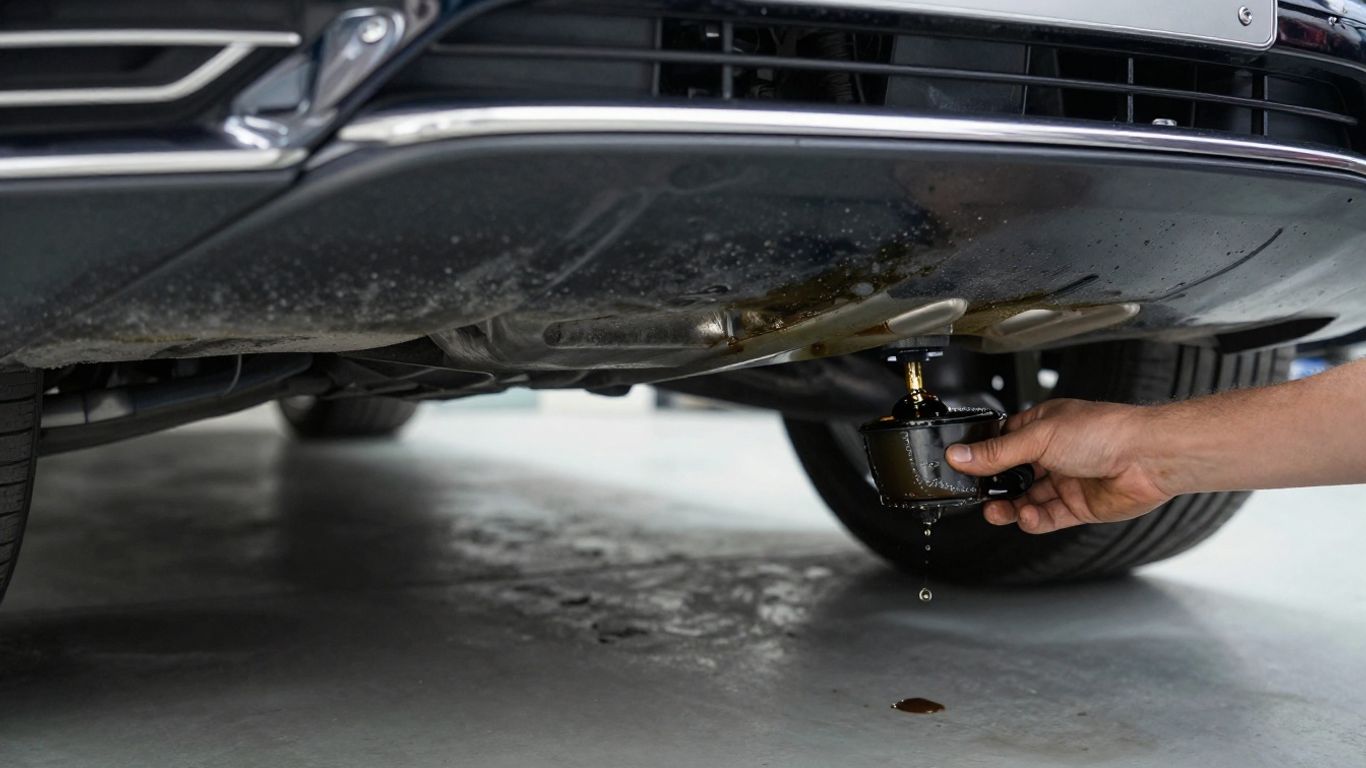
A valve cover gasket leak often leaves oil around the upper edge of the engine and may allow oil to run downward. If oil reaches hot exhaust components, a burning smell can develop even before a puddle appears. The repair is commonly less expensive than a timing-cover or rear-main-seal job, although access and related ignition components can change the estimate.
Oil pan and drain plug leaks
Oil pan leaks are often visible near the bottom of the engine, while a damaged or improperly sealed drain plug may leak after an oil service. A gasket, sealant, plug, or washer may be all that is needed, but a dented pan or damaged threads can make the repair more involved. A technician should confirm the source instead of assuming every lower-engine drip comes from the pan.
Front cover and timing cover leaks
Front cover leaks can spread over a broad area and may be difficult to distinguish from leaks higher on the engine. Repair usually involves more disassembly than a simple gasket replacement, which is why labor can dominate the quote. When comparing estimates, ask whether the price includes new seals, one-time-use fasteners, cleaning, and a post-repair leak check.
Rear main seal leaks
The rear main seal sits where the engine meets the transmission, making it one of the more labor-intensive oil leak repairs. Oil in that area can also come from another source and travel downward, so replacing the seal without confirming the diagnosis is risky. Front cover repair pricing is a useful comparison for understanding how access and labor can shape a quote, even though the affected component differs.
Oil filter housing and cooler leaks
Oil filter housings and coolers contain several seals and connections, depending on the engine. Leaks there can wet the side of the engine and spread toward wiring, belts, or the undertray. The bill may include seals, a housing or cooler, fresh oil and filter, and cleanup if the leak has been present for some time.
Symptoms that indicate an oil leak
Some oil leaks announce themselves with a clear puddle, while others produce only an odor or a low-level warning. The vehicle can continue to drive normally for a while, which makes early signs easy to dismiss. Treat the symptoms as clues about urgency, not as a substitute for locating the source.
Oil spots under the vehicle
Fresh brown or black spots beneath the engine area are a common warning sign. The location can narrow the search, but it does not prove which component is leaking because oil may travel across covers and shields. Place clean cardboard under the parked vehicle if you need to observe the size and frequency of the drip before an appointment.
Burning oil smell and visible smoke
A sharp burnt-oil odor often means oil is reaching a hot exhaust surface or another hot engine component. Light smoke from the engine bay should not be ignored, particularly if it increases after driving. Turn the engine off safely and arrange an inspection if smoke is persistent, heavy, or accompanied by other warning signs.
Low oil levels or dashboard warnings
Check the oil level on level ground using the procedure specified for the vehicle. A falling level suggests that the leak is more than cosmetic, even if the driveway remains dry. If an oil-pressure warning appears, stop driving as soon as it is safe; continuing can cause severe engine damage.
Engine bay residue and wet components
A mechanic may find fresh oil around a gasket, housing, sensor, or cover even when there is no visible puddle. Dirt tends to cling to oily areas, creating a dark, damp residue. Photographing the area before cleaning can help document what you noticed, but avoid touching hot parts or disturbing electrical connections.
When a small leak becomes urgent
A small seep becomes urgent when the oil level drops quickly, oil reaches the exhaust, or the warning system indicates low pressure. It is also more concerning when the leak is close to a belt or connector that could be damaged by contamination. If you are unsure whether the car is safe to drive, have it inspected rather than relying on repeated top-ups.
How mechanics diagnose a Mercedes oil leak
Diagnosis is a process of tracing oil back to its highest fresh point, not simply looking at the lowest wet area. A technician may need to remove covers, clean residue, run the engine, and inspect it again after a road test. That work is part of the repair decision because replacing the wrong gasket can create a second expense without solving the leak.
Visual inspection and fluid tracking
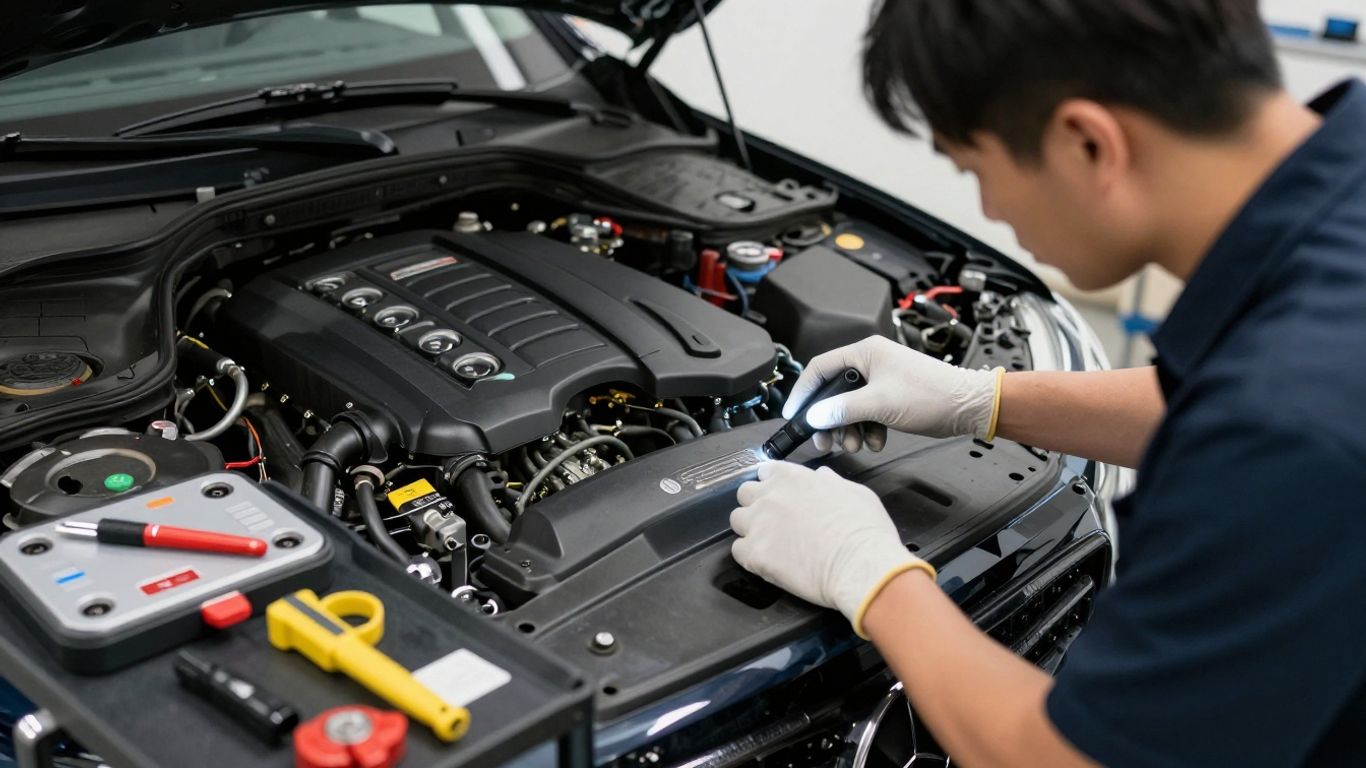
The inspection usually begins with the engine, undertray, oil pan, filter area, and surrounding surfaces. A technician looks for wet edges, fresh trails, pooled oil, and signs that a leak has been moving through the engine bay. The pattern helps establish a likely starting point before testing becomes more involved.
Cleaning the engine before testing
Old residue can make several components appear to be leaking at once. Cleaning the affected area gives the technician a clearer baseline, although care is needed around sensors, wiring, and other sensitive parts. After cleaning, the engine can be operated briefly and checked again for fresh oil.
UV dye and pressure testing
If the source remains unclear, a shop may use UV dye and a suitable lamp to make the oil’s path easier to follow. Testing methods vary by vehicle and by the suspected source, so the technician should explain what is being tested and why. A good diagnostic charge should produce useful findings, not just a vague statement that oil is present.
Distinguishing oil from coolant or transmission fluid
Not every wet stain is engine oil. Coolant may have a different color and feel, while transmission fluid can appear lighter or redder depending on its age and specification. Correctly identifying the fluid prevents the repair from being aimed at the wrong system.
Checking for related engine damage
The technician should check the oil level, warning history, belt area, electrical connectors, and visible signs of overheating or oil starvation. If the engine has been run with very low oil, the estimate may need to address possible internal damage rather than only the original seal. The diagnostic result should distinguish observed damage from risks that have not been confirmed.
A practical inspection often follows this sequence:
- Confirm the oil level and warning history.
- Find the highest fresh point of the leak.
- Clean and retest contaminated areas.
- Check nearby components for oil damage.
This sequence keeps the repair focused and helps prevent paying for parts that were never responsible for the leak. It also gives the owner a clearer basis for deciding whether to repair immediately or plan the work.
Mercedes oil leak repair cost by repair approach
There is no single repair approach that fits every leak. The sensible choice depends on the confirmed source, the condition of related parts, and how much disassembly is required. A written estimate should make those differences visible rather than presenting one unexplained total.
Minor gasket and seal replacements
Accessible gaskets, washers, and seals may require relatively little disassembly. The invoice can still include diagnostic time, cleaning, fresh oil, a filter, and a final inspection, so a low parts price does not necessarily equal a low total. Ask whether the shop is replacing only the failed seal or also correcting a damaged mating surface.
Labor-intensive component removal
Front covers, filter housings, and other crowded components may require removal of surrounding parts before the leak can be repaired. Labor is often the largest part of this type of estimate. The quote should explain which components must be removed and whether their gaskets or fasteners are included when they are reinstalled.
Engine removal and rear main seal repairs
A rear main seal may require separating the engine and transmission or creating comparable access, depending on the vehicle. That makes the job expensive even when the seal itself is inexpensive. Because oil can travel from above, confirmation of the source is particularly valuable before approving this repair.
Repairing multiple leaks at once
When several leaks are confirmed in one area, combining the work can reduce duplicated labor. It may make sense to replace nearby seals while access is already available, but only if those parts show wear or are likely to require the same disassembly later. Review the combined estimate line by line so preventive replacement does not become an open-ended add-on.
Choosing between dealer and independent service
Choose a shop that can explain the diagnosis, parts choice, labor hours, warranty, and follow-up inspection. A dealer is not automatically the best or worst value, and an independent shop is not automatically cheaper once parts and procedures are compared. The clearest estimate is usually more useful than a promise of the lowest price.
How to reduce Mercedes oil leak repair costs
Cost control starts before parts are ordered. Early diagnosis can prevent a small leak from lowering the oil level or contaminating nearby components, while a careful estimate can prevent unnecessary work. The goal is not simply to choose the cheapest line item; it is to avoid paying twice for an incomplete repair.
Getting multiple written estimates
Request estimates from at least two qualified shops and give each one the same symptoms and inspection findings. Ask for the diagnostic fee, labor hours, parts brands, taxes, fluids, and warranty in writing. For comparison, resources such as transparent repair quotes explain why itemized pricing is easier to evaluate than a single bundled number.
Asking what parts and labor include
A useful estimate states whether cleaning, new oil, an oil filter, seals, fasteners, and road testing are included. It should also identify the assumptions that could change the total once the component is opened. If you are reviewing unrelated household or project estimates, the same habit applies to London loft costs, lamp repair parts, slab leak repairs, and commercial LED solutions: scope should be clear before work begins.
Comparing repair urgency with monitoring
Not every damp gasket needs immediate replacement, but monitoring is appropriate only when the technician confirms that oil loss is minimal and no hot or moving component is at risk. Establish what to check, how often to check it, and which change means the vehicle should return immediately. Do not treat repeated top-ups as a permanent repair plan.
Using preventive maintenance to avoid repeat leaks
Follow the recommended oil specification and service interval, inspect for seepage during routine maintenance, and address damaged undertrays or loose fasteners. Keeping the engine reasonably clean makes new leaks easier to identify. Preventive work cannot stop every seal from aging, but it can reduce the chance that a developing problem goes unnoticed.
Knowing when DIY inspection is safe
A careful owner can check the oil level, look for fresh spots with the engine cool, and note odors or warning lights. Avoid getting beneath a vehicle supported only by a jack, spraying water into sensitive areas, or removing parts without the correct procedure. For broader website maintenance questions, a separate Florida SEO guide exists, but automotive diagnosis should be left to a suitably equipped technician.
Conclusion
The Mercedes oil leak repair cost becomes easier to judge once the source, access requirements, parts choice, and urgency are clear. Record the symptoms, confirm the diagnosis, compare itemized estimates, and avoid driving if oil pressure is low or oil is reaching hot components. A prompt, accurately targeted repair is usually less expensive than waiting for lubrication loss or secondary damage.
Frequently Asked Questions
How much does a Mercedes oil leak repair cost?
The price varies widely by the leaking component, vehicle, labor rate, parts selected, and additional damage. An inspection and written estimate are more reliable than a broad average.
What is the most common cause of an oil leak?
Aged gaskets and seals are common causes, but oil can also escape from a drain plug, oil pan, filter housing, cooler, or cover. The visible drip does not always identify the failed part.
Can I drive with a small oil leak?
Only if a qualified inspection confirms that oil loss is minimal and no hot or moving component is at risk. Stop driving if the oil level falls quickly, smoke appears, or an oil-pressure warning activates.
How can I tell whether the leak is engine oil?
Engine oil is commonly brown or black and feels slick, but color changes with age. A technician can distinguish it from coolant, transmission fluid, or other fluids using appearance, location, and testing.
Why does my car smell like burning oil but leave no puddle?
Oil may be landing on a hot exhaust or engine surface and burning away before it reaches the ground. Residue can also spread across covers and shields, hiding the original source.
Is a rear main seal repair always expensive?
It can be because the seal is located between the engine and transmission and may require substantial disassembly. The source should be confirmed first because oil from a higher leak can collect in the same area.
Should I use an aftermarket gasket?
An aftermarket part may be suitable when its quality, fit, warranty, and compatibility are clear. The cheapest option can be poor value if it fails early and requires repeating extensive labor.