

Key Takeaways
A timing chain is designed for long service, but it is not automatically maintenance-free. Cold-start rattles, timing-related fault codes, and changes in engine behavior deserve prompt diagnosis before a small wear issue becomes internal engine damage.
- A timing chain keeps the camshafts and crankshaft synchronized.
- Cold-start rattling is an early warning sign, but not a diagnosis by itself.
- Replacement pricing depends heavily on engine layout, access, parts, and labor.
- Guides, tensioners, sprockets, seals, and oil-system components may need inspection or replacement.
- Good oil, regular servicing, and detailed repair records can reduce future risk.
Understanding the Mercedes timing chain system
The timing chain works inside the engine, where it coordinates moving components that must remain precisely synchronized. Its condition depends on design, mileage, lubrication, and the history of previous servicing. Understanding that context makes it easier to separate a routine inspection from a repair that should not be postponed.
What the timing chain does in the engine
The chain transfers rotation from the crankshaft to the camshaft or camshafts. That relationship controls when the valves open and close in relation to the pistons. If the chain stretches, a guide wears, or a tensioner loses control, valve timing can drift and engine operation may suffer.
The chain itself is only one part of the system. Guides keep its path controlled, while the tensioner maintains appropriate tension, often using engine oil pressure. A problem in any of these parts can create symptoms that sound like a chain fault.
How timing chains differ from timing belts
Timing belts use a reinforced flexible belt and are commonly replaced according to a manufacturer-specified interval. Timing chains use metal links and run inside the engine, usually with oil lubrication. That construction can allow a long service life, but it does not make the chain immune to wear.
A belt service is often easier to schedule by mileage or age. Chain work is more frequently prompted by symptoms, measured timing deviation, inspection findings, or a known engine-specific concern. The correct approach depends on the exact engine rather than the badge on the trunk.
Mercedes engines commonly affected by chain wear
Chain wear can occur across many engine families, but the risk and repair procedure vary considerably. Some engines place the chain at the front for relatively direct access; others position it toward the rear of the engine, where access can require substantially more disassembly.
That is why a general online estimate can be misleading. The exact engine code, model year, chain arrangement, and condition of the guides all matter. A useful overview of typical symptoms and service considerations is available in this timing chain overview, but the vehicle-specific diagnosis still has to happen at the car.
Why chain condition varies by mileage and maintenance history
Mileage offers useful context, not a guaranteed replacement deadline. Repeated short trips, neglected oil changes, incorrect oil, long idling, and heavy operating conditions can affect the chain system differently from steady highway use with consistent servicing.
Maintenance records are therefore as valuable as the odometer. A high-mileage engine with careful oil service may be quieter and healthier than a lower-mileage engine that has experienced poor lubrication. Maintenance history changes the decision more than a single mileage number does.
Warning signs of a failing timing chain
Timing chain symptoms can begin quietly and may resemble other engine problems. A noise, warning light, or rough idle should not be treated as proof of chain failure, but it should be recorded and investigated. Early attention can preserve more repair options.

Rattling noises during cold starts
A brief metallic rattle immediately after a cold start can indicate that the chain is not being held firmly as the engine builds oil pressure. Worn guides, a tired tensioner, low oil level, or internal wear elsewhere can produce a similar sound.
Note when it happens, how long it lasts, and whether the engine was fully cold. A recording made from a safe position can help a technician reproduce the concern. Persistent or worsening noise deserves faster attention than an isolated sound with no repeatable pattern.
Check engine light and timing-related fault codes
A check engine light may appear when the engine computer detects that camshaft and crankshaft positions are no longer matching the expected relationship. The same light can also result from ignition, fuel, sensor, or emissions faults, so the code must be interpreted in context.
A scan is only the starting point. A technician may compare live data, inspect oil condition, verify sensor signals, and check mechanical timing before recommending replacement. Clearing the code without finding its cause can allow the underlying wear to progress.
Rough running, misfires, or reduced performance
As valve timing moves away from its intended position, the engine may idle unevenly, misfire, respond slowly, or feel less powerful. These symptoms can also come from spark plugs, coils, injectors, air leaks, or variable valve timing components.
The pattern matters. Rough running that accompanies a startup rattle or correlation code is more concerning than an isolated misfire with a clear ignition-system cause. Driving should be limited if the engine is shaking badly, losing power, or producing new mechanical noise.
Difficult starting and engine stalling
A chain system with excessive slack or incorrect timing can make the engine take longer to start. In more advanced cases, the engine may stall, fail to restart, or run erratically as timing control becomes less reliable.
Do not repeatedly crank an engine that has suddenly developed severe mechanical noise. Extended cranking will not correct a timing problem and may create additional strain. Arrange a proper inspection, especially if starting trouble follows earlier rattling or warning-light events.
Symptoms of severe chain or guide failure
A broken guide, failed tensioner, or chain that has jumped position can cause loud continuous noise, immediate loss of power, severe misfires, or a no-start condition. Depending on the engine, incorrect valve timing may allow contact between pistons and valves.
Those symptoms call for stopping the engine and arranging transport rather than driving to a shop. The longer the engine runs with uncontrolled timing, the greater the possibility of bent valves or other internal damage.
Diagnosing timing chain problems accurately
Diagnosis should combine the driver’s observations with electronic data and mechanical checks. No single sound, mileage figure, or fault code can confirm a chain replacement on its own. A careful process avoids both unnecessary parts replacement and dangerous delay.
Visual and electronic inspection methods
A technician may begin by checking oil level and condition, scanning the engine computer, listening during a cold start, and inspecting accessible areas for leaks or damaged components. Depending on the engine, further checks may involve removing covers or other components to view the chain, guides, or tensioner.
Electronic data can show whether camshaft position is tracking crankshaft position as expected. Mechanical inspection then helps determine whether the cause is chain wear, a guide, a tensioner, a sprocket, a sensor, or another timing component.
Interpreting camshaft and crankshaft correlation codes
Correlation codes indicate that the computer has detected an unexpected relationship between crankshaft and camshaft signals. They are useful clues, but they do not identify the failed part automatically. A stretched chain, incorrect mechanical timing, a damaged reluctor, wiring trouble, or a faulty sensor may produce related findings.
The code should be considered alongside startup noise, live-data readings, oil pressure, and the engine’s recent behavior. Replacing a sensor without checking mechanical timing can leave the actual problem untouched.
Checking chain stretch and timing deviation
Chain stretch is often assessed indirectly through measured timing deviation, manufacturer-specific scan data, or mechanical timing references. The terminology can be confusing: the metal chain may wear and lengthen slightly, while guide and tensioner wear can add slack to the system.
The technician should document the measurement and explain the applicable limit or reference. The following kinds of evidence are more useful together than in isolation:
| Evidence | What it may indicate | Why context matters |
|---|---|---|
| Cold-start rattle | Slack, guide, or tensioner concern | Noise duration and repeatability matter |
| Correlation code | Camshaft and crankshaft timing mismatch | Sensors and wiring can create similar codes |
| Timing deviation | Possible chain-system wear | The correct limit is engine-specific |
| Damaged guide material | Internal chain-system deterioration | Further disassembly may be necessary |
A measurement outside the expected range strengthens the case for repair, but the repair plan should still identify which components need inspection. That prevents a chain-only fix from overlooking a worn guide or sprocket.
Distinguishing chain noise from other engine sounds
Not every rattle comes from the timing chain. Exhaust shields, accessory pulleys, belt tensioners, variable valve timing units, injectors, and low oil pressure can all create noises near the front or rear of the engine.
Sound location, engine temperature, rpm, and the moment when the noise appears are useful clues. A trained technician may use a stethoscope, scan data, inspection camera, or controlled testing to narrow the source without guessing from sound alone.
When a specialist diagnosis is worthwhile
A specialist diagnosis is particularly valuable when access is difficult, the engine has a rear-mounted chain, multiple fault codes are present, or the proposed repair is expensive. The shop should be able to explain its evidence in plain language and distinguish confirmed findings from possibilities.
Before authorizing work, ask whether the estimate includes diagnosis, parts, fluids, seals, timing verification, and post-repair testing. For a practical description of startup symptoms and inspection steps, this Mercedes timing chain repair guide can provide useful background, though it cannot replace an inspection of your vehicle.
Mercedes timing chain replacement cost factors
The cost of Mercedes timing chain replacement is shaped less by the chain alone than by the labor required to reach it and the condition of the surrounding parts. Two vehicles with similar mileage can have very different estimates. A written quote should explain the assumptions behind the number.
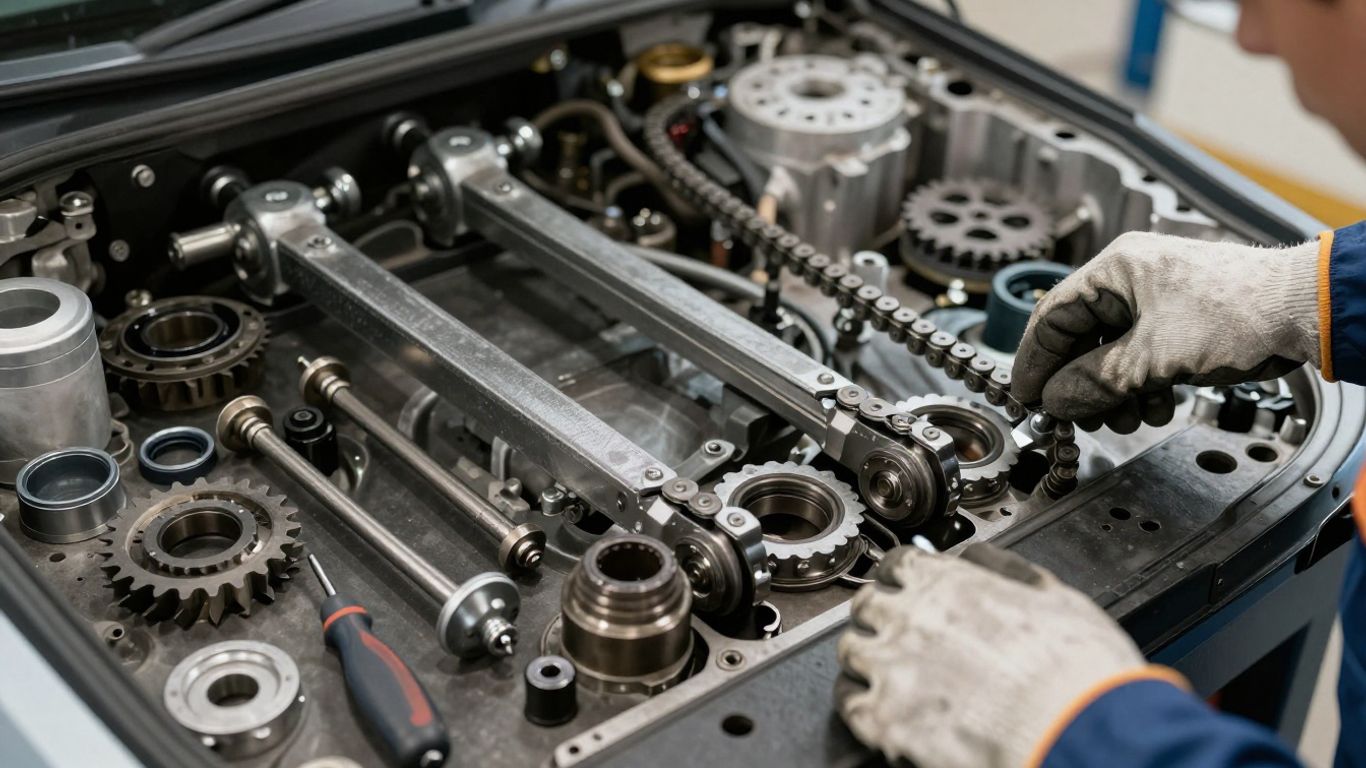
Parts, labor, and shop-rate differences
A typical estimate separates parts, labor, fluids, seals, and shop supplies. Labor can dominate the bill when the chain is difficult to access or when the engine must be supported, lowered, or removed for related work.
Hourly rates also vary by region and facility. A lower rate does not necessarily mean a lower final bill if the estimate assumes fewer hours or omits likely components. Conversely, a higher rate may reflect better diagnostic equipment, specialized experience, or a more complete repair plan.
How the Mercedes engine model affects pricing
Engine layout is one of the largest pricing variables. The chain may be accessible with the engine installed, or access may require extensive removal of intake, wiring, covers, brackets, or other assemblies. Some procedures also involve more than one chain or multiple timing components.
Model year alone is not enough to price the job accurately. Provide the vehicle identification number and engine information when requesting an estimate so the shop can identify the correct procedure and parts.
Additional components replaced during the repair
A responsible repair plan may include guides, tensioners, sprockets, seals, fasteners, and fresh oil and coolant where appropriate. Whether each item needs replacement depends on inspection, manufacturer procedure, and the condition found during disassembly.
Replacing only the visibly worn chain can be false economy if a guide or tensioner is already damaged. The technician should show which parts are being recommended and explain whether each is required, prudent, or optional.
Dealer versus independent Mercedes specialist costs
A dealer and an independent specialist may use different labor rates, warranty terms, diagnostic processes, and parts sources. The meaningful comparison is not simply the total price; it is the scope of work, technician experience, documentation, and warranty behind that price.
Ask both types of shop for comparable written estimates. A specialist familiar with the engine may identify access requirements earlier, while a dealer may have direct access to factory procedures and vehicle-specific records. The best choice depends on the job and the quality of the explanation.
When low-cost estimates may signal missing work
An unusually low quote may cover the chain but exclude guides, tensioners, seals, fluids, diagnostic time, or timing verification. It may also assume that no broken guide material or damaged sprocket will be found once the engine is open.
A low estimate is worth clarifying rather than rejecting automatically. Ask what happens if inspection reveals additional wear, whether the shop will contact you before exceeding the quote, and what warranty applies to parts and labor.
What the replacement process involves
Timing chain replacement is a precision repair, not a simple belt-like service. The sequence varies by engine, but the work generally involves gaining access, controlling crankshaft and camshaft position, replacing worn parts, and verifying operation before the vehicle returns to service.
Removing components to access the timing chain
The technician may remove covers, intake components, wiring, brackets, cooling parts, or other assemblies that block access. On some engines the chain can be serviced with the engine in the vehicle; on others, extensive support or removal is necessary.
Disassembly should be organized and documented because connectors, fasteners, and seals must return to their correct locations. The amount of access work is a major reason estimates differ between engine families.
Replacing guides, tensioners, and related hardware
Once the chain is visible, the technician can inspect guides, tensioners, sprockets, and chain contact surfaces. Worn or broken guides may leave plastic or metal debris in the oil system, while a weak tensioner may allow slack during startup.
The parts replaced should match the findings and the specified repair procedure. New components do not compensate for contaminated oil passages or an underlying lubrication problem, so those concerns should be addressed at the same time.
Setting engine timing correctly
The crankshaft and camshafts must be positioned and secured according to the engine’s timing procedure. Timing marks, locking tools, and specified fasteners help prevent movement while the new chain is installed.
A small timing error can cause poor running or internal damage. After installation, the engine should be rotated and checked as required before it is started, rather than relying on a quick visual confirmation.
Inspecting sprockets, seals, and oil system components
Sprocket teeth can wear where the chain engages them, and seals may be disturbed during access. The technician should also look for oil leaks, debris, blocked passages, or evidence that poor lubrication contributed to the failure.
Replacing a seal or cleaning an accessible oil passage may be sensible while the area is open. The final decision should be tied to visible condition and the engine’s service requirements, not a blanket list of unrelated parts.
Testing the engine after reassembly
After reassembly, the engine should be checked for correct timing, oil pressure, leaks, warning lights, abnormal noise, and stable operation. A scan may confirm that previous timing-related faults have not returned.
A proper road test, when safe and appropriate, can reveal hesitation, misfires, or temperature problems that are not obvious while stationary. The shop should provide the completed work order and explain any follow-up checks.
Deciding when to replace the timing chain
The decision is usually based on evidence rather than a universal calendar interval. A confirmed timing deviation or damaged guide is a different situation from a quiet chain with no relevant codes. The owner’s budget and the vehicle’s overall condition also belong in the conversation.
Mileage-based maintenance versus symptom-based repairs
Some owners prefer preventive work at a chosen mileage, while others wait for symptoms or inspection findings. Neither approach is automatically correct for every engine. Manufacturer guidance, engine design, maintenance history, and local specialist experience should shape the decision.
Mileage can justify an inspection, especially on a vehicle with unknown records, but it should not be used as the only reason to replace an otherwise healthy system. Likewise, a low-mileage vehicle with a clear rattle or correlation fault should not be dismissed.
The risks of delaying a known timing problem
If a technician has confirmed excessive slack, a damaged guide, or incorrect mechanical timing, continued driving carries a risk of the chain jumping or failing. The result can range from poor running to substantial valve and piston damage.
The safest response depends on severity. A brief, carefully controlled trip may be acceptable in some cases, but an engine with loud continuous rattling, stalling, or sudden power loss should generally be transported rather than driven.
When an engine rebuild may be necessary
A timing chain problem does not automatically mean the engine needs rebuilding. If timing has remained correct and internal damage is absent, a timing-system repair may be sufficient. A rebuild becomes more relevant when valves, pistons, cylinder-head components, or bearings have been damaged or when debris has circulated extensively.
Compression testing, leak-down testing, borescope inspection, and removal of affected components may help determine the extent of damage. Ask for evidence before approving a rebuild, since the cost and value decision are very different from a chain-only repair.
Considering vehicle age, value, and repair history
A well-maintained vehicle with a sound transmission, body, and interior may justify a major timing repair even when it is older. A vehicle with rust, repeated electrical issues, or several imminent repairs may call for a broader financial review.
Compare the proposed work with the vehicle’s recent repair history and likely near-term needs. A timing repair that restores dependable service can make sense, but it should be evaluated as part of the car’s whole condition rather than in isolation.
Questions to ask before approving the work
A clear conversation before disassembly helps prevent surprises. Ask the shop to explain the evidence, the access method, the parts included, and the conditions that could change the estimate.
Useful questions include:
- What finding confirms that the chain system is the cause?
- Are guides, tensioners, sprockets, seals, and fluids included?
- Will the engine remain in the vehicle during the repair?
- What warranty covers the parts and labor?
The answers should be specific to the engine in your vehicle. If the explanation remains vague, a second diagnosis may be worthwhile before authorizing a large repair.
Preventing future timing chain problems
No maintenance plan can eliminate mechanical wear, but it can reduce avoidable stress on the timing system. The most consistent habits are straightforward: use the correct oil, service it at sensible intervals, respond to symptoms early, and keep records that show what has been done.
Following the correct Mercedes oil specification
Use the oil viscosity and specification listed for the exact engine and operating conditions. The timing chain, guides, and tensioner depend on clean oil reaching the right components at the right pressure.
When in doubt, confirm the specification in the owner’s information or with a qualified technician. Substituting oil based only on viscosity can be risky when the engine requires a particular approval or formulation.
Keeping up with oil and filter changes
Oil changes remove degraded lubricant and suspended contaminants before they can contribute to wear. The interval should reflect the manufacturer’s guidance and the vehicle’s actual use, particularly when it sees many short trips or severe conditions.
Use a quality filter and keep the receipts or service entries. The record helps identify whether a later timing concern may be connected to a long service gap, low oil level, or repeated leak.
Responding quickly to startup rattles and warning lights
A new cold-start rattle is easier to investigate before it becomes constant. Record the temperature, duration, and circumstances, then arrange a scan and inspection if it repeats or is accompanied by rough running.
Early diagnosis can distinguish a relatively contained tensioner or guide issue from a broader timing failure. Ignoring a warning because the noise disappears after a few seconds is an unnecessary gamble.
Using quality replacement parts
Replacement parts should be appropriate for the engine and installed according to the applicable procedure. The chain is part of a matched system, so guide material, tensioner behavior, fastener requirements, and sprocket condition all matter.
Ask what parts are being used and whether the shop can document their source. The least expensive component is not necessarily the least expensive repair if it fails early or does not match the required specification.
Maintaining records for future inspections
Keep invoices, diagnostic reports, parts information, oil specifications, and mileage with the vehicle. A future technician can then see what was replaced, what measurements were recorded, and whether any recommended follow-up remains open.
That record also supports sensible decisions when the vehicle changes hands. Even unrelated maintenance references, such as supplement guidance in Morocco, bridal makeup tips, proactive IT maintenance, BAT.TAXI, or water filtration components, belong to different specialist contexts; they are reminders that useful records and precise instructions matter across maintenance tasks, not substitutes for automotive advice.
A timing-chain video can make the parts easier to recognize, but visual content should supplement—not replace—a diagnosis on the specific engine. Procedures differ, and an apparently similar engine may require a different access or locking method.
Conclusion
Mercedes timing chain replacement is best approached as a diagnosis-led repair, not a guess based on mileage or one unusual sound. Prompt attention to cold-start rattles, warning lights, rough running, and starting problems gives a technician more opportunity to correct wear before it becomes internal engine damage. A detailed estimate, appropriate parts, correct timing setup, and consistent oil service provide the clearest path to a durable repair.
Frequently Asked Questions
How long does a timing chain usually last?
There is no universal lifespan because engine design, lubrication, driving conditions, and maintenance history all affect wear. Mileage is useful context, but symptoms and measured timing deviation are more meaningful than a single replacement number.
Is a cold-start rattle always caused by the timing chain?
No. A rattle can also come from accessory components, exhaust hardware, valve-train parts, or oil-pressure concerns. Its timing, duration, location, and relationship to fault codes should be assessed by a technician.
Can I drive with a timing chain rattle?
Driving may increase the risk if the chain, guide, or tensioner is failing. Loud persistent noise, stalling, severe misfires, or sudden power loss should be treated as reasons to stop driving and arrange transport.
What does a timing chain replacement include?
The job may include the chain, guides, tensioner, sprockets, seals, fasteners, fluids, and timing verification. The exact scope depends on what inspection reveals and the procedure for the particular engine.
Why can replacement estimates vary so much?
Access is a major factor. Some engines can be serviced with the engine installed, while others require extensive disassembly or engine removal. Labor rates, parts quality, diagnostic work, and warranty terms also affect the total.
Can an engine run after the timing chain jumps?
It may run poorly, stall, or fail to start, depending on how far timing has moved and how the engine is designed. Continuing to operate it can increase the chance of valve or piston damage.
Should guides and tensioners be replaced with the chain?
They should at least be inspected, because they control the chain and can be the source of slack or debris. Replacement depends on their condition, the repair procedure, and the technician’s documented findings.